
Abstract book of the 18th Conference of the EAVP
Pterosaurs from Coahuila
New elephant cranium from early Pliocene Ileret, Kenya
Les sélaciens du Miocène de la région de Montpellier
Muridae du Pliocène supérieur d'Espagne et du midi de la France.
Contribution à l'étude des genres Gliravus et Microparamys.
Eocene (57) , Quercy Phosphorites (38) , Systematics (32) , Rodents (29) , Mammalia (27) , Rodentia (25) , Miocene (25)
Page 13 of 19, showing 20 record(s) out of 366 total

|
Prospection paléontologique de la région de Torralba de Ribota (Burdigalien du bassin de Calatayud, prov. de Zaragoza, Espagne)Edouard Boné, Maria T. Alberdi
Published online: 01/10/1980 |
|

|
Evolution des Aplodontidae Oligocènes EuropéensNorbert Schmidt-Kittler and Monique Vianey-Liaud
Published online: 01/10/1979 |
|

|
D'important restes de Diplobune minor FILHOL à Itardies (Quercy)Jean SudrePublished online: 15/11/1974Keywords: Diplobune; Quercy Phosphorites https://doi.org/10.18563/pv.6.1-2.47-54 Abstract Voici un résumé concis en trois phrases : PV article infos Published in Vol. 06, Fasc. 1-2 (1974) |
|

|
Contributions à l'étude du gisement Miocène supérieur de Montredon (Hérault). Les grands mammifères. 8 - Analyse paléoécologique de la faune mammalienneSerge Legendre
Published online: 15/11/1988 |
|

|
Premier catalogue des specimens-types Paléontologiques déposés dans les collections de l'Université de Montpellier II (Sciences et Techniques du Languedoc)Bernard MarandatPublished online: 20/12/1994Keywords: Collections; Inventory; Type specimens; University Montpelllier II https://doi.org/10.18563/pv.23.ext.3-113 Abstract More than 400 paleontological type-specimens housed in the Montpellier University collections have been inventoried in this catalogue which includes charophytes, Paleozoic plants, brachiopodes, molluscs, arthropodes and vertebrates (selachians, amphibians, reptiles, birds and mammals). The vertebrates have been treated exhaustively in the catalogue and one can consider that it includes most of the type specimens deposited in the Montpelier II collections. PV article infos Published in Vol. 23, Ext (1994) |
|

|
Ein neuer condylarthre und ein tillodontier (Mammalia) aus dem Mitteleozän des Geiseltales.Jens L. Franzen and Hartmut HauboldPublished online: 15/04/1986Keywords: Condylarthra; Eocene; Europe; Mammalia; taxonomy; Tillodontia https://doi.org/10.18563/pv.16.1.35-53 Abstract In the course of a revision of the Equoidea numerous dentitions as well as a partial skeleton of a Phenaeodont were discovered from the Middle Eocene lignite beds of the Geiseltal locality. These fossils are recognized as a new genus and species of Phenacodontidae : HaIlensia matthesi n.g. n.sp.. The species is present in the « untere und obere Unterkohle ›› (uUK, oUK = the lower and upper part of the Lower Coal Seam) as well as in the « obere Mittelkohle ›› (oMK = the upper part of the Middle Coal Seam). Two fragmentary upper jaws described and figured by Matthes (1977) as Propachynolophus gaudryi are also belonging to Hallensia matthesi. Thus the decisive argument for classifying the " Unterkohle " of the Geiseltal section as Lower Eocene has to be dropped. Another relict form of the Geiseltal is Esthonyx tardus n. sp. documented by a fragmentary mandible coming from the « untere Unterkohle ››. This is the latest Tillodont from Europe. Contrasting to E. munieri from the european Lower Eocene the dentition of E. tardus is morphologically more progressive. PV article infos Published in Vol. 16, Fasc. 1 (1986) |
|

|
Hyracodontids and rhinocerotids (Mammalia, Perissodactyla, Rhinocerotoidea) from the Paleogene of MongoliaDemberelyin DashzevegPublished online: 29/10/1991Keywords: Hyracodontidae; Mongolia; Paléogène; Perissodactyla; Rhinocerotidae https://doi.org/10.18563/pv.21.1-2.1-84 Abstract Two families are reviewed (Hyracodontidae and Rhinocerotidae) from the Paleogene of Mongolia. The following taxa are described from the former family: Triplopus? mergenensis sp. nov., Prohyracodon meridionale CHOW, Prohyracodon? parvus sp. nov., Forstercooperia ergiliinensis GABUNIA & DASHZEVEG, Ardynia praecox MATTHEW & GRANGER, A. mongoliensis (BELIAYEVA), Ardynia sp., Urtinotheríum sp. (or Indricotherium) and Armania asiana GABUNIA & DASHZEVEG. All of them are from the Paleogene of the eastem Gobi Desert The hyracodontid Pataecops parvus RADINSKY is described from a new locality, Menkhen-Teg (Middle Eocene), in the Valley of Lakes. PV article infos Published in Vol. 21, Fasc. 1-2 (1991) |
|

|
Introduction à l'oeuvre scientifique de Donald E. Russell, "gentleman paleontologist"Marc Godinot
Published online: 16/12/1996 |
|

|
Le genre Mesembriacerus (Bovidae, Artiodactyla, Mammalia) : un Oviboviné primitif du Vallésien (Miocène supérieur) de Macédoine (Grèce)Geneviève Bouvrain and Louis de Bonis
Published online: 15/12/1984 |
|

|
Eléments nouveaux sur l'évolution des genres Eucricetodon et Pseudocricetodon (Eucricetodontinae, Rodentia,Mammalia, de l'Oligocène d'Europe Occidentale.Bernard ComtePublished online: 01/07/1985Keywords: evolution; Occidental Europe; Oligocene; Rodentia; Systematics https://doi.org/10.18563/pv.15.1.1-68 Abstract The review of material recently collected in the new localities from the “Phosphorites du Quercy", and different localities from the South of France, bring new informations on the genus Eucricetodon THALER. 1966, and Pseudocricetodon THALER, I969 (Middle and Upper Oligocene. Western Europe). Thanks to Eucricetodon huerzeleri VIANEY-LIAUD, 1972, which were unsufficiently known until now, is proposed. During the middle Oligocene Eucricetodon atavus MISONNE, 1957 seems to give rise to two lineages. One of them led to Eucricetodon huberi,which however exhibits a larger size and a development of progressive characters on the teeth. The other would be Eucricetodon huerzeleri well differentiated at the “Mas de Pauffié" standard level (beginning of the upper Oligocene). The ornementation of lower incisors is described, when possible. Though the fossils are not abundant, it seems that the ancestral lineage, Eucriretodon atavus, remains in the upper Oligocene (Boningen standard level). evolving into Eucricetodon praecursor SCHAUB, 1925 (Rickenbach standard level). The characters of Eucricetodon dubius (SCHAUB. 1925), represented by a numerous population in Pech Desse and Pech du Fraysse (Quercy). confirm that this species and Eucricetodon praecursor belong to two different lineages. As Eucricetodon dubius shows more primitive features, this species could not originale from Eucricetodon atavus -Eucricetodon huberi. The appearance of this species at the level of Mas de Pauffié could be the result of an immigration. A new definition of Pseudocricetodon incertus (SCHLOSSER. 1884) is given. This species has been found in several localities, where it had not been identified until now. lts comparison with Pseudocricetodon moguntiacus (BAHLO. l975), found at several localities from the standard level of Antoingt (end of middle Oligocene). shows a parallel evolution to that of Pseudocetodon incertus, which is of larger size and with a less complicated pattern of teeth. PV article infos Published in Vol. 15, Fasc. 1 (1985) |
|

|
Les artiodactyles du gisement yprésien terminal de Premontre (Aisne, France)Jean Sudre and Jorg ErfurtPublished online: 16/12/1996Keywords: Artiodactyls; France; Mammals; new species; Ypresian https://doi.org/10.18563/pv.25.2-4.391-414 Abstract The artiodactyls (Mammalia) from the latest Ypresian locality of Prémontré from the Paris Basin (niveau repère MP 10 in the lower Eocene of the Paris Basin) are described in this paper. Three species have been identified: 1) Diacodexis cf. varleti SUDRE et al., 1983; 2) a new species of Eurodexis ERFURT & SUDRE (E. russelli nov. sp.) defined after the revision of the species Messelobunodon? ceciliensis from the Lutetian beds of Geiseltal (Germany); and 3) Eurodexeinae indet., a probable ancestor of another form from the Geiseltal which was previously recorded as Homacodon? sp. (Erfurt 1993) and now named Parahexacodus germanicus. The two later forms are referred to the new subfamily Eurodexeinae (Erfurt & Sudre 1996). The analysis of these forms as weIl as comparative studies have led us to reconsider our previous conclusions regarding the content of the species Protodichobune oweni LEMOINE 1878 and some aspects of Ypresian diacodexid evolution. One can postulate that the divergence of E. russelli nov. sp. occurred during the first radiation of these primitive artiodactyls. Some other stem form with bunodont teeth such as Protodichobune and Aumelasia have also differentiated from Diacodexis. Like Eurodexis, these two genera persist during the middle Eocene. The absence of Protodichobune and Aumelasia at Prémontré is probably due to particular ecological conditions. PV article infos Published in Vol. 25, Fasc. 2-4 (1996) |
|

|
New murids and gerbillids (Rodentia, Mammalia) from Pliocene Siwalik sediments of India.Rajeev Patnaik
Published online: 15/12/1997 |
|

|
La poche à Phosphate de Ste-Néboule (Lot) et sa faune de vertebres du Ludien supérieur. 6- OiseauxCécile Mourer-Chauviré
Published online: 25/09/1978 |
|

|
Contribution à la classification des pistes de vertébrés du Trias: Les types du Stormberg d'Afrique du Sud (1).Paul EllenbergerPublished online: 16/10/1972Keywords: Footprints; South Africa; Stormberg; Trias https://doi.org/10.18563/pv.5.ext Abstract Cet article explore les pistes fossiles de vertébrés du Stormberg (Trias, Afrique du Sud), révélant une diversité ichnologique inédite avec 64 ichnotypes classés en tridactyles, tétradactyles et pentadactyles. Les découvertes incluent des reptiles bipèdes comme Qemetrisauropus et Prototrisauropus, dont les empreintes suggèrent des adaptations évolutives vers la bipédie, ainsi que des pentadactyles géants comme Pentasauropus, annonçant les futurs sauropodes. L’étude combine ichnologie et restes osseux pour reconstituer des écosystèmes triasiques riches, où flore (fougères, conifères) et faune témoignent d’une transition écologique majeure avant l’essor des dinosaures. PV article infos Published in Vol. 5, Ext (1972) |
|
|
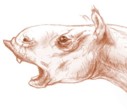
There were giants upon the earth in those daysPierre-Olivier Antoine
Published online: 16/07/2014 |
|

|
Rongeurs du Miocène supérieur de Chorora, Ethiopie: Murinae, Dendromurinae et conclusions.Denis Geraads
Published online: 30/07/2001 |
|

|
Les insectivores des phosphorites du QuercyJean-Yves CrochetPublished online: 15/11/1974Keywords: Insectivores; Quercy Phosphorites https://doi.org/10.18563/pv.6.1-2.109-159 Abstract Many types of insectivores have been described from specimens found in the Quercy phosphorites. These remains very often were not dated because they came from old collections. Recent excavations have permitted the situation of Amphidozotherium cayluxi FILHOL in the late Eocene. Two new genera are descrlbed based on material both from the old collections (Cryplotopos nov. g.) and from that recently recovered (Darbonetus nov. g., beginning of the middle Oligocene). Their systematic positions are revised and comparisons with American faunas are made. Amphidozotherium is not a talpid, but an erinaceoid belonging to an indeterminate family. Saturninia gracilis STHELIN is classified among the Nyctitheriinae, Myxomygale antiqua FILHOL among the Urotrichini Talpinae, and the genus Geotypus POMEL among the Scaptonichini Talpinae. A new study of the talpids from Auvergne has been rendered necessary. During the late Eocene and Oligocene precise morphology relationships existed between certain insectivores of Europe and North America. PV article infos Published in Vol. 06, Fasc. 1-2 (1974) |
|

|
Artiodactyla from the early Eocene of KyrgyzstanAlexander Averianov
Published online: 16/12/1996 |
|

|
Morphotypes dentaires actuels et fossiles des chiroptères vespertilionines. 2ème partie: implications systématique et phylogéniques.Henri MenuPublished online: 15/11/1987Keywords: Chiroptera; PHYLOGENY; Systematics; Vespertilionine https://doi.org/10.18563/pv.17.3.77-150 Abstract The first part of this study was devoted to a descriptive analysis of teeth morphologies among the vespertilionine bats. This leads now to a tentative synthesis, providing views on the systematics of the group. The results could be seen according to three distinct but closely related purposes : 1 - the sorting of the genera contents in order to conform the genera units to homogeneous taxa that could represent natural issues of evolutionary lineages ; 2 - the investigation of relationships between extant genera in order to infer the possibilities of common origin ; 3 - according to the preceeding items and to the observed evolutionary trends, a tentative phylogeny, modest and cautious. The contents of many genera are sorted : Leuconoe is removed from subgeneric to generic position, whereas Myotis becomes a subgenus of it ; the myotodont species are cleared away from the Pipistrellus genus ; Glischropus and Scotozous are synonymized within Pipistrellus ; Hypsugo is raised to the generic level ; some species previously ranged within Pipistrellus will form provisionally a collective group, Attalepharca nov. ; the Eptesicus genus is broken up, the excluded species being grouped within Nycterikaupius gen. nov. ; the Nycticeini tribe is defined again after exclusion of Otonycteris , Scotoecus, Scotophilus , and addition of Hesperoptenus ; the species la io and Pipistrellus tasmaniensis are removed to Eptesicus (n.s.) and Pipistrellus dormeri to Scotoecus. Groupings of genera are stated according to the main evolutionary trends of I1/. The relevance of these is often warranted by close morphologic similarities of other teeth. This leads to a recognition of the major evolutionary radiations which occurred in the group. The filiations schematized at the end of the work show the dental relationships observed between the extant genera, and could represent a phylogenic framework. Two major facts are to be underlined : 1- the early divergence of leuconoids ; 2 - the successives crossings to myotodonty from the nyctaloid flow. Fossil data from the literature are punctually and tentatively incorporated within phylogenic sketches. PV article infos Published in Vol. 17, Fasc. 3 (1987) |
|

|
Analysis of changing diversity patterns in Cenozoic land mammal age faunas, South AmericaLarry G. Marshall and Richard L. CifelliPublished online: 30/03/1990Keywords: Cenozoic; Chronofaunas; diversity; Equilibrium theory; Extinction; Land mammal faunas; Origination; South America https://doi.org/10.18563/pv.19.4.169-210 Abstract Comparison of various measurements of taxonomic evolution using stratigraphic range data for orders, families and genera of land mammals indicates several means by which deficiencies of the South American fossil record (e.g., presence of hiatuses, unequal temporal and geographic representation of ages, unequal systematic treatment) may be normalized, thus permitting a less distorted appreciation of diversity pattern and trend. Initial radiation of native taxa resulted in a relative equilibrium by early Eocene time. Subsequent increases in absolute diversity were apparently induced by immigration at the family level and by environmental factors at the generic level. Miocene through Pleistocene phases of faunal stability, herein characterized as chronofaunas, are punctuated by rapid turnover events resulting from a complex of factors, including adaptive radiation of immigrant taxa into unoccupied eco-space; environmental and concomitant habitat change induced by orogenic events of the Andes; and biotic interactions between native and immigrant taxa, including competition and prey naivete. The first two factors account for major faunal transitions in the South American middle and late Tertiary; immigration-induced turnover may have been of greater importance in shaping the character of the fauna upon the Great American Interchange and the arrival of man in the Neotropics PV article infos Published in Vol. 19, Fasc. 4 (1990) |
|
