|
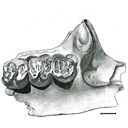
Les rongeurs de Chéry-Chartreuve et Rocourt-Saint-Martin (est du bassin de Paris; Aisne, France). Leur place parmi les faunes de l'Eocène Moyen d'Europe
Published online: 15/12/2012
Keywords:
Biochronology; evolution; Middle Eocene; Paris basin; Rodents; Systematics
https://doi.org/10.18563/pv.37.4-5.167-271
Abstract
This paper is mainly devoted to the systematics of rodents from two middle Eocene (Bartonian) localities: Chéry-Chartreuve and Rocourt-Saint-Martin (Aisne, Eastern Paris Basin). These two localities are stratigraphically located slightly above the Auversian sands. The two faunas, which comprise 11 and 8 taxa, respectively, are very different in their composition. That of Rocourt-Saint-Martin shows strong similarities with that of the geographically very close locality of Grisolles, referred to the MP16 mammalian Reference level. The very distinct fauna of Chéry-Chartreuve includes a new species of Ailuravinae, Ailuravus nov.sp, and some teeth of the theridomyid Protadelomys, which represent archaic elements in the fauna. The most abundant species of the locality represents a new genus of primitive Theridomyidae. The presence of some teeth belonging to a new species of large Remyinae, Remys nov. sp., of Elfomys engesseri HOOKER & WEIDMANN, and a population of small dimensions referred to the genus Estellomys allow a correlation with Les Alleveys (Switzerland), with however some differences that would indicate an older age for Chéry-Chartreuve. Situated at the base of the "Marinesian" from the Bassin de Paris, this fauna is unquestionably different from those referred to the MP16 reference level and could represent an older level for which the macrofauna remains very poorly known. Conversely, the comparison of rodents from La Livinière II with those present in MP16 faunas, especially those of Robiac (Gard), shows a great similarity between both localities. This casts doubts on whether to keep this La Livinière II faunule to define the current MP15 reference level, while the biostratigraphical position of Pontils 26 (Spain), previously referred to this level, is reconsidered. Chery Chartreuse could be a good candidate for a new definition of the MP15 reference level.
PV article infos
Published in Vol. 37, Fasc. 4-5 (2012)
|
PDF
|
|
Les Périssodactyles (Mammalia) du gisement Bartonien supérieur de Robiac (Éocène moyen du Gard, Sud de la France)
Published online: 04/05/2015
Keywords:
Chasmotherium; new species; Palaeotheriidae; paleoenvironments
https://doi.org/10.18563/pv.39.1.e3
Abstract
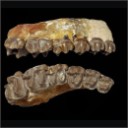
We present here a new updated counting of the perissodactyls of Robiac, the type locality of the MP 16 level of the biochronological scale of paleogene mammals and that of the Robiacian stage of Eocene Land Mammals Ages in Western Europe.
The outcrop of Robiac consists actually of two 500m apart loci, Robiac-Nord and Robiac-Sud, considered of the same age according to the current discriminating power, and is dated from -38,7 MA after the last faunal, magnetostratigraphic and climatic calibrations.
It has yielded a very abundant and rich of 21 taxa perissodactyl fauna, topped by the giant Lophiodon lautricense, last representative of the family Lophiodontidae, of which it is the last proved deposit. The Palaeotheriidae are much diversified with 5 genera and 9 species of "Pachynolophinae", 3 genera and 10 species of Palaeotheriinae. Nine taxa have been defined from Robiac: Chasmotherium depereti n. sp., Palaeotherium castrense robiacense Franzen, 1968, the genus Leptolophus Remy, 1965 with the species L. stehlini Remy, 1965 and L. magnus Remy, 1998, Anchilophus (Paranchilophus) jeanteti Remy, 2012, Metanchilophus chaubeti Remy, 2012, Lophiotherium robiacense Depéret, 1917 and Pachynolophus gaytei n. sp.
The faunal Robiac cenogram with the associated flora testify to a hot, wet and forestal environment, likely corresponding to a short warming climatic phase; the broken up fossil bones should have been carried away and then gathered in swamp areas along the banks of a meandering river.
The swarm of mammals of Robiac, the richest of contemporaneous deposits, has been followed by a drastic drop in perissodactyl diversity at the MP 17A level; a crisis which could have originated in a renewal of the global Eocene cooling. Fons 4, the type-locality of this level, is largely scarcer in perissodactyls and its cenogram testifies to a less diversified fauna, with on the whole smaller species, that likely means a cooler and drier climatic environment; a new perissodactyl diversification occurred but later.
PV article infos
Published in Vol.39-1 (2015)
|
PDF
|

|
Study of the Turolian hipparions of the lower Axios valley (Macedonia, Greece). 4. Localities of Dytiko.
Published online: 15/12/1988
Keywords:
Equidae; Greece; Hipparion; Lower Axios Valley; Macedonia; Mammalia; Turolian
https://doi.org/10.18563/pv.18.4.187-239
Abstract
The hipparions from the Dytiko localities of the lower Axios valley (Macedonia, Greece) are studied. The material comes from three localities Dytiko-l, 2, 3 (DTK, DIT, DKO), which are situated near the village of Dytiko, about 60 km northwest to Thessaloniki. Three species have been determined, the medium-sized H. mediterraneum, the small-sized H. matthewi and the very small-sized H. periafricanum. The determined Hipparion species, their morphological characters and their comparison with the other Axios valley material indicate a Late Turolian age for the Dytiko localities.
PV article infos
Published in Vol. 18, Fasc. 4 (1988)
|
PDF
|
|
Designating a lectotype for Mesacanthus pusillus (Gnathostomata: Acanthodii)
Published online: 03/03/2021
Keywords:
acanthodians; Chordata; Devonian; Midland Valley; Orcadian Basin
https://doi.org/10.18563/pv.44.1.e2
Abstract
The early gnathostome genus Mesacanthus is well represented in both Lower Old Red Sandstone and Middle Old Red Sandstone assemblages of northern and central Scotland. This ‘acanthodian’ taxon is currently thought to comprise two valid species: M. mitchelli and M. pusillus. Although the whereabouts of the holotype of M. mitchelli (NHMUK PV P560) is known, the syntype material for M. pusillus has long been thought lost. Here we identify at least one specimen that formed part of the original syntype material for M. pusillus, albeit in a slightly different condition than when it was originally figured. This specimen is ROM 25872, which is here designated as the lectotype. A second specimen – ELGNM 1978.191.1 – could represent another of the syntype specimens, but poor preservation quality makes it impossible to be certain.
PV article infos
Published in 44-1 (2021)
|
PDF
S.I. Data
|
|
Old world hemiones and new world slender species (Mammalia, Equidae)
Published online: 16/12/2008
Keywords:
Amerhippus; biometry; Equus; Holocene; New World; Old World; Osteology; Pleistocene; Pliocene
https://doi.org/10.18563/pv.36.1-4.159-233
Abstract
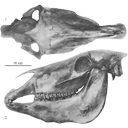
Morphological and biometrical description of skulls, teeth, and limb bones of extant and fossil Old World herniones (including E. hydruntinus) and of New World 'stilt-Iegged' and other slender species from Blancan to Holocene. An Appendix presents ways in which the approximate size of some missing bones or dimensions may be deduced from available ones.
The discussed and/or illustrated fossils were found in Bolivia (Tarija), Canada (Yukon), China (Choukoutien, Gulongshan, Jiling, Loufangzi), Ecuador (Oil Fields), Ethiopia (Melka Kunturé), France (Lunel-Viel), Germany (Süssenborn), Greece (Agios Georgios, Petralona), Hungary (Dorog), Italy (Romanelli), Mexico (Cedazo, San Josecito), Mongolia (Sjara-osso-gol), Spain (Venta Micena), ex-Soviet Union (Akhalkalaki, Binagady, Chokurcha, Chukochya, Kabazi, Kolyma, Krestovka, Kurtak, Staroselie, Tologoj), USA (Alaska, Arkalon, Cedar Meadow, Channing, Conkling, Dry Mountains, Hay Springs, Leisey Shell Pit A, Lissie Formation, Natural Trap, Pool Branch, Powers Ranch, Rock Creek, San Diego, Santo Domingo, Seymour Formation, Shelter, Slaton, Trinity River). Numerous raw or statistically elaborated data are given in Tables.
There is no evidence for the existence of Old World hemiones in the New World nor of 'stilt-Iegged' equids in the Old World. The first 'stilt-Iegged' equid was found at Santo Domingo, New Mexico, and is believed to be Late Blancan. It was probably at the origin of E. calobatus (Arkalon, Rock Creek) and of the smaller E. semiplicatus (Channing, Rock Creek). Slender, but not 'stilt-Iegged', equids found at Natural Trap, Wyoming, ca. 12 ky ago belong to Amerhippus. AlI these species share with Oid World Sussemiones (and some hemiones) peculiar patterns on the lower cheek teeth.
The slender Equus sp. B of Leisey Pit A, Florida, ca. 1.2 Ma, as weIl as Amerhippus francisci and E. tau (probably a senior synonym of E. quinni) share conventional lower cheek teeth patterns. The skulls of A. francisci and E. tau, however, are quite different.
Paleontological data suggest a common origin of Amerhippus, Sussemiones, and 'stilt-Iegged' equids during the late Blancan. Old World hemiones seem to have differentiated later.
PV article infos
Published in Vol. 36, Fasc. 1-4 (2008)
|
PDF
|
|
Enamel hypoplasia on rhinocerotoid teeth: Does CT-scan imaging detect the defects better than the naked eye?
Published online: 03/01/2022
Keywords:
fossil teeth; method; micro-CT imaging; Rhinocerotoidea
https://doi.org/10.18563/pv.45.1.e2
Abstract
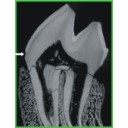
Micro-CT imaging is an increasingly popular method in paleontology giving access to internal structures with a high resolution and without destroying precious specimens. However, its potential for the study of hypoplasia defects has only recently been investigated. Here, we propose a preliminary study to test whether hypoplastic defects can be detected with micro-CT (μCT) scan and we assess the costs and benefits of using this method instead of naked eye. To do so, we studied 13 fossil rhinocerotid teeth bearing hypoplasia from Béon 1 (late early Miocene, Southwestern France) as positive control and 11 teeth of the amynodontid Cadurcotherium (Oligocene, Phosphorites du Quercy, Southwestern France), for which enamel was partly or totally obscured by cement. We showed that all macroscopically-spotted defects were retrieved on 3D reconstructions and selected virtual slices. We also detected additional defects using μCT scan compared to naked eye identification. The number of defects detected using μCT was greater in the Cadurcotherium dataset (paired-sample Wilcoxon test, p-value = 0.02724) but not for our control sample (paired-sample Wilcoxon test, p-value = 0.1171). Moreover, it allowed for measuring width and depth of the defects on virtual slices (sometimes linked to stress duration and severity, respectively), which we could not do macroscopically. As μCT imaging is both expensive and time consuming while not drastically improving the results, we recommend a moderate and thoughtful use of this method for hypoplasia investigations, restricted for instance to teeth for which enamel surface is obscured (presence of cement, uncomplete preparation, or unerupted germs).
PV article infos
Published in 45-1 (2022)
|
PDF
S.I. Data
|

|
Les Pseudosciuridae (Mammalia, Rodentia) de l'Eocène moyen de Bouxwiller, Egerkingen et Lissieu.
Published online: 30/10/1969
Keywords:
Bouxwiller; cranium; Egerkingen; Middle Eocene; Rodents
https://doi.org/10.18563/pv.3.2.27-64
Abstract
The description of new material from three classic middle Eocene localities of western Europe permits the addition of details to the systematics of primitive Pseudosciurids. The cranial anatomy of Protadelomys cartieri (STEHLIN and SCHAUB) from Egerkingen is described here and compared to that of the Adelomyines from the late Eocene, until now the only ones known. The morphologic and biometric study of the dentition of P. cartieri compared to that of P. alsaticus n. sp. from Bouxwiller and P. Iugdunensis n. sp. from Lissieu, forms respectively older and younger than P. cartieri, permits the evolutionary tendencies of the group to be demonstrated and shows that notable differences in age exist between these localities. This ensemble of forms can constitute a valuable guide lineage in the establishment of a fine stratigraphy of the period. Other less well known lineages are present at Egerkingen along with P. cartieri. They can be related to genera that have been noted int he late Eocene. In conclusion, a criticism of recent zonation proposals, made by divers authors, completes this article.
PV article infos
Published in Vol. 03, Fasc. 2 (1969)
|
PDF
|

|
Les gisements de Robiac (Eocène supérieur) et leurs faunes de Mammifères.
Published online: 05/04/1969
Keywords:
Fauna; Late Eocene; Mammalia; Robiac
https://doi.org/10.18563/pv.2.3.95-156
Abstract
Designated the type-locality of a late Eocene paleomammal zone, Robiac has recently been the object of important excavations. The first results of the new collecting, as well as a revision of the material in old collections, are given in this work.
Two stratigraphic section, cutting through the two sites presently distinguished (Robiac-Nord and Robiac-Sud) reveal the lithologic variation at the base of the Fons Limestone and the localization of three fossiliferous beds at Robiac-Sud.
The molluscan fauna and the flora (charophytes), which have already been described, as well as that of the lower vertebrates, have been listed.
A list of 46 mammalian species (only 16 species were known previous to 1964) has been established. The micro-mammals, nearly all new in this fauna (marsupials, insectivores, bats, rodents, primates, and some smallsized artiodactyls), Were obtained only after screen-washing of the matrix; about 4 tons of sediment were thus treated.
The artiodactyls have been the most extensively analyzed; 6 genera, of which one is new, have been recognized. The latter is described as Robiacina minum n.g., n.sp., and represents a very small artiodactyl of the family Anoplotheriidae. The taxonomie status of certain species formerly described has been clarified by the designation of lectotypes (Cebochoerus robiucensis, Catodonerium robiacense, Xiphodon castrense).
The paleontologic corrélations at present possible between the late Eocene faunas have allowed the relative positions of te different French localities of this age to be established; the Guépelle locality, it seems, could define in the future a new paleomammal zone.
PV article infos
Published in Vol. 02, Fasc. 3 (1969)
|
PDF
|
|
New material of “Eurysternidae” (Thalassochelydia, Pan-Cryptodira) from the Kimmeridgian of the Swiss Jura Mountains
Published online: 25/06/2020
Keywords:
Eurysternidae; Late Jurassic; morphology; Switzerland; Testudines; Thalassochelydia
https://doi.org/10.18563/pv.43.1.e2
Abstract
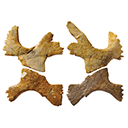
The region of Porrentruy (Swiss Jura Mountains) is known for its rich and diverse assemblage of Late Jurassic coastal marine turtles (Thalassochelydia). Dominated by the “Plesiochelyidae”, this assemblage also includes representatives of the two other thalassochelydian groups, the “Thalassemydidae” and “Eurysternidae.” In this study, we present new shell-based material from Porrentruy referable to eurysternids. One specimen represents a juvenile individual or a relatively small taxon, and is notably characterized by a well fenestrated plastron exhibiting a wider than long central plastral fontanelle. Two other specimens are much larger and possibly represent the largest eurysternids known to date. The fourth specimen is characterized by a unique plastral morphology otherwise only known in very small juveniles. This is the first time this unique plastral morphology is known to persist in an adult or subadult. The new material described herein represents at least three distinct taxa, all of them probably new. However, we refrain from naming new species based on this incomplete material in order to avoid adding confusion to an already complex taxonomical situation. This study provides new insights into the great diversity of eurysternids during the Late Jurassic.
PV article infos
Published in Vol 43-1 (2020)
|
PDF
|
|
New Late Miocene plecotine bats (Chiroptera, Vespertilionidae: Plecotini) from Gritsev, Ukraine
Published online: 07/03/2019
Keywords:
Barbastella; bats; late Neogene; Mammalia; Plecotus
https://doi.org/10.18563/pv.42.1.e2
Abstract
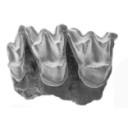
The Late Miocene site of Gritsev (MN 9, Ukraine) has yielded a very rich bat fauna, the remains of which are well preserved. Compared to other Neogene bat assemblages of Europe, the Gritsev bat community is unique in preserving plecotine bats, which are rare from Neogene sites. Some peculiar and new bat species, including a large plecotin Otonycteris, already were described from the Gritsev mammal site. Here we report new records of small plecotin bats from Gritsev, including a new taxon, Barbastella maxima nov. sp. This is the earliest reliable fossil record of this genus and it differs from more recent species of Barbastella in being considerably larger. The evolutionary patterns in the odontology within the tribe Plecotini, supported by biostratigraphical distribution of fossil records of Plecotus are discussed. The morphological peculiarities of the new fossils of plecotine bats from Gritsev are discussed in connection with its possible taxonomical affinity.
PV article infos
Published in Vol 42-1 (2019)
|
PDF
|
|
New remains of the very small cuckoo, Chambicuculus pusillus (Aves, Cuculiformes, Cuculidae) from the late Early/early Middle Eocene of Djebel Chambi, Tunisia
Published online: 15/02/2016
Keywords:
Cuckoos; Eocene; Fossil bird
https://doi.org/10.18563/pv.40.1.e2
Abstract
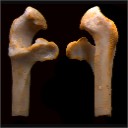
Abstract: A very tiny cuckoo, Chambicuculus pusillus, was recently described after a few fragments of tarsometatarsi from the late Early/early Middle Eocene of Djebel Chambi, Tunisia. New remains, notably a coracoid, confirm the attribution of this genus to the recent family Cuculidae. This coracoid shows a very elongate and strap-like processus procoracoideus. This morphological feature is otherwise only known in the family Cuculidae. The characteristics of the coracoid and tarsometatarsi show that Chambicuculus is morphologically more advanced over the other stem cuculids described in Europe and North America. Chambicuculus is the oldest Cuculidae known so far.
PV article infos
Published in Vol.40-1 (2016)
|
PDF
|

|
A new hypothesis for the origin of African Anomaluridae and Graphiuridae (Rodentia)
Published online: 16/12/1996
Keywords:
Africa; Anomaluridae; Gliridae; Graphiuridae; Paleontology; PHYLOGENY; Rodentia
https://doi.org/10.18563/pv.25.2-4.349-358
Abstract
A new hypothesis for the phylogenetic relationships of recent anomalurids and graphiurids is proposed, based on information from evolutionary lineages of Paleogene European rodents, particularly Gliridae, and Eocene Algerian Zegdoumyidae. Differences in first occurrences, in paleogeography, and in infraorbital structure in glirids (protrogomorphy and pseudomyomorphy) and graphiurids (hystricomorphy) separate Graphiuridae from Gliridae (Graphiurinae is here raised to family rank). Similar considerations, and dental morphology, suggest that Anomaluridae (appearing in the late Eocene) and Graphiuridae (appearing in the Pliocene) are related to early Eocene Zegdoumyidae.
PV article infos
Published in Vol. 25, Fasc. 2-4 (1996)
|
PDF
|

|
The Pleistocene vertebrate fauna of Robinson Cave, Overton County, Tennessee
Published online: 20/01/1969
Keywords:
Fauna; Mammalia; Pleistocene; Tennessee
https://doi.org/10.18563/pv.2.2.25-75
Abstract
A late Pleistocene deposit of 60 species of vertebrates and 12 of invertebrates is described from Robinson Cave, Overton County, Tennessee, U.S.A. Forty-eight species of mammals are represented by at least 2,483 individuals; 10 % are extinct, 10 % occur in the state only as boreal relicts in the Great Smoky Mountains; 23 % no longer occur as far south as Tennessee; 57 % occur at or near the site today. Nínety-one percent of the Recent mammal species can be found living today in the Minnesota-Wisconsin area, approximately 10 degrees farther north. Fluorine analysis suggests a long period of accumulation. The following 10 mammalian species are recorded from Tennessee for the first time. Sorex arcticus, Microsorex hoyi, Citellus tridecemlineatus, Clethrionomys gapperi, Microtus pennsylvanicus, Synaptomys cooperi, Synaptomys borealis, Zapus nudsonius, Napaeozapus insignis, Martes americana. Six additional species are present as boreal relicts in the Great Smoky Mountains of eastern Tennessee but not at the site today : Sorex cinereus, Sorex dispar, Sorex palustris, Parascalops breweri, Glaucomys sabrinus, Mustela nivalis. Six forms are extinct: Canis dirus, Ursus americanus amplidens, Sangamona furtiva, Dasypus bellus, Mammut americanus,Megalonyx jeffersoni. Twenty-six additional species of mammals, all of the snails, birds, reptiles, and amphibians recovered from the fauna still inhabit the area today: The fauna is indicative of a cold-temperate climatic episode associated with the Wisconsin glaciation, but may be chronologically mixed.
PV article infos
Published in Vol. 02, Fasc. 2 (1969)
|
PDF
|

|
Contribution à l'étude des Cricétidés oligocènes d'Europe occidentale
Published online: 20/01/1972
Keywords:
Cricetidae; Europe; Oligocene
https://doi.org/10.18563/pv.5.1.1-44
Abstract
Of the ten cricetid species from the Oligocene of Western Europe, attributed until now to the genus Eucricetodon, only four prove to be utilizable - E. atavus, E. huberi, E. praecursor, E. collatum - to which it is possible to add two forms newly described: E. huerzeleri and E. quercyi. The evolullon of the genus Pseudocricetodon is also the subject of new observations. The study of the dental morphology allows us to distinguish in these two genera three lineages beginning in the middle Oligocene:
- Lineage P. montalbenensis-P. thaleri (from Montalban to Goderet), of small size, without
increase in size.
- LineageE. atavus-E. infralactorensis (from Hoogbulsel to Estrepouy), of middle size, with a regular increase in size.
- Lineage E. huerzeleri-E. haslachense (level of Montalban to that of Estrepouy), of large size, with an increase in size.
Two other forms are equally represented in these loealitles: Heterocricetodon aff. helbengi and Melissiodon quercyi. It has been possible to attribute a precise age (zone of "Cournon") to the last species, which has been defined by Schaub (l925) from material in the Old Quercy collections. The genera Pseudocricetodon, Eucricetodon, ? "Cricetodon", Leydimys, Eumys, differentiated at the beginning of the middle Oligocene in Europe, Asia and North America, seem to derive from a common ancestral group. The place of origin of this group could be situated in Asia.
PV article infos
Published in Vol. 05, Fasc. 1 (1972)
|
PDF
|
|
A new and primitive species of Protophiomys (Rodentia, Hystricognathi) from the late middle Eocene of Djebel el Kébar, Central Tunisia
Published online: 02/06/2014
Keywords:
Adaptive radiation; Bartonian; Dental morphology; North Africa; Paleobiogeography
https://doi.org/10.18563/pv.38.1.e2
Abstract
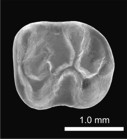
Based on fossil discoveries and phylogenetic studies, an Eocene Asian origin for hystricognathous rodents and anthropoid primates has gained strong support in recent years. The two groups then invaded both Africa and South America, which promoted their evolutionary success. However, the fossil record has so far failed to constrain the nature and precise timing of these pivotal dispersal events. In Africa, given the apparent absence of hystricognaths and anthropoids in early to early middle Eocene localities, it is suggested that these mammal groups dispersed from Asia to Africa sometime during the middle Eocene. In this paper, we report the discovery of several isolated teeth of a rodent from a new vertebrate locality situated in central Tunisia (Djebel el Kébar, KEB-1), dating from the late middle Eocene (Bartonian, ~39.5 Myr). These fossils document a diminutive new species of Protophiomys (P. tunisiensis nov. sp.), a basal genus of hystricognathous rodents which is well known from several North African mammalian-bearing localities of the end of the Eocene. The teeth of P. tunisiensis display a suite of anatomical details comparable with those observed in the other species of the genus, but with a lesser degree of development. Such an apparent primitive evolutionary stage is corroborated by the greater antiquity of this Tunisian species. P. tunisiensis nov. sp. is so far the most ancient representative of hystricognaths in Africa. However, it can be expected that hystricognaths were already present on that landmass given the new data on early caviomorphs recently reported from South America (at ~41 Myr). The arrival of hystricognaths in Africa from South Asia certainly predates the depositional period of the Kébar sediments, but perhaps not by much time.
PV article infos
Published in Vol.38-1 (2014)
|
PDF
|

|
Observations sur des remaniements structuraux post-mortem dans des dents de mammifères fossiles provenant des phosphorites du Quercy
Published online: 01/12/1974
Keywords:
Quercy Phosphorites; rearrangements; Teeth
https://doi.org/10.18563/pv.6.3-4.163-176
Abstract
Deux types de remaniements post mortem me paraissent caractéristiques de l'état de conservation des dents de mammifères fossiles dans les Phosphorites du Quercy :
1) Des destructions localisées d'origine biologique, sous forme de galeries de morphologie très variable creusées dans la dentine et le cément, et impliquant sans doute la participation de différents types de micro-organismes. Ces altérations se sont développées peu de temps après la mort, avant la fossilísation proprement dite et se sont rapidement arrêtées après l'enfouissement dans le sédiment phosphaté.
2) Des perturbations dans les structures de la dentine liées aux variations locales de minéralisation, provoquées par une imprégnation diffuse des zones les moins calcifiées par divers minéraux et probablement surtout de l`apatite.
PV article infos
Published in Vol. 06, Fasc. 3-4 (1975)
|
PDF
|

|
A new species of chimaeroid fish from the upper Paleocene (Thanetian) of Maryland, USA
Published online: 29/10/1991
Keywords:
Chimaeroid nov. sp.; Maryland; U.S.A.; Upper Paleocene
https://doi.org/10.18563/pv.21.1-2.85-94
Abstract
The recent discovery of several mandibular toothplates of a chimaeroid fish at a dig in the area of the Landover Mall, near Landover, Prince Georges County, Maryland, brings to our attention a new species of the chimaeroid, Ischyodus.
Although superficially reminiscent of the European chimaeroid toothplates of Ischyodus thurmanni (cf. text-fig. 2), I. williamsae nov. sp. probably has a more closer relationship to I. bifurcatus CASE, 1978, of the Upper Cretaceous of New Jersey and Delaware.
PV article infos
Published in Vol. 21, Fasc. 1-2 (1991)
|
PDF
|

|
Les gangas (Aves, Columbiformes, Pteroclidae) du Paléocène et du Miocène inférieur de France.
Published online: 11/02/1993
Keywords:
Birds; evolution; Lower Miocene; New taxa; Oligocene; Paleoecology; Paulhiac; Quercy Phosphorites; Saint-Gérand-Ie-Puy; Sandgrouse; Upper Eocene
https://doi.org/10.18563/pv.22.2-3.73-98
Abstract
The two species of Sandgrouse from Quercy, Pterocles validus MILNE-EDWARDS and P. larvatus MILNE-EDWARDS, are ascribed to the genus Archaeoganga MOURER-CHAUVIRÉ which includes a third, very large species, A. pinguis. The Sandgrouse of Saint-Gérand-le-Puy, Pterocles sepultus MILNE-EDWARDS, is ascribed to a new genus, Leptoganga. This form appears in the Upper Oligocene of Quercy, in Pech Desse and Pech du Fraysse localities, and is still present in the Lower Miocene of Saint-Gérand-le-Puy and Paulhiac. Recent Sandgrouse live in semidesert or desert areas. The indications provided by mammal and bird faunas in the localities where sandgrouse were found, confirm that the paleoenvironment was open and arid. The morphological study of these fossils indicates that, in the Upper Eocene, the Pteroclidae were already completely individualized with respect to Charadriiformes.
PV article infos
Published in Vol. 22, Fasc. 2-3 (1993)
|
PDF
|

|
Die Ohr-Region der Paulchoffatiidae (Multituberculata, Ober-Jura).
Published online: 15/11/1988
Keywords:
Multituberculata; Ober-Jura; Paulchoffatiidae; Petrosum; Portugal
https://doi.org/10.18563/pv.18.3.155-185
Abstract
The petrosal of the Paulchoffatiidae HAHN, 1969 is described and compared with that of younger multituberculates and of other Mesozoic mammals. The "Morrison petrosal", described by Prothero (1983), is also discussed; it probably belongs to the multituberculates. The reconstruction of the ventral side of the Paulchoffatiinae-skull, given by Hahn in 1987, is completed by addition of the otic and the occipital region.
PV article infos
Published in Vol. 18, Fasc. 3 (1988)
|
PDF
|
|
Comparative bone histology of rhabdodontid dinosaurs
Published online: 17/11/2014
Keywords:
bone histology-based ontogeny; Mochlodon; Rhabdodon; skeletal maturation; Zalmoxes
https://doi.org/10.18563/pv.38.2.e1
Abstract
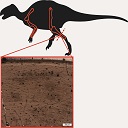
A comparative bone histological study of the three known genera of the endemic European ornithopod dinosaur family, Rhabdodontidae, is presented here in an ontogenetic context. Investigated specimens were assigned to different ontogenetic stages based exclusively on the histological indicators of osteologic maturation during diametrical bone growth; an entirely size-independent method as opposed to most previous studies. Qualitative comparison of bone histology of corresponding ontogenetic stages and elements among the three valid rhabdodontid genera, Mochlodon, Zalmoxes, and Rhabdodon, revealed some consistent patterns. Genus specific histological differences within Rhabdodontidae are most expressed between Rhabdodon and the Mochlodon-Zalmoxes clade. These indicate a prolonged phase of fast growth and a less constrained cyclicity in the growth dynamics of Rhabdodon, as opposed to the slower and more regulated growth strategy reflected in the bones of Mochlodon and Zalmoxes. These genus specific differences are consistent with the phylogenetic interrelation of the genera and are most probably related to the pronounced differences in body size. However, when compared to other ornithopods, most detected histological features in rhabdodontids do not seem to reliably reflect either phylogenetic relations or body size. A notable common feature of all rhabdodontid genera irrespective of body size is the ontogenetically early onset of cyclical growth and secondary remodelling; a pattern that more resembles the condition found in derived ornithopods than that described in more basal taxa which are closer relatives of rhabdodontids. The recognition of taxon-specific histological patterns as well as patterns indicative of ecological and thereby functional traits clearly requires more accurate, preferably quantitative evaluations.
PV article infos
Published in Vol.38-2 (2014)
|
PDF
|