
Abstract book of the 18th Conference of the EAVP
Pterosaurs from Coahuila
New elephant cranium from early Pliocene Ileret, Kenya
Les sélaciens du Miocène de la région de Montpellier
Muridae du Pliocène supérieur d'Espagne et du midi de la France.
Contribution à l'étude des genres Gliravus et Microparamys.
Eocene (57) , Quercy Phosphorites (38) , Systematics (32) , Rodents (29) , Mammalia (27) , Rodentia (25) , Miocene (25)
Page 10 of 19, showing 20 record(s) out of 366 total

|
Osteology of Prolagus sardus, a Quaternary Ochotonid (Mammalia, Lagomorpha).Mary R. DawsonPublished online: 21/06/1969Keywords: Lagomorpha; Ochotonidae; Prolagus https://doi.org/10.18563/pv.2.4.157-190 Abstract Prolagus sardus is the last representative of the diverse lineages of European endemic ochotonids. It is also the most abundant in the collections. The previous studies made of this species have established rather well its dental morphology, its phylogenetic position, its geographic and temporal distribution, and its intraspecific individual variation. On the other hand, no osteologic study has fully utilized the superb material from Corsica and Sardinia collected by Forsyth Major. PV article infos Published in Vol. 02, Fasc. 4 (1969) |
|

|
Additions of the Geiseltal mammalian faunas, Middle Eocene: Didelphidae, Nyctitheriidae, Myrmecophagidae.Gerhard Storch and Hartmut HauboldPublished online: 04/12/1989Keywords: Edentata; Geiseltalian; German Democratic Republic; Lipotyphla; Marsupialia; MP 11-13 https://doi.org/10.18563/pv.19.3.95-114 Abstract New and hitherto unpublished mammals from the stratigraphical levels Unterkohle, Untere Mittelkohle and Obere Mittelkohle of the Geiseltal near Halle, GDR, are described (= biochronological levels MP 11-13, Geiseltalian sensu Franzen & Haubold 1986a, b). The marsupial taxa Amphiperatherium aff. maximum (MP 12), A. goethei (MP 12), and Peratherium aff. monspeliense (MP 12 and 13) are recorded for the first time. A lectotype for Amphiperatherium giselense is designated, and the alleged primate Microtarsioides voigzi is assigned to Marsupialia, incertae sedis. A new insectivore species, Saturninia ceciliensis n. sp., is described (MP 13). The anteater Eurotamandua joresi is recorded for the first time outside its type locality, Grube Messel, FRG (MP 11). The present humerus and ulna display the autapomorphic features of the myrmecophagids. PV article infos Published in Vol. 19, Fasc. 3 (1989) |
|

|
Contributions à l'étude du gisement miocène supérieur de Montredon (Hérault). Les grands mammifères. Avant propos.Bernard SigéPublished online: 15/11/1988Keywords: Editorial; Mammalia; Montredon; Upper Miocene https://doi.org/10.18563/pv.18.ext.1-2 Abstract Le Mémoire Extraordinaire 1988 de PALAEOVERTEBRATA regroupe dix articles consacrés au gisement à mammifères du Miocène supérieur de Montredon (Hérault), connu et classique depuis la fin du siècle dernier, et auquel est lié le nom du savant paléontologue lyonnais Charles Depéret. View editorial Published in Vol. 18, Ext (1988) |
|

|
Nouvelles données sur les mammifères du Thanétien et de l'Yprésien du bassin d'Ouarzazate (Maroc) et leur contexte stratigraphique.Emmanuel Gheerbrant
Published online: 15/12/1998 |
|

|
Les insectivores des phosphorites du QuercyJean-Yves CrochetPublished online: 15/11/1974Keywords: Insectivores; Quercy Phosphorites https://doi.org/10.18563/pv.6.1-2.109-159 Abstract Many types of insectivores have been described from specimens found in the Quercy phosphorites. These remains very often were not dated because they came from old collections. Recent excavations have permitted the situation of Amphidozotherium cayluxi FILHOL in the late Eocene. Two new genera are descrlbed based on material both from the old collections (Cryplotopos nov. g.) and from that recently recovered (Darbonetus nov. g., beginning of the middle Oligocene). Their systematic positions are revised and comparisons with American faunas are made. Amphidozotherium is not a talpid, but an erinaceoid belonging to an indeterminate family. Saturninia gracilis STHELIN is classified among the Nyctitheriinae, Myxomygale antiqua FILHOL among the Urotrichini Talpinae, and the genus Geotypus POMEL among the Scaptonichini Talpinae. A new study of the talpids from Auvergne has been rendered necessary. During the late Eocene and Oligocene precise morphology relationships existed between certain insectivores of Europe and North America. PV article infos Published in Vol. 06, Fasc. 1-2 (1974) |
|

|
D'important restes de Diplobune minor FILHOL à Itardies (Quercy)Jean SudrePublished online: 15/11/1974Keywords: Diplobune; Quercy Phosphorites https://doi.org/10.18563/pv.6.1-2.47-54 Abstract Voici un résumé concis en trois phrases : PV article infos Published in Vol. 06, Fasc. 1-2 (1974) |
|

|
|
|

|
Un nouveau genre de ?Palaeotheriidae (Perissodactyla, Mammalia) décelé dans les phosphorites du Quercy (Eocène supérieur ou Oligocène) d'après un arrière crâne sans dents.Jean-Albert RemyPublished online: 15/06/1999Keywords: endocranial cast; Epitympanic sinus; Palaeotheriidae; Paléogène; Quercy Phosphorites; skull anatomy https://doi.org/10.18563/pv.28.1.75-87 Abstract A rear skull from the Quercy Phosphorites is described. It documents a new perissodactyl genus, likely assignable to the family Palaeotheriidae and probably paleogene of age. Owing to the lack of any tooth, this family assignment remains however somewhat hypothetical. The specimen is firstly characterised by the presence of a wide epitympanic sinus swelling and hollowing the squamosal shell and the post-glenoid process. This cavity might make up a peculiar pattern of improvement for the hearing apparatus by carrying out a kind of drum near the middle ear, whereas the bony tympanic remains barely bulged and forms but a few developed auditory bulla. This pattern appears an outcome of a trend observed with many palaeotheriids, such as Plagiolophus. Furthermore, the endocranial cast shows a rather high degree of gyrencephaly for a paleogene mammal. The prominent lambdoidal crest points out a powerful nape musculature and a lowered head bearing. Consequently, it is assumed that such an animal was probably living in somewhat open places, at the expense of rather tough vegetables. It might have been accordingly provided with a semi-hypsodont, cement covered, "plagiolophoid" dentition. PV article infos Published in Vol. 28, Fasc. 1 (1999) |
|
|
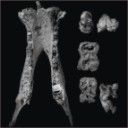
A new species of hippopotamine (Cetartiodactyla, Hippopotamidae) from the late Miocene Baynunah Formation, Abu Dhabi, United Arab EmiratesJean-Renaud Boisserie
Published online: 07/04/2017 |
S.I. Data |
|
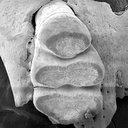
A new Desmodillus (Gerbillinae, Rodentia) species from the early Pliocene site of Langebaanweg (South-western Cape, South Africa)
|
S.I. Data |

|
Prospection paléontologique de la région de Torralba de Ribota (Burdigalien du bassin de Calatayud, prov. de Zaragoza, Espagne)Edouard Boné, Maria T. Alberdi
Published online: 01/10/1980 |
|

|
Nouvelles espèces de Dendromus (Rongeurs,Muriodea) à Langebaanweg (Pliocène,Afrique du Sud) conséquences stratigraphiques et PaléoecologiquesChristiane Denys
Published online: 20/05/1994 |
|

|
Cricetid and arvicolid rodents of the California wash local fauna, late Blancan of the san Pedro Valley, Arizona.Cristiana MezzabottaPublished online: 15/12/1997Keywords: Arvicolidae; Blancan; Cenozoic; Cricetidae; Mammals https://doi.org/10.18563/pv.26.1-4.189-218 Abstract An assemblage of micromammals is reported from California Wash, a fossil bearing continental deposit in the San Pedro Valley, Arizona, late Blancan in age. Cricetid and Arvicolid rodents are richly represented, including four and two species, respectively. This study mainly focuses on Sígmodon, the most abundant form. The sample of Sigmodon is compared to samples of the same genus from other localities of the San Pedro Valley of comparable age, and some inferences on the taxonomy of the genus are attempted. The specimens are referred to Sigmodon minor and Sigmodon cf. S. curtisi. Other cricetids (Onychomys pedroensis and Baiomys brachygnathus) and arvicolids (Mictomys vetus and Ondatra ídahoensis) are also recognized and described. PV article infos Published in Vol. 26, Fasc. 1-4 (1997) |
|

|
Eurodexeinae, eine neue unterfamilie der Artiodactyla (Mammalia) aus dem unter- und mitteleozän europasJorg Erfurt and Jean SudrePublished online: 16/12/1996Keywords: Artiodactyls; Eocene; evolution; Germany; Lutetian; new genus; New subfamily https://doi.org/10.18563/pv.25.2-4.371-390 Abstract Dichobunoid artiodactyls are described in this paper from the middle Eocene Geiseltal lignite deposits near Halle (Sachsen-Anhalt, Germany). The genera Eurodexis and Parahexacodus are established based on odontologica1 studies. The type-species are E. ceciliensis (FRANZEN & KRUMBIEGEL, 1981) and P. germanicus n. sp. from the "obere Mittelkohle" (see text), MP 13. The genera are referred to the new subfamily Eurodexeinae (Dichobunidae, Artiodactyla, Mammalia), which also contains the monospecific genus Eygalayodon SUDRE & MARANDAT, 1993. These new genera show many features similar to North American homacodontids and antiacodontids. They exemplify a high degree of diversity in European dichobunids. Moreover, the family Dichobunidae includes the Dichobuninae and the Hyperdichobuninae. The connection of the posthypocristid with the postentocristid, the shift of a medial to a lingual position of the hypoconulid on the lower molars and the development of a large, caniniform P1 are regarded as the principal tendencies of the eurodexeines. The entoconid is larger and more mesially situated compared to that of Diacodexis. The hypoconulid has a lingual position on a broad postcingulid. The elongation of the premolars and the presence of diastemata are considered associated with extension of the muzzle. This and the acute tubercles of the molars could indicate a limited degree of insectivory. Protodichobune cf. oweni and Diacodexis cf. varleli, first reported here from the "untere Unterkohle" (MP 11) of the Geiseltal, demonstrate the existence of forms in the basal part of the middle Eocene, that are direct descendants of lower Eocene ones. Eurodexis russelli n. sp. from MP 10 of Premontre is the most primitive representative of Eurodexis. A further part of this lineage could be Messelobunodon sp. from MP 11 of Messel (Germany). Another form from Premontre, referred to Eurodexeinae indet., represents the origin of the lineage to Parahexacodus germanicus n. sp. from the Geiseltal (MP 13). The identification of several lineages in MP 10 is evidence of an adaptive radiation during this time. Unfortunately the history of the earlier species of Diacodexis is not known well enough to exclude earlier diversifications. Our study shows the independent development of artiodactyls at the end of the lower Eocene in Europe, North America (and maybe in Asia) with much convergence. The question of the geographic origin of the genus Diacodexis is still open. PV article infos Published in Vol. 25, Fasc. 2-4 (1996) |
|

|
Skeleton of early Eocene Homogalax and the origin of PerissodactylaKenneth D. RosePublished online: 16/12/1996Keywords: Eocene; Homogalax; Perissodactyla; Skeletal Anatomy https://doi.org/10.18563/pv.25.2-4.243-260 Abstract The first good skeletal remains of Homogalax protapirinus from the Wasatchian of the Bighorn Basin, Wyoming, indicate that this primitive tapiromorph was more plesiomorphic in many features than primitive equoids including Hyracotherium. Compared to Hyracotherium, Homogalax more closely resembles Phenacodonta (the closest outgroup of Perissodactyla for which postcrania are known) in various details of articular surfaces, muscle attachments, and proportions of the humerus, manus, and pes.Among known taxa, Homogalax most nearly approximates the plesiomorphic postcranial skeletal anatomy of Perissodactyla. PV article infos Published in Vol. 25, Fasc. 2-4 (1996) |
|

|
Lower Paleogene crocodilians from Silveirinha, Portugal.Miguel T. Antunes
Published online: 15/10/2003 |
|

|
Contributions à l'étude des micromammifères du gisement Miocène supérieur de Montredon (Hérault). 1- Le gisementJean-Pierre Aguilar and Jean-Yves CrochetPublished online: 30/06/1982Keywords: Hérault; Late Miocene; Micromammals; Montredon https://doi.org/10.18563/pv.12.3.75-79 Abstract La localité fossilifère du Puech de Montredon, désignée plus communément sous le nom de Montredon, est située sur la commune de Montouliers (Hérault) à quelques 300 mètres de la limite avec le département de l'Aude. Elle a été découverte en 1845 par Narbonne, Directeur des Mines de La Caunette, et de très nombreux restes de vertébrés continentaux y ont été extraits. La plus ancienne mention de ce gisement dans la littérature semble être celle de Lartet (1859) qui signale que "M. Jourdan, de Lyon, a constaté à Montredon, près de Bize (Aude), l'association des restes de Dinotherium avec l'Hipparion". PV article infos Published in Vol. 12, Fasc. 3 (1982) |
|

|
Etude paléoneurologique comparative de Parabos Cordieri (De Christol), un bovidae (Mammalia, Artiodactyla) du Pliocène d'Europe Occidentale.Catherine GromolardPublished online: 31/03/1982Keywords: Bovidae; endocranial cast; Europe; Pliocene https://doi.org/10.18563/pv.12.2.57-74 Abstract A skull of Parabos cordieri, undamaged by fossilisation, allows us to make an endocranial cast, which is compared to those of Bos taurus, Boselaphus tragocamelus and Hippotragus equinus. These are studied by general form (shape, volume, « rolling-up›› and inclination), and by detailed morphology (gyri and sulci patterns, rete mirabile, importance of rhinencephalon and cerebellum). PV article infos Published in Vol. 12, Fasc. 2 (1982) |
|
|
Angolabatis nom. nov.,a replacement name for the Cretaceous genus Angolaia Antunes & Cappetta, 2002 (Chondrichthyes: Rajiformes), a preoccupied name.Miguel T. Antunes
Published online: 15/10/2006 |
|

|
Les crocodiliens paléogenes du Tilemsi (Mali): un aperçu systématiqueEric Buffetaut
Published online: 01/10/1980 |
|
