
Abstract book of the 18th Conference of the EAVP
Pterosaurs from Coahuila
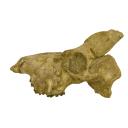
New elephant cranium from early Pliocene Ileret, Kenya
Les sélaciens du Miocène de la région de Montpellier
Muridae du Pliocène supérieur d'Espagne et du midi de la France.
Contribution à l'étude des genres Gliravus et Microparamys.
Eocene (57) , Quercy Phosphorites (38) , Systematics (32) , Rodents (29) , Mammalia (27) , Rodentia (25) , Miocene (25)

|
This review critiques the third edition (1986) of The Animals (Systematische Zoologie), a descriptive zoology textbook first published in 1976. The book focuses on morphology, taxonomy, and basic anatomy of animal groups, with occasional notes on distribution, habits, and economic/medical significance.Leigh M. Van ValenPublished online: 15/04/1986Keywords: Book review; Systematics https://doi.org/10.18563/pv.16.1.55 Abstract THE ANIMALS. Systematische Zoologie by A. REMANE, V. STORCH, and U. WELSCH. 1986, Edition 3. Cloth and paperbound. Stuttgart and New York : Gustav Fischer Verlag. xvi + 698 pp. DM 86. (Geb.) & DM 72 (kart.). PV article infos Published in Vol. 16, Fasc. 1 (1986) |
|

|
Analyse d'ouvrage: “M. ARSENAULT, H. LELIÈVRE & P. JANVIER (Eds.): Etudes sur les vertébrés inférieurs — VII e Symposium International, Parc de Miguasha, Québec, 9- 22 Juin 1991 (1994)”Alain BlieckPublished online: 18/03/1996Keywords: Book review https://doi.org/10.18563/pv.25.1.51-53 Abstract Etude sur les vertébrés inférieurs (VIIe Symposium International, Parc de Miguasha, Québec, 9-22 Juin 1991), édité par Marius ARSENAULT, Hervé LELlÈVRE & Philippe JANVIER, 1994. Bulletin du Muséum National d'Histoire Naturelle, Paris, 4e Série, T. 17, Section C, n° 1-4, 529 p. PV article infos Published in Vol. 25, Fasc. 1 (1996) |
|
|
Miocene Bovidae (Mammalia) of the Siwaliks, Part 1: Hypsodontinae and Bovinae.Alan Gentry, Nikos Solounias
Published online: 30/07/2026 |
S.I. Data |

|
Repartition et dynamisme des faunes de Lacertilia et d'Amphisbaenia dans l'Eocène EuropeMarc AugéPublished online: 11/02/1993Keywords: Amphisbaenia; climate; Endemism; Eocene; Europe; Lacertilia; Metabolism https://doi.org/10.18563/pv.22.2-3.51-71 Abstract The composition of assemblages of lizards and Amphisbaenian from the European Eocene are described. At least ten lizard families are identified from the lower European Eocene levels. Eight are still recorded in the last level (Escamps) of the late Eocene. Agamid lizards (genus Tinosaurus) died out by the end of the lower Eocene and Varanid lizards (genus Saniwa) disappeared by the beginning of the late Eocene. Amphisbaenians are recorded throughout the Eocene in Europe. The lacertilian fossil record of Europe and North America show a high degree of faunal resemblance in the early Eocene, followed by a decrease during the later part of the epoch. The lacertilian and amphisbaenian faunas from the European Eocene are not subject to great variations during the period; this is in contrast with the mammal record at the same time. It is argued that the low metabolic rates and the ectothermy of lizards could explain those differences, along with the increasing insularity of the West European area during the late Eocene time. PV article infos Published in Vol. 22, Fasc. 2-3 (1993) |
|

|
Un nouveau type de coquille d'oeuf présumé Dinosaurien dans la Campanien et le Maestrichtien continental de Provence.Philippe KerourioPublished online: 04/10/1982Keywords: Campanian/Maastrichtian; eggshell microstructure; Provence https://doi.org/10.18563/pv.12.4.141-147 Abstract The discovery of eggshells of ornithoid type is signaled for the first time in the continental Campanian and Maastrichtían of Provence. The taxonomie relationship of these eggshells and their interest in the biostratigraphical study of Upper Cretaceous of Provence are discussed. PV article infos Published in Vol. 12, Fasc. 4 (1982) |
|

|
Owls, caves and fossils. Predation, preservation and accumulation of small mammal bones in caves, with an analysis of the Pleistocene cave faunas from Westbury-Sub-Mendip, Somerset, UK, par Peter Andrews, 1990. The University of Chicago Press, 232 p.Christiane Denys
Published online: 17/12/1992 |
|
