Print ISSN: 0031-0247
Online ISSN: 2274-0333
Frequency: biannual
stratigraphy and biochronology of Oligo-Miocene of Kazakhstan
Notidanodon tooth (Neoselachii: Hexanchiformes) in the Late Jurassic of New Zealand
Additions to the elasmobranch fauna from the upper Cretaceous of New Jersey (middle Maastrichtian, Navesink Formation)
Fossil snakes, Palaeocene, Itaborai, Brazil, Part I
Abstract book of the 18th Conference of the EAVP
Eocene (57) , Quercy Phosphorites (38) , Systematics (32) , Rodents (29) , Mammalia (27)
|
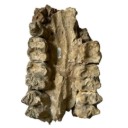
Revision of the historical collections of Pliocene-Pleistocene large mammals from Le Riège and Saint-Palais localities, near Pézenas (Southern France)Federica Mulè, Luca Pandolfi, Anne-Lise Charruault, Jean-Yves Crochet, Jérôme Ivorra, Fabrice Lihoreau, Laurent Marivaux, Mehdi Mouana, Félix Nesme, Céline Robinet, Philippe Münch and Pierre-Olivier AntoineKeywords: Hérault; Mammalia; Montpellier; Neogene; Quaternarydoi: 10.18563/pv.48.1.e2 Abstract Numerous “Quaternary” large-mammal fossils have been collected since the 1830s along the Le Riège stream, near Pézenas (Southern France). More than 120 specimens are stored in the collections of the Université de Montpellier (UM) under the name “Le Riège”. A major operation aiming at relocating the palaeontological collections of the University has made it possible to group together all the specimens of interest and launch their systematic revision for the first time. The fossils belong to the Reboul (1839; 51 samples) and de Christol (1865; 18 samples) Collections and 17 samples compose the Crochet & Ivorra Collection (1998). The remaining 38 samples have no mention about the exact time and location of their finding. We provide a critical inventory with literal transcription of inscriptions on specimens and historical labels. This revision confirms the presence of two distinct faunal assemblages under the name of “Le Riège”: Saint-Palais (Early Pliocene, MN14–15) and Le Riège sensu stricto (late Early Pleistocene, most likely MNQ19). The former assemblage, with coastal affinities, is composed of the ruminants Alephis sp. and Procapreolus cf. pyrenaicus, the rhinocerotid Pliorhinus megarhinus, the gomphotheriid Anancus arvernensis and marine mammals, all emblematic taxa for the Early Pliocene of Montpellier and Perpignan. The latter assemblage documents a late Early Pleistocene fluvio-volcanic sequence, yielding the bovid Bison (Eobison) spp., the cervid Eucladoceros cf. giulii, the hippopotamid Hippopotamus antiquus, the rhinocerotid Stephanorhinus etruscus, the equid Equus cf. altidens, and the elephantid Mammuthus cf. meridionalis, plus a few specimens of uncertain taxonomic affinities. This revision underscores the interest of revisiting historical collections and further provides a starting point for future research. Article infos in press |
|
S.I. Data |

|
Un crane de Chalicothere (Mammalia, Perissodactyla) du Miocène supérieur de Macédoine (Grèce) : remarque sur la phylogénie des ChalicotheiinaeLouis de Bonis, Geneviève Bouvrain, George D. Koufos and Pascal TassyKeywords: Chalicotheriidae; Cladistics; Greece; Miocene; Perissodactyla; PHYLOGENYAbstract The discovery in the Turolian (Late Miocene) of Dytiko 3 (Macedonia, Greece) of a complete skull with mandibles and cervical vertebrae, atlas and epistropheus, is a very important contribution to the knowledge of the subfarnily Chalicotheríinae. After the description, the comparison with other specimens of Miocene chalicotheres permits the revival of the generic name Macrotherium with a new species M. macedonicum. This genus is mainly characterized by a short snout and an inflated cerebral skull. It coexists during the Miocene with Chalicotherium. A cladistic analysis leads to conclusion that the species which has been described from the Early Middle Miocene of Rusinga must be identified as the type-species of a new genus: Butleria. Article infos Published in Vol. 24, Fasc. 1-2 (1995) |
|
|

|
Contributions à l'étude des micromammifères du gisement Miocène supérieur de Montredon (Hérault). 1- Le gisementJean-Pierre Aguilar and Jean-Yves CrochetKeywords: Hérault; Late Miocene; Micromammals; MontredonAbstract La localité fossilifère du Puech de Montredon, désignée plus communément sous le nom de Montredon, est située sur la commune de Montouliers (Hérault) à quelques 300 mètres de la limite avec le département de l'Aude. Elle a été découverte en 1845 par Narbonne, Directeur des Mines de La Caunette, et de très nombreux restes de vertébrés continentaux y ont été extraits. La plus ancienne mention de ce gisement dans la littérature semble être celle de Lartet (1859) qui signale que "M. Jourdan, de Lyon, a constaté à Montredon, près de Bize (Aude), l'association des restes de Dinotherium avec l'Hipparion". Article infos Published in Vol. 12, Fasc. 3 (1982) |
|
|

|
La poche à Phosphate de Ste-Néboule (Lot) et sa faune de vertebres du Ludien supérieur. 6- OiseauxCécile Mourer-ChauviréKeywords: Eocene; Quercy PhosphoritesAbstract There are very few birds in the site of Sainte-Néboule. They belong to three species already known in the "Phosphorites" : Paraortyx brancoi, Aegialornis broweri, Cypselavus gallicus, and to one new species, Recurvirostra santaeneboulae. The comparison of some different bones of the genus Cypselavus with some Apodiformes and Caprimulgiformes shows that this genus must be classified in the order Apodiformes. Article infos Published in Vol. 08, Fasc. 2-4 (1978) |
|
|

|
Les mammifères Montiens de Hainin (Paléocène moyen de Belgique) Part1: Multituberculés.Monique Vianey-LiaudKeywords: Belgium; Hainin; Mammals; multituberculates; PaleoceneAbstract The Montian locality of Hainin (Hainaut, Belgium) yielded about twenty teeth of Multituberculates. They are very peculiar forms, showing no affinities, at the generic level, with those hitherto known from North America, Asia and Europe. They are referred to the new taxa Boffius splendidus nov. gen., nov. sp., Hainina belgica nov. gen., nov. sp., and H. godfriauxi nov. gen., nov. sp. They expose some common features, such as the advanced type of first upper molar. possessing at least three complete rows of cusps. Because of this, and also of the upper premolar reduction, Boffius splendidus appears as the most specialized form within the Ptilodontoidea suborder. Article infos Published in Vol. 09, Fasc. 4 (1979) |
|
|
|
New datation of the Tafna Basin (Algeria): A combination between biochronological and magnetostratigraphical dataSalamet Mahboubi, Mouloud Benammi and Jean-Jacques JaegerKeywords: correlations; Late Miocene; North Africa; Rodentiadoi: 10.18563/pv.39.1.e1 Abstract The Tafna Basin corresponds to the lowlands, which are located in front of Tessala and Traras ranges, below the Tlemcen mountains, Algeria. This basin displays a complete sedimentary cycle dominated by lagoonal-fluvial and marine deposits. The continental formations located at the base of these deposits are mainly composed of alternating sandstones and clays. An early late Miocene age has been previously attributed to them, based on direct correlations with marine deposits. Search for micromammal fossils led to the discovery of three different rodent species from a single level of the Djebel Guetaf section, located at the bottom of these deposits. The rodent assemblage indicates a late Miocene age. Combined magnetostratigraphical and biostratigraphical investigations were carried out to provide a more accurate age control of these continental deposits. Sixty-four oriented rock samples were collected for a magnetostratigraphic study along a 92 meters thick section including the fossiliferous layer. Rock magnetic investigations indicate the presence of both high and low coercivity minerals. Specimens subjected to progressive thermal demagnetization procedures show that the samples exhibit a high temperature magnetization component and display a normal polarity. Based on biostratigraphic constraints, the Guetaf section is correlated with Chron C4An, indicating an age ranging from Article infos Published in Vol.39-1 (2015) |
|
|

|
Cryptomerix Schlosser, 1886, Tragulidé de l'oligocène d'Europe ; relations du genre et considérations sur l'origine des ruminants.Jean SudreKeywords: Archaic Ruminants; Paleobiogeography; Quercy Phosphorites; Systematics; TragulidsAbstract The genus Cryptomeryx SCHLOSSER, 1886, inusited during a long period, has been discovered in Lower and Middle Oligocene localities of the Quercy region (South-West France). This new material, as well as specimens from the old collections referred to Cryptomeryx, are described; their study, allows us precising the definition of the genus, and confirming its allocation to the Tragulidae family. The type species of the genus, Crypmmeryx gaudryi (= Lophiomeryx gaudryi FILHOL, 1877), occurs in several localities at the base of the Middle Oligocene (Itardies, La Plante 2, Roqueprune 2, Soulce, Herrlingen 1). The new species C. matsoui n. sp. has been defined in the older locality of Mas de Got (top of Lower Oligocene). It is possible that the species Pseudamphimeryx decedens STEHLIN, 1910 pertains to the same genus. Also to the Tragulids must be referred the monospecific genus Iberomeryx (I. parvus GABOUNIA, 1964) from Upper Oligocene of Benara (Georgie, URSS), with which Cryptomeryx is related. These genera are not direct ancestors of Miocene tragulids; their occurrence in the Western European Oligocene results from a first immigration wawe of the family. These Tragulids are one of the most archaic groups of Ruminants. They are probably derived from a primitive stock which had acquired in Asia the selenodont condition of the dentition. Article infos Published in Vol. 14, Fasc. 1 (1984) |
|
|

|
Contributions à l'étude des micromammifères du gisement Miocène supérieur de Montredon (Hérault). 2- Les rongeursJean-Pierre AguilarKeywords: Hérault; Late Miocene; Micromammals; Montredon; RodentsAbstract The recent excavation of the Upper Miocene locality of Montredon (Hérault) provides a rich material of Mammals. The present study deals with rodents. The new quarry is 10 meters above the classical Depéret's Quarry. No differences have been noticed between the rodent populations coming grom these two sites. The description of two new species : Hispanomys mediterraneus and Muscardinus heintzi is given and the dormouse Eliomys is recorded there for the first time. The new zonation of the Miocene given by Aguilar (1982) and the previously established correlations between marine and continental chronological scales give Tortonien age (estimated between 9 and 10 M.Y. old) to the site of Montredon, which belongs to the Mammal zone D 2. Article infos Published in Vol. 12, Fasc. 3 (1982) |
|
|

|
Les sélaciens du Miocène de la région de MontpellierHenri CappettaKeywords: Ichtyofauna; Miocene; Montpellierdoi: 10.18563/pv.3.ext.1-139 Abstract The utilization of screen-washing and attack by dilute acetic acid has permitted the collecting, in the Miocene of the department of Hérault (France), of a very rich ichthyofauna. This fauna is presently comprised of about 60 studied species, of which 11 are new, and represents, in the present state of knowledge, the most varied Miocene selachian fauna described in the world. Article infos Published in Vol. 3, Ext (1970) |
|
|

|
Second international symposium on Dinosaur, Eggs and Babies (Montpellier-Aix-en-Provence, 25-29 Août 2003).Monique Vianey-LiaudKeywords: amniotic eggshells; dinosaursAbstract Le premier Symposium International sur les ceufs de dinosaures et leurs petits a connu un francs succès, à Isona, en Catalogne (Espagne) en 1999. I1 faisait suite à la publication en 1994 d'un premier ouvrage "Dinosaurs eggs and babies" édité par K. Carpenter, K. Hirsch et J. Homer. Entre 1994 et 1999, les nouvelles découvertes ont augmenté significativement, notamment celles d'ceufs embryonnés, et le nombre de chercheurs impliqués dans ce domaine a accompagné cet accroissement. Jusque là, l'étude de ces objets, les coquilles d'ceufs, est restée longtemps marginale, faute d'une méthodologie scientifique appropriée. Article infos Published in Vol. 32, Fasc. 2-4 (2003) |
|
|

|
Equus caballus antunesi, nouvelle sous-espèce Quaternaire du PortugalJoao L. Cardoso and Véra EisenmannKeywords: Equidae; Equus caballus; new subspecies; Perissodactyla; Portugal; WürmAbstract Equus caballus antunesi, nova subspecies, was a hypsodont, slender, and rather small horse (around 141cm at the withers), with narrow hooves and protocones longer on P3/-P4/ than on M1/-M2/. It does not fit in any of the different "types" of Pleistocene caballine horses previously recognized but may be related to the horse from the Acheulean of Solana del Zamborino. Article infos Published in Vol. 19, Fasc. 2 (1989) |
|
|

|
Etude des dents jugales inférieures des Equus (Mammalia, Perissodactyla) actuels et fossilesVéra EisenmannKeywords: Cheek teeth; Equus; MammalsAbstract The comparative morphology and biometry of the lower cheek teeth of modern Equus are studied on approximately 300 mandibles belonging to the 10 usually recognised species : Equus grevyi, E. burchelli, E. quagga, E. zebra, E. africanus, E. asinus, E. hemionus, E. klang, E. przewalskii, E. caballus. The studied parameters comprise : occlusal length and width, postflexid length and index ; shape of the double knot (metaconid + metastylid + lingual groove) ; depth of the vestibular groove on the molars ; frequency of the pli caballinid, protostylid and other enamel plications or islets ; frequency of the dP/l. Article infos Published in Vol. 10, Fasc. 3-4 (1981) |
|
|

|
Table ronde sur les phosphorites du Quercy Montauban 15-16 Décembre 1972Louis Thaler and Jean-Louis HartenbergerKeywords: Quercy PhosphoritesAbstract Voici une centaine d'années débutait sur les Causses du Quercy l'exploitation des phosphorites qui devait permettre d'amasser des collections de Vertébrés fossiles uniques au monde. Ces fossiles firent l'objet de nombreuses publications et les noms de Filhol, Gaudry, Schlosser, Stehlin, Teilhard de Chardin sont attachés à ces premières études. Article infos Published in Vol. 06, Fasc. 1-2 (1974) |
|
|

|
Les Entélodontes des phosphorites du quercyMichel BrunetKeywords: Entelodontes; Quercy PhosphoritesAbstract The entelodonts of the Quercy phosphorites are essentially known from isolated teeth. The skull remains attributed to Entelodon magnum by Kowalewsky in 1876 and the type left mandible of Enteladon depereti RÉPELIN, 1918 do not belong to this family. From a morphologic point of view, the teeth from Quercy are quite comparable to those from the type localities of E. magnum and E. deguilhemi. In the absence of distinctive anatomical criteria between E. magnum (small species from the level of Ronzon) and E. deguilhemi (large species from the level of Villebramar) they are referred, according to their size, to one or the other of these two species. However, some of them are intermediate in size. Their existence speaks in favor of a close relationship between E. magnum and E. deguilhemi and confers a real stratigraphic interest to these entelodonts of Western Europe. Finally, some anatomical characters (notch on the mesial border of P4, presence of a paraconid joined to the metaconid, trigonid higher than talonid) considered until now as peculiar to the North American Archaeotherium and not yet cited in its European contemporary Entelodon have been brought to light on the teeth from Quercy. Article infos Published in Vol. 06, Fasc. 1-2 (1974) |
|
|

|
La poche à phosphate de Ste-Néboule (Lot) et sa faune de vertebres du Ludien supérieur. 12- Fissipèdes (Carnivores)Louis de BonisKeywords: Carnivora; Eocene; Quercy PhosphoritesAbstract Les Carnivores Fissipèdes de Sainte-Néboule appartiennent tous au genre Cynodictis et semblent constituer une population homogène. Celle-ci se distingue suffisamment des espèces déjà décrites pour constituer un taxon particulier : Cynodictis lacustris neboulensis n. s. sp. . L'étude des variations à l'intérieur de cette population nous a conduit à reconsidérer les critères utilisés pour définir les espèces existantes et à regrouper certaines d'entre elles. Il semble qu'il demeure cependant trois lignées distinctes dans le genre Cynodictis mais le matériel nous paraît encore insuffisant pour traduire cette remarque en termes de systématique. Article infos Published in Vol. 08, Fasc. 2-4 (1978) |
|
|
|
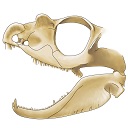
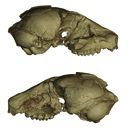
The skull of Tetraceratops insignis (Synapsida, Sphenacodontia)Frederik SpindlerKeywords: cranium; pelycosaur; Permian; therapsid originsdoi: 10.18563/pv.43.1.e1 Abstract Tetraceratops insignis is known from a single, crushed skull from the Lower Permian of Texas. Its unique proportions and osteological details gained central meaning in the question of the origins of Therapsida since this early synapsid has been determined as the oldest and less derived therapsid. Apart from Tetraceratops, the ‘mammal-like’ Therapsida and their sister, the pelycosaur-grade Sphenacodontidae, are separated by one of the longest ghost lineages in tetrapod fossil record. However, the minor, though well justified critique faced insistent publication regarding the therapsid hypothesis. A carefull re-evaluation of the holotypic skull reveals that therapsid traits cannot be supported, including a rejection of the formerly supposed adductor shelf in the temporal fenestra. Increased understanding of ‘pelycosaur’ character variation underlines a haptodontine-grade or, less likely, sphenacodontid position for Tetraceratops. Article infos Published in Vol 43-1 (2020) |
|
|
|
The digital endocast of Necrolemur antiquusArianna Harrington, Gabriel Yapuncich and Doug BoyerKeywords: brain evolution; Eocene; Omomyiforms; Primatesdoi: 10.18563/pv.43.2.e1 Abstract The study of endocasts, or casts of the endocranial space, have played an important role in shaping understanding of mammalian, and particularly primate, brain evolution. Recently, the reconstructions of three-dimensional virtual endocasts from high-resolution computed tomography images have allowed for the visualization and quantification of endocasts in several Paleocene and Eocene primate species. Here we present the virtual endocast of MaPhQ 289 (informally known as the Montauban 9 skull), a specimen of Necrolemur antiquus Filhol 1873, a middle to late Eocene European primate of the family Microchoeridae. The virtual endocast of MaPhQ 289 reveals a lissencephalic surface morphology with expanded temporal poles and minimal overlap of the cerebellum or olfactory bulb by the cerebrum, which closely resembles the morphology of the endocast of its contemporary relative, Microchoerus erinaceus (Primates, Microchoeridae). MaPhQ 289 yields an endocranial volume (ECV) of 2.36 cm3, about 60% smaller than the volume of the most commonly cited ECV of N. antiquus. Thus, the size of the brain of N. antiquus relative to its body size is likely to be smaller than has been reported in previous literature, highlighting the importance of corroborating older ECV estimates with new evidence using 3-D imaging techniques. Related dataset Article infos Published in 43-2 (2020) |
|
|

|
Découverte d'un gisement de micromammifères d'âge Pliocène dans le bassin de Constantine (Algérie), présence d'un muridé nouveau : Paraethomys Athmeniae n.sp.Brigitte Coiffait and Philippe-Emmanuel CoiffaitKeywords: Algeria; Constantine; Micromammals; Muridae; PlioceneAbstract The study of that locality allowed the description of a new Muridae : Paraethomys athmeniae n. sp. It reveals the existence of new rodent for Algeria : first, a Sciuridae, Atlantoxerus cf. rhodius, and second, a Gliridae, Eliomys truci. So, that work shows the presence of the genus Eliomys in North Africa before the middle of Pleistocene. Lastly, Paraethomys cf. anomalus gives an exact datation of that bed. Article infos Published in Vol. 11, Fasc. 1 (1981) |
|
|

|
Le genre Leptolophus (Perissodactyla, Mammalia): morphologie et histologie dentaires, anatomie cranienne, implications fonctionnelles.Jean-Albert RemyKeywords: dental histology; Eocene; functional anatomy; Palaeotheriidae; skull anatomy; Southern France; SystematicsAbstract A strong lophodonty, an extreme heterodonty, some hypsodonty and regular overlayings of coronal cement are prominent features of the genus Leptolophus (Palaeotheriinae = Palaeotheriidae s.s.). The histological pattern of the teeth unusually joins type II enamel prisms, characteristic of advanced ungulates, together with archaic features, such as an almost complete lack of Hunter-Schreger zonation and a weak expanse of peritubular dentine. The skull is narrow and slender, with an elongated ante-orbital facial region, a moderately notched nasal aperture, a rather elongated post-canine diastem, parallel zygornatic arches and a fairly dorsally located squamoso-mandibular joint.The functional analysis brings to light "ectolophodont" masticatory cycles with two phases, in which maximum power was applied, contrary to equíds, on hindmost teeth; likewise, skull accomodations to increasing height of the teeth are quite different. This study leads to the assumption that Leptolophus may have been light mammals, living in rather open surroundings, browsing on herbaceous plants or leaves cropped close to the ground. Moreover, it appears that it could have been some inadequacy of dental structures to the dietary, which leaded to quick wear of the teeth and to many enamel notches, but had been somewhat balanced by the early increase of hypsodonty, not induced in such a case by a biotop deterioration (as it will happen at the end of the Eocene). This ínadaptation might account for the short duration of the genus Leptolophus, whose the 3 species, L. stehlini, L. nouletí and L. magnus n. sp. are indeed confined in the level MP 16. Its geographical spreading (as far as known, South of western Europe) and the morphological pattern of its dentition suggest that this genus would have been related to early upper Eocene endemic spanish forms. Article infos Published in Vol. 27, Fasc. 1-2 (1998) |
|
|
|
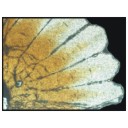
First report of Cylindracanthus (Osteichthyes) from the Eocene of IndiaPankal Kumar, Rajeev Patnaik, Deepak Choudhary, Rohit Kumar and Wasim Abass WazirKeywords: Cylindracanthus; Eocene; histology; rostrum; Umarsar mine.doi: 10.18563/pv.47.1.e2 Abstract Fossils of the endangered sturgeons and peddlefishes are widely distributed. We here report for the first time the presence of one of the extinct osteichthyes genus Cylindracanthus (Liedy 1856a) from the Early Eocene lignite-bearing successions of the Kutch Basin, India. The present well preserved rostrum is characterised by numerous wedge-shaped components encircling the central canal that runs along its length, paired at the base and each wedge contributing to the formation of a ridge. The rostrum lacks teeth. The present find extends the palaeobiogeographical distribution of Cylindracanthus considerably and supports its Eocene age as dental remnants preserved in Cylindracanthus sp. shows a decrease in remanent dentition and tooth bases from the Cretaceous to the Eocene. Cylindracanthus is an useful palaeoenvironmental indicator as it has been found associated typically with deposits of nearshore marine environments. Article infos Published in 47-1 (2024) |
|