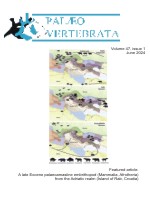
Print ISSN: 0031-0247
Online ISSN: 2274-0333
Frequency: biannual
stratigraphy and biochronology of Oligo-Miocene of Kazakhstan
Notidanodon tooth (Neoselachii: Hexanchiformes) in the Late Jurassic of New Zealand
Additions to the elasmobranch fauna from the upper Cretaceous of New Jersey (middle Maastrichtian, Navesink Formation)
Fossil snakes, Palaeocene, Itaborai, Brazil, Part I
Abstract book of the 18th Conference of the EAVP
Eocene (57) , Quercy Phosphorites (38) , Systematics (32) , Rodents (29) , Mammalia (27)

|
Données nouvelles sur le genre Stehlinia (Vespertilionoidea, Chiroptera) du Paléocène d'EuropeBernard SigéKeywords: Chiroptera; Palaeocene; VespertilionoideaAbstract Abstract not available Article infos Published in Vol. 06, Fasc. 3-4 (1975) |
|
|

|
Compléments sur les Chiroptères de l'Eocène moyen d'Europe. Les genres Palaeochiropteryx et Cecilionycteris.Bernard Sigé and Donald E. RussellKeywords: Chiroptera; Geiseltal; Messel; Middle EoceneAbstract New dental and skeletal material referable to Palaeochiropteryx tupaiodon from the Middle Eocene locality of Article infos Published in Vol. 9, Ext (1980) |
|
|

|
Un gisement à mammifères dans la formation lacustre d'âge Miocène moyen du Collet Redon près de St-Cannat (Bouches-du-Rhone). Implications stratigaphiquesJean-Pierre Aguilar and G. ClauzonKeywords: France; Neogene; RodentiaAbstract The new fauna of Collet Redon (Bouches-du-Rhône, France) is dated by three rodents: Megacricetodon aff. bavaricus, Democricetodon affinis mutilus and Peridyromys cf. hamadryas. They correlate this locality with Oggenhof and Ohningen in Bavaria (Western Germany). As the radiometric age of Ohningen is estimated between 14 and 13 M.Y., these three localities are of Serravallian age. This datation brings a complete readjusment of the stratigraphy of the section of Collet Redon formerly described by Collot and Combaluzier. The marine deposits with underly the continental formation with the mammal fauna, are Burdigalian. The angular unconformity between the marine and the continental deposits gives evidence of an episode of emersion on the margin of a sedimentary basin, with deformation and erosion. Owing to the newly discovered fauna, this geodynamical event is clearly settled within the regional geographical and chronological context. Lacustrine and continental deposits of such an age were up to now unsuspected in this area. Article infos Published in Vol. 08, Fasc. 5 (1979) |
|
|
|
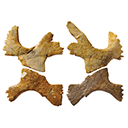
New material of “Eurysternidae” (Thalassochelydia, Pan-Cryptodira) from the Kimmeridgian of the Swiss Jura MountainsChristian Püntener, Jérémy Anquetin and Jean-Paul Billon-BruyatKeywords: Eurysternidae; Late Jurassic; morphology; Switzerland; Testudines; Thalassochelydiadoi: 10.18563/pv.43.1.e2 Abstract The region of Porrentruy (Swiss Jura Mountains) is known for its rich and diverse assemblage of Late Jurassic coastal marine turtles (Thalassochelydia). Dominated by the “Plesiochelyidae”, this assemblage also includes representatives of the two other thalassochelydian groups, the “Thalassemydidae” and “Eurysternidae.” In this study, we present new shell-based material from Porrentruy referable to eurysternids. One specimen represents a juvenile individual or a relatively small taxon, and is notably characterized by a well fenestrated plastron exhibiting a wider than long central plastral fontanelle. Two other specimens are much larger and possibly represent the largest eurysternids known to date. The fourth specimen is characterized by a unique plastral morphology otherwise only known in very small juveniles. This is the first time this unique plastral morphology is known to persist in an adult or subadult. The new material described herein represents at least three distinct taxa, all of them probably new. However, we refrain from naming new species based on this incomplete material in order to avoid adding confusion to an already complex taxonomical situation. This study provides new insights into the great diversity of eurysternids during the Late Jurassic. Article infos Published in Vol 43-1 (2020) |
|
|
|
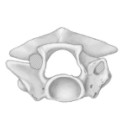
Latest Early-early Middle Eocene deposits of Algeria (Glib Zegdou, HGL50), yield the richest and most diverse fauna of amphibians and squamate reptiles from the Palaeogene of AfricaJean-Claude Rage, Mohamed Adaci, Mustapha Bensalah, Mahammed Mahboubi, Laurent Marivaux, Fateh Mebrouk and Rodolphe TabuceKeywords: Africa; Algeria; amphibians; Eocene; squamatesdoi: 10.18563/pv.44.1.e1 Abstract HGL50 is a latest Early-early Middle Eocene vertebrate-bearing locality located in Western Algeria. It has produced the richest and most diverse fauna of amphibians and squamate reptiles reported from the Palaeogene of Africa. Moreover, it is one of the rare faunas including amphibians and squamates known from the period of isolation of Africa. The assemblage comprises 17 to 20 taxa (one gymnophionan, one probable caudate, three to six anurans, seven ‘lizards’, and five snakes). Two new taxa were recovered: the anuran Rocekophryne ornata gen. et sp. nov. and the snake Afrotortrix draaensis gen. et sp. nov. The locality has also yielded the first confirmed anilioid snake, the first Palaeogene gymnophionan, and probably the first caudate from the Palaeogene (and possibly from the Tertiary) of Africa. The presence of a caudate at that time in Africa would be of particular interest; unfortunately, the available material does not permit a definitive identification. The fauna comprises Gondwanan and more specifically West Gondwanan vicariants, probably autochthonous groups and a Eurasian immigrant (assuming that the identification of the caudate is accurate). The fauna from HGL50 is clearly distinguished from the few other Eocene assemblages of Africa. However, if this results largely from differences in geological ages, geographic positions of the localities and mainly differences in environments took a part in the composition of the faunas. Article infos Published in 44-1 (2021) |
|
|

|
La poche à phosphate de Ste-Néboule (Lot) et sa faune de vertebres du Ludien supérieur. 8- Insectivores et Chiroptères.Bernard SigéKeywords: Eocene; Quercy PhosphoritesAbstract The small insectivorous placental mammals from Ste-Néboule are poorly varied. Two orders of insectivores are documented : the Proteutheria by Pseudorhyncocyon cayluxi (leptictids), the Lipotyphla by Saturninia gracilis and S. beata (nyctitheriids). The bats are only rhinolophoids and mostly hipposiderids. Sufficient populations allow us to restrict the original definitions of three previous species (Hipposideros schlosseri, Palaeophyllophora quercyi, P. oltina). From now, these species can be regarded as monophyletíc. Article infos Published in Vol. 08, Fasc. 2-4 (1978) |
|
|

|
Les mammifères de Rians (Eocène inférieur, Provence)Marc GodinotKeywords: Eocene; Mammals; Provence; RiansAbstract The fossil mammals discovered in the quarry of Rians (Sparnacian, Provence) are described. Among these forms, Hyracotherium is interesting because of the little molarization of the lower premolars and its small size, and Diacodexis by its small size and very primitive astragalus ; they may be the most primitive representatives of their respective orders. Also, Proviverra eisenmanni n. sp. is the smallest and most primitive hyaenodontid yet described. Hyopsodus itinerans is the first species of this genus described France. Among other rare fossils is a new species of bat, a small palaeoryctid, and other forms not yet identified. Marsupials are varied. Several new species are present among the rodents. The fauna is well-balanced and rich in small hyopsodontid condylarths. It is stratigraphically situated at the Article infos Published in Vol. 10, Fasc. 2 (1981) |
|
|

|
Middle Eocene rodents from the Subathu group, Northwest Himalya.Kishor Kumar, Rahul Srivastava and Ashok SahniKeywords: Chapattimyidae; Eocene; evolution; India; Rodentia; Subathu group; SystematicsAbstract Extensive collecting in previously known and new Middle Eocene rodent localities in the Subathu Group of the Rajauri and Reasi districts, Jammu and Kashmir (northwest Himalaya, India) has yielded over 500 isolated cheek teeth, numerous incisors and cheek tooth fragments, and two mandibular fragments with M/1-M/3. An analysis of this additional material and a restudy of that reported earlier from the Metka (Rajauri) area has revealed the presence of diverse Middle Eocene ctenodactyloid rodents in India. The assemblage comprises six genera and twelve species, viz.., Bírbalomys woodi, B. ibrahimshahi, B. sondaari, Basalomys vandermeuleni, B. ijlsti, B. lavocati, Chapattimys wilsoni, C. debruijni, Gumbatomys asifi, cf. Advenimus bohlini, cf. Petrokoslovia sp. indet. 1 and cf. Petrokoslovia sp. indet. 2. Most species of this assemblage are endemic to the Indian subcontinent and are referred to the Family Chapattimyidae. However, at least three taxa, viz.., cf. Advenimus bohlini, cf. Petrokoslovia sp.indet. 1 and cf. Pezrokoslovia sp. indet. 2 show close affinities with their Central and Eastern Asiatic contemporaries and are attributed to the Family Yuomyidae. The dentitions of most of the Middle Eocene rodents from India are described here in better detail thus providing more precise characterization than was available earlier. The taxonomie status of Basalomys, formerly a subgenus of Birbalomys has been raised to that of a genus. Basalomys vandermeuleni is here designated as the type species of Basalomys in place of B. ijlsti. The rodent assemblage from the Subathu Group is specifically similar to that from the coeval Kuldana Formation of Pakistan. The absence of Birbalomys ibrahimshahi and cf. Advenimus bohlini in Pakistan is related to sampling bias. The identifications of the Early Eocene rodents from Barbara Banda, Pakistan have been reexamined and the familial assignments of some of the Early and Middle Eocene rodents from Central and Eastern Asia have been discussed and reviewed in the light of recent discovery of early rodents in Mongolia. Article infos Published in Vol. 26, Fasc. 1-4 (1997) |
|
|

|
La poche à phosphate de Ste-Néboule (Lot) et sa faune de vertebres du Ludien superieur. 14 - Conclusions généralesJean-Louis HartenbergerKeywords: Eocene; Quercy PhosphoritesAbstract Le matériel provenant de nouvelles fouilles dans les phosphorites du Quercy, soumis aux divers spécialistes, a conduit à la soutenance de plusieurs thèses d'état: sur les rongeurs (Hartenberger, Vianey-Liaud), les Chiroptères et Insectivores (Sigé), les Artiodactyles (Sudre), les Squamates (Rage) et, en partie, les Chéloniens (De Broin). Chacun dans son domaine, à côté des conclusions d'ordre évolutif, paléogéographique ou paléoécologique, a pu établir des successions stratigraphiques des gisements du Quercy qui se sont révélées largement concordantes. Ainsi la succession des faunes du Quercy est actuellement l'une des mieux établies. Dans ce contexte, les différents spécialistes ont décidé de conjuguer leurs efforts dans l'étude monographique de plusieurs gisements repérés le long de cette échelle, afin de rassembler l'information paléontologique sur des faunes bien précises et de tenter d'obtenir des indications d'ordre taphonomique. Article infos Published in Vol. 08, Fasc. 2-4 (1978) |
|
|
|
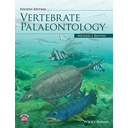
A classic in the making : VERTEBRATE PALAEONTOLOGY (4th edition). By Michael J. Benton.Eric BuffetautKeywords: Book review; Vertebrate Palaeontologydoi: 10.18563/pv.40.1.e1 Abstract When the first edition of Mike Benton’s Vertebrate Palaeontology came out in 1990, sauropods still dragged their tails on the ground, the closest relatives of whales were mesonychids, and Mesozoic birds consisted essentially of Archaeopteryx, Ichthyornis and Hesperornis. Twenty-five years later, the book, now in its fourth edition, is a third longer, in a larger format and sports fine colour plates – in addition to a companion website. Article infos Published in Vol.40-1 (2016) |
|
|

|
Les Gruiformes (Aves) des phosphorites du Quercy (France). 1. sous-ordre cariamae (Cariamidae et Phorusrhacidae), systématique et biostratigraphie.Cécile Mourer-ChauviréKeywords: Aves; Biostratigraphy; Birds; Cariamae; gruiformes; Quercy Phosphorites; SystematicsAbstract The revision of the old collections of fossil birds from the “Phosphorites du Quercy” and the study of new material give the following results (Gruiformes, Cariamae) : The humeri and most of the carpometacarpi described under the name Filholornis belong in Elaphrocnemus. The ulnae ascribed to Fïlholornis belong in Idiornis. Most of the post-cranial elements of the genera Elaphrocnemus and Idiornis are described and show great similarities with recent Cariamidae and Opisthocomidae, and fossil Bathornithinae. A new genus and a new species, Oblitavis insolitus, are created in the sub-family Idiornithinae; two new species are described in the genera Elaphrocnemus (E. brodkorbz) and Idiornis (I. itardiensis), and the species Elaphrocnemus gracilis is transferred to the genus Idiornis. The genus Propelargus Lydekker is transferred from the family Ciconiidae to Cariamidae. A new generic name, Occitaniavis, is created for the species Geranopsis elatus, which belong in Cariamidae, while the type-species of the genus, Geranopsis hastingsiae, is a member of the Gruidae. The affinities between the Quercy avifauna and the Neotropical one is emphasized by the occurrence of Phorusrhacidae, previously known only from the Cenozoic of South America and the Late Pliocene or Early Pleistocene of North America. Thanks to the material collected during the new excavations, the stratigraphical position of most of the species is stated precisely, and evolutionary lineages are outlined. This study shows that the suborder Cariamae, presently restricted to two South American genera, was already extremely diversified during the Eocene, and widespread in Europe and North America. Article infos Published in Vol. 13, Fasc. 4 (1983) |
|
|

|
Contribution à la classification des Pistes de Vertébrés du Trias : les types du Stormberg d'Afrique du Sud (2 ème Partie: le Stormberg supérieur - 1. Le biome de la zone B/1 ou niveau de Moyeni: ses biocénoses).Paul EllenbergerKeywords: biocenosis; Footprints; South Africa; Stormberg; TriasAbstract Les Pistes de Vertébrés du Stormberg Supérieur ("Trias terminal à Rhétien"), ou Quthingien Article infos Published in Vol. 6, Ext (1974) |
|
|

|
Repartition et dynamisme des faunes de Lacertilia et d'Amphisbaenia dans l'Eocène EuropeMarc AugéKeywords: Amphisbaenia; climate; Endemism; Eocene; Europe; Lacertilia; MetabolismAbstract The composition of assemblages of lizards and Amphisbaenian from the European Eocene are described. At least ten lizard families are identified from the lower European Eocene levels. Eight are still recorded in the last level (Escamps) of the late Eocene. Agamid lizards (genus Tinosaurus) died out by the end of the lower Eocene and Varanid lizards (genus Saniwa) disappeared by the beginning of the late Eocene. Amphisbaenians are recorded throughout the Eocene in Europe. The lacertilian fossil record of Europe and North America show a high degree of faunal resemblance in the early Eocene, followed by a decrease during the later part of the epoch. The lacertilian and amphisbaenian faunas from the European Eocene are not subject to great variations during the period; this is in contrast with the mammal record at the same time. It is argued that the low metabolic rates and the ectothermy of lizards could explain those differences, along with the increasing insularity of the West European area during the late Eocene time. Article infos Published in Vol. 22, Fasc. 2-3 (1993) |
|
|

|
Die Referenzfauna des Geiseltalium, MP levels 11 bis 13 (Mitteleozan, Lutetium)Hartmut HauboldKeywords: Eocene; Geiseltal; Land mammal ages; Mammalian reference levelsAbstract The Middle Eocene Fossillägerstätte of the Geiseltal lignite beds near Halle/S. (German Democratic Republic) is the reference locality of the European land mammal age Geiseltalian and of the Mammalian Paleogene reference levels MP 11 - MP 13. Due to this importance a reinvestigation is given of the lithostratigraphical development of the Geiseltal beds and of their vertebrate sites. The last are genetically related to the southwest border of the Geiseltal depression and the influx of carbonate-rich waters. The geographical distribution and stratigraphical position of the fossiliferous sites depends on subrosive and tectonically controlled distribution of coal seams. The geological factors and the known stratigraphical guide of some mammalian species suggest corrections of the age of some sites. Four of the alltogether five coal bearing phases contain the 35 sites with mammalian remains. By the distribution of the around 69 mammal species are characterized, with 5 faunal steps ranging from MP 11 to MP 14 or over the Geiseltalian up to the Lower Robiacian. Well distant are the faunas of MP 11 and MP 12. Beginning with MP 12 up to MP 13/14, the fossil record is very frequent by 27 sites. This evidence coincides somewhat more with the concept of land mammal ages compared to that of the punctual mammalian reference levels. Article infos Published in Vol. 19, Fasc. 3 (1989) |
|
|

|
Mammifères nouveaux de l'Ilerdien des Corbières et du Minervois (Bas-Languedoc, France)Bernard MarandatKeywords: Bas-Languedoc; Early Eocene; France; Ilerdian; Mammals; New taxaAbstract Four new taxa (two genera, one subgenus, and four species) conceming the orders Condylarthra, Rodentia, Pantolesta, and an undetermined order from middle and middle/upper Ilerdian localities (lower Ypresian) of the Corbières and Minervois regions (Bas-Languedoc, Southem France) are presented in this short paper Article infos Published in Vol. 19, Fasc. 3 (1989) |
|
|

|
Rongeurs caviomorphes de l'Oligocène de Bolivie. 1 Introduction au deseadien de BolivieRobert HoffstetterKeywords: Rodentia; South AmericaAbstract The Tertiary of the Salla-Luribay basin consists of red beds affected by the second period of the andine compression, of Miocene ending age. The Tertiary layers are exposed at an approximate elevation of 3.500 to 4.000 meters. Two stratigraphic units can be distinguished in them: the Luribay conglomerates, in which vertical clifts result from erosion, and the Salla layers consisting mostly of consolidated clays. These clays are very fossiliferous and have furnished a rich vertebrate fauna which gave to R. Hoffstetter the possibility to establish the Oligocene age of these beds. Sediments of same age has been reported to be present in several other places of Bolivia, particularly near Lacayani, where have been collected highly hypsodont Rodents, different from those found in Salla-Luribay basin. Article infos Published in Vol. 07, Fasc. 3 (1976) |
|
|

|
La poche à phosphate de Sainte-Néboule (Lot) et sa faune de vertébrés du Ludien supérieur. 13-RongeursJean-Louis Hartenberger and Monique Vianey-LiaudKeywords: Eocene; Quercy PhosphoritesAbstract Sainte-Néboule has yielded only 4 species of Rodents. But the Theridomyids (Blainvillimys rotundidens and Patriotheridomys altus) are very significative of the age of the locality: Ste-Néboule is lower than the marker level of Escamps Article infos Published in Vol. 08, Fasc. 2-4 (1978) |
|
|
|
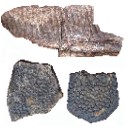
Terrestrial vertebrate paleocommunities from the Cerro del Pueblo Formation (Late Cretaceous; Late Campanian) at Las Aguilas, Coahuila, MexicoHéctor E. Rivera-Sylva, Eberhard Frey, Wolfgang . Stinnesbeck, Natalia Amezcua Torres and Diana Flores HuertaKeywords: Campanian; Coahuila; dinosaurs; Mexico.; Vertebratesdoi: 10.18563/pv.42.2.e1 Abstract The Las Águilas site near Porvenir de Jalpa, Coahuila, Mexico, is extremely rich in tetrapod remains comprising both bones and trackways of several dinosaur taxa of late Campanian age. Within a 50 m thick section we identified at least nine layers with dinosaur bone assemblages. In one of these the dinosaur bones are associated with remnants of eusuchian crocodilians, turtles, plesiosaurs, pterosaurs, tyrannosaurids, dromaeosaurids, parksosaurid, hadrosaurids, ceratopsids, and ankylosaurs. This layer is also rich in coprolites of turtles, crocodilians and likely theropods, thus providing evidence for the wealth of Late Cretaceous vertebrate life in the area. Article infos Published in Vol 42-2 (2019) |
|
|

|
Eléments nouveaux sur l'évolution des genres Eucricetodon et Pseudocricetodon (Eucricetodontinae, Rodentia,Mammalia, de l'Oligocène d'Europe Occidentale.Bernard ComteKeywords: evolution; Occidental Europe; Oligocene; Rodentia; SystematicsAbstract The review of material recently collected in the new localities from the “Phosphorites du Quercy", and different localities from the South of France, bring new informations on the genus Eucricetodon THALER. 1966, and Pseudocricetodon THALER, I969 (Middle and Upper Oligocene. Western Europe). Thanks to Eucricetodon huerzeleri VIANEY-LIAUD, 1972, which were unsufficiently known until now, is proposed. During the middle Oligocene Eucricetodon atavus MISONNE, 1957 seems to give rise to two lineages. One of them led to Eucricetodon huberi,which however exhibits a larger size and a development of progressive characters on the teeth. The other would be Eucricetodon huerzeleri well differentiated at the “Mas de Pauffié" standard level (beginning of the upper Oligocene). The ornementation of lower incisors is described, when possible. Though the fossils are not abundant, it seems that the ancestral lineage, Eucriretodon atavus, remains in the upper Oligocene (Boningen standard level). evolving into Eucricetodon praecursor SCHAUB, 1925 (Rickenbach standard level). The characters of Eucricetodon dubius (SCHAUB. 1925), represented by a numerous population in Pech Desse and Pech du Fraysse (Quercy). confirm that this species and Eucricetodon praecursor belong to two different lineages. As Eucricetodon dubius shows more primitive features, this species could not originale from Eucricetodon atavus -Eucricetodon huberi. The appearance of this species at the level of Mas de Pauffié could be the result of an immigration. A new definition of Pseudocricetodon incertus (SCHLOSSER. 1884) is given. This species has been found in several localities, where it had not been identified until now. lts comparison with Pseudocricetodon moguntiacus (BAHLO. l975), found at several localities from the standard level of Antoingt (end of middle Oligocene). shows a parallel evolution to that of Pseudocetodon incertus, which is of larger size and with a less complicated pattern of teeth. Article infos Published in Vol. 15, Fasc. 1 (1985) |
|
|

|
Premier signalement du Monachinae (Phocidae, Mammalia) dans le Sahélien (Miocène supérieur) d'Oran (Algérie)Christian de MuizonKeywords: Algeria; Late Miocene; PhocidaeAbstract Messiphoca mauretanica nov. gen., nov. sp. représente le premier Phocidae fossile recensé en Afrique du Nord. Provenant du gisement sahélien (Miocène supérieur) de Raz-el-Aïn (Algérie), il est connu par quelques os du membre antérieur (humérus, radius, ulna), quelques vertèbres dorsales et un crâne très fragmentaire. La description de cette forme nouvelle amène à considérer Messiphoca mauretanica comme un Monachinae archaïque proche de l'origine du groupe Pliophoca - Monachus. L'incidence de cette interprétation d'un Phocidae «pré-Messinien ›› sur la crise de salinité du Messinien est aussi envisagée. Article infos Published in Vol. 11, Fasc. 5 (1981) |
|