
Abstract book of the 18th Conference of the EAVP
Pterosaurs from Coahuila
New elephant cranium from early Pliocene Ileret, Kenya
Les sélaciens du Miocène de la région de Montpellier
Muridae du Pliocène supérieur d'Espagne et du midi de la France.
Contribution à l'étude des genres Gliravus et Microparamys.
Eocene (57) , Quercy Phosphorites (38) , Systematics (32) , Rodents (29) , Mammalia (27) , Rodentia (25) , Miocene (25)
Page 14 of 19, showing 20 record(s) out of 366 total

|
Etude du crâne de Pachynolophus lavocati n. sp. (Perissodactyla, Palaeotheriidae) des Phosphorites du QuercyJean-Albert RemyPublished online: 15/02/1972Keywords: Perissodactyla; Quercy Phosphorites https://doi.org/10.18563/pv.5.2.45-78 Abstract The genus Pachynolophus, one of the poorest known of the Palaeotheriidae, includes the brachyodont forms with reduced and non-molariform premolars and with upper molars lacking a mesostyle. Quantitative characters (divers surface indications and elongation of the teeth), while demonstrating a close relationship to Hyracotherium, permit a better differentiation of the genus, confirm its specific splitting, and permit the distinction of three lineages. The skull from Memerlein is taken as the type of a new species, P. Iavocati, of which the dentition is extremely characterized by its lophiodonty, the strong reduction of the premolars and the reduction of the cingula. This characterization testifies to a late age which extends the existence of the genus quite near to the Eocene-Oligocene limit. Compared with the only two skulls known of related species (Hyracotheríum vulpiceps and Pachynolophus Iivinierensis), that from Memerlein is distinguished by progressive characters affecting diferent regions but most particularly the braincase; it is not possible, however, to isolate within this evolution the part which leads to a systematic differentiation. Modernization is translated by a considerable increase in size of the braincase, principally in the frontal region, a development of the facial region with anterior displacement of the dental series and a greater specialization of the masticatory apparatus. This evolution parallels the history of the Equidae of the North American early Tertiary, but certain particularities, the form of the alisphenoid, the presence of an anterior frontal foramen, and the structure of the paroccipital apophysis, testifies to the independance of the European forms. PV article infos Published in Vol. 05, Fasc. 2 (1972) |
|

|
Table ronde sur les phosphorites du Quercy Montauban 15-16 Décembre 1972Louis Thaler and Jean-Louis HartenbergerPublished online: 15/11/1974Keywords: Quercy Phosphorites https://doi.org/10.18563/pv.6.1-2.1-3 Abstract Voici une centaine d'années débutait sur les Causses du Quercy l'exploitation des phosphorites qui devait permettre d'amasser des collections de Vertébrés fossiles uniques au monde. Ces fossiles firent l'objet de nombreuses publications et les noms de Filhol, Gaudry, Schlosser, Stehlin, Teilhard de Chardin sont attachés à ces premières études. PV article infos Published in Vol. 06, Fasc. 1-2 (1974) |
|

|
Rongeurs caviomorphes de l'Oligocène de Bolivie. 1 Introduction au deseadien de BolivieRobert HoffstetterPublished online: 01/08/1976Keywords: Rodentia; South America https://doi.org/10.18563/pv.7.3.1-16 Abstract The Tertiary of the Salla-Luribay basin consists of red beds affected by the second period of the andine compression, of Miocene ending age. The Tertiary layers are exposed at an approximate elevation of 3.500 to 4.000 meters. Two stratigraphic units can be distinguished in them: the Luribay conglomerates, in which vertical clifts result from erosion, and the Salla layers consisting mostly of consolidated clays. These clays are very fossiliferous and have furnished a rich vertebrate fauna which gave to R. Hoffstetter the possibility to establish the Oligocene age of these beds. Sediments of same age has been reported to be present in several other places of Bolivia, particularly near Lacayani, where have been collected highly hypsodont Rodents, different from those found in Salla-Luribay basin. PV article infos Published in Vol. 07, Fasc. 3 (1976) |
|

|
Essai de filiation des campagnols et des lemmings (Arvicolidae, Rodentia) en zone holartique d'après la morphologie dentaire.Jean ChalinePublished online: 01/10/1980Keywords: Arvicolidae; Dental morphology; Paleogeography; phyletic relationships https://doi.org/10.18563/pv.9.ext.375-382 Abstract The Arvicolid evolution results in an increase of the dental structure complexity. The M3/ differenciation seems to characterise the tribe subdivisions, that of M/1 being variable from one to another lineage. The phyletic relationships of fossil lineages are discussed from a paleogeographic point of view. PV article infos Published in Vol. 9, Ext (1980) |
|

|
Diversity among north african dinosaur eggshells.Monique Vianey-Liaud
Published online: 15/12/2003 |
|

|
Dating dinosaur oodiversity: chronostratigraphic control of LateCretaceous oospecies succession.Nieves Lopez-MartinezPublished online: 15/12/2003Keywords: Biostratigraphy; Chronology; dinosaur eggshells; Late Cretaceous https://doi.org/10.18563/pv.32.2-4.121-148 Abstract An increasing fossil record of dinosaur eggs and eggshells allows putting ootaxa within a chronostratigraphic framework, in order to study their distribution pattern leading eventually to their use as biochronological markers. For these purposes, high-quality data exists in four major regions; North America, South America, Europe and Asia (Central Asia and India). Most of the highly diverse dinosaur egg record has been dated as Latest Cretaceous in age (Campanian-Maastrichtian), reaching the Cretaceous-Tertiary boundary closer than the dinosaur bone record. However, dating continental sections is problematic and need to be carefully verified, as it appears when comparing the European dinosaur eggshell record from two well-studied areas. Ootaxa distribution in both sides of the Pyrenees (Tremp and Aix basins) shows comparable oospecies successions, but different chronology. This disagreement probably indicates that one or both successions have a wrong chronostratigraphic calibration. PV article infos Published in Vol. 32, Fasc. 2-4 (2003) |
|

|
Sur le plus ancien Lagomorphe Européen et la "Grande Coupure" Oligocène de StehlinNieves Lopez-Martinez and Louis ThalerPublished online: 01/01/1974Keywords: Grande Coupure; Lagomorphe; Oligocene https://doi.org/10.18563/pv.6.3-4.243-251 Abstract Pour la première fois un spécimen de lagomorphe a été récolté en Quercy. L'intérêt de ce fossile tient surtout à son âge géologique inattendu, qui recule considérablement la date de première apparition en Europe de cet ordre de mammifère, Ceci nous paraît justifier une nouvelle réflexion sur la « grande coupure» oligocène, PV article infos Published in Vol. 06, Fasc. 3-4 (1975) |
|

|
Analyse d'ouvrage: Jean-Claude Rage, Handbuch der Paläeoherpetologie Teil 11: SerpentesJacques MichauxPublished online: 15/11/1984Keywords: Book review https://doi.org/10.18563/pv.14.3.199 Abstract Le volume 11 du «Handbuch der Paläeoherpetologie», consacré aux «Serpellles» et redigé par Jean-Claude Rage, apporte une remarquable information sur ce groupe particulier de reptiles dont on ne pouvait guere se faire une idée très précise à partir, par exemple, des seuls chapitres des traités classiques de Paléontologie et de Zoologie. PV article infos Published in Vol. 14, Fasc. 3 (1984) |
|

|
L'anatomie de Lyrocephaliscus euri (wiman), Trématosaure du Trias inférieur du Spitsberg : arrière-crâne, squelette axial et ceinture scapulaire.Jean-Michel Mazin
Published online: 30/06/1983 |
|

|
Les mammifères Montiens de Hainin (Paléocène moyen de Belgique) Part II : Les CondylarthresJean Sudre and Donald E. RussellPublished online: 30/12/1982Keywords: Belgium; Condylarths; Louisininae; Oxyclaeninae; Paleocene https://doi.org/10.18563/pv.12.6.173-184 Abstract The Condylarths from Hainin (Hainault, Belgium) show no affinity at the generic level to those known in other Paleocene localities of Europe and North America ; they are described as new forms : Monshyus praevius n. gen., n. sp. and Prolatidens waudruae n. gen., n. sp. Monshyus praevius, discovered in only one of the levels in the excavation at Hainin, is similar to the genera Microhyus TEILHARD and Louisina RUSSELL ; with them it is included in the subfamily Louisininae (Hyopsodontidae). With respect to Microhyus and Louisina, Monshyus is distinguished by the precociously modern aspect of its upper molars, the only teeth that are referable. Prolatidens waudruae, known only by lower molars, was found in several levels in the pit at Hainin. It is an arctocyonid presenting possible relationships to the North American form Oxyprimus galadrielae ; it therefore has been provisionally attributed to the subfamily Oxyclaeninae. If this attribution is confirmed, this species will constitute the first and only representative of the group in Europe. PV article infos Published in Vol. 12, Fasc. 6 (1982) |
|
|
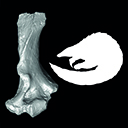
A pangolin (Manidae, Pholidota, Mammalia) from the French Quercy phosphorites (Pech du Fraysse, Saint-Projet, Tarn-et-Garonne, late Oligocene, MP 28)Jean-Yves Crochet, Lionel Hautier
Published online: 14/09/2015 |
|

|
First record of the genus Megaderma Geoffroy (Microchiroptera: Megadermatidae) from Australia.Suzanne J. Hand
Published online: 14/06/1995 |
|

|
La région des phosphorites du QuercyA. CavailléPublished online: 15/11/1974Keywords: Quercy Phosphorites https://doi.org/10.18563/pv.6.1-2.5-19 Abstract L'exploitation des phosphates s'est produite surtout de 1890 à 1914 de Saint-Antonin à Cajarc, sur le Causse de Limogne, dont l'histoire géologique et morphologique peut expliquer les conditions de gisement du minerai, et aussi la découverte des nombreux, variés et beaux fossiles qu'on a extrait des poches en même temps que la phosphorite. Le Causse de Limogne est le nom donné par les géographes au plateau calcaire, faisant partie des Causses du Quercy, et compris entre la vallée du Lot au Nord et celle de "Aveyron au Sud". En fait, le nom de "causse" désigne localement un terroir, un paysage, à sous-sol de calcaire, à sol peu épais, qui s'oppose aux sols argileux des « terreforts » et aux sols légers et profonds des "boulbènes". Chaque communauté agricole distinguait ainsi son causse, par exemple le causse de Caylus, le causse de Limogne ou le causse de Cajarc. C'est par extension que l'appellation Causse de Limogne désigne tout un petit pays. La présence des poches à phosphate déborde un peu vers le Nord la vallée du Lot, et vers l'Est le Causse de Limogne proprement dit (Causse de Villeneuve). PV article infos Published in Vol. 06, Fasc. 1-2 (1974) |
|

|
Diversity of triconodont mammals from the early Cretaceous of North Africa-affinities of the AmphilestidsDenise Sigogneau-RussellPublished online: 15/10/2003Keywords: amphilestines; Early Cretaceous; gobiconodontines; North Africa; Teeth; triconodonts https://doi.org/10.18563/pv.32.1 Abstract The mammalian fauna (represented only by isolated teeth) from the early Cretaceous of Morocco includes a number of non-'therian' specimens, characterized by the antero-posterior alignement of the main molar cusps. This assemblage is very heterogenous, including forms (among them Gobiconodon palaios sp. nov.) that can be related to Laurasian triconodonts and several forms so far known only in this part of Gondwana (among them Kryptotherium polysphenos gen. et sp. nov.). The latter, in particular, exemplifies the diversity of the mammalian dental morphology in the Mesozoic, often largely underestimated. In the last part of this paper, the 'therian' affinity of the 'amphilestids' is discussed, on the basis of the arrangement of molar cusps, the interlocking mechanism and the occlusal pattem. PV article infos Published in Vol. 32, Fasc. 1 (2003) |
|

|
Contribution à la classification des pistes de vertébrés du Trias: Les types du Stormberg d'Afrique du Sud (1).Paul EllenbergerPublished online: 16/10/1972Keywords: Footprints; South Africa; Stormberg; Trias https://doi.org/10.18563/pv.5.ext Abstract Cet article explore les pistes fossiles de vertébrés du Stormberg (Trias, Afrique du Sud), révélant une diversité ichnologique inédite avec 64 ichnotypes classés en tridactyles, tétradactyles et pentadactyles. Les découvertes incluent des reptiles bipèdes comme Qemetrisauropus et Prototrisauropus, dont les empreintes suggèrent des adaptations évolutives vers la bipédie, ainsi que des pentadactyles géants comme Pentasauropus, annonçant les futurs sauropodes. L’étude combine ichnologie et restes osseux pour reconstituer des écosystèmes triasiques riches, où flore (fougères, conifères) et faune témoignent d’une transition écologique majeure avant l’essor des dinosaures. PV article infos Published in Vol. 5, Ext (1972) |
|

|
The eosimiid and amphipithecid primates (Anthropoidea) from the Oligocene of the Bugti hills (Balochistan, Pakistan): new insight into early higher primate evolution in South Asia.Laurent Marivaux
Published online: 15/10/2006 |
|

|
La poche à phosphate de Ste-Néboule (Lot) et sa faune de vertebres du Ludien supérieur. 8- Insectivores et Chiroptères.Bernard SigéPublished online: 25/09/1978Keywords: Eocene; Quercy Phosphorites https://doi.org/10.18563/pv.8.2-4.243-268 Abstract The small insectivorous placental mammals from Ste-Néboule are poorly varied. Two orders of insectivores are documented : the Proteutheria by Pseudorhyncocyon cayluxi (leptictids), the Lipotyphla by Saturninia gracilis and S. beata (nyctitheriids). The bats are only rhinolophoids and mostly hipposiderids. Sufficient populations allow us to restrict the original definitions of three previous species (Hipposideros schlosseri, Palaeophyllophora quercyi, P. oltina). From now, these species can be regarded as monophyletíc. PV article infos Published in Vol. 08, Fasc. 2-4 (1978) |
|

|
La poche à phosphate de Ste-Néboule (Lot) et sa faune de vertebres du Ludien supérieur. 7- Didelphides (Marsupiaux)Jean-Yves CrochetPublished online: 25/09/1978Keywords: Eocene; Quercy Phosphorites https://doi.org/10.18563/pv.8.2-4.231-242 Abstract The family Didelphidae is represented by three species in the Sainte-Néboule site, phosphorites of Quercy (lower Oligocene, San Cugat's nivel): Amphiperatherium minutum (Aymard), Amphiperatherium sp. and Peratherium cuvieri (Fischer). Only the first and third species are abundant (88 and 97 pieces). This two populations are described. The marsupial fauna of the european lower Oligocene is not recognized in its entirety in this site. PV article infos Published in Vol. 08, Fasc. 2-4 (1978) |
|

|
Preliminary evolution of paleosols and implications for interpreting vertebrate fossil assemblages, Kuldana formation, Northern PakistanAndres Aslan and J. G. M. Thewissen
Published online: 16/12/1996 |
|

|
Evolution de la lignée Megacricetodon collongensis-Megacricetotodon roussillonensis (Cricetidae, Rodentia, mammalia) au cours du Midocène inférieur et moyen dans le Sud de la France.Jean-Pierre AguilarPublished online: 14/06/1995Keywords: Cricetids rodents; Evolutionary lineage; Lower and Middle Miocene; Mammalian biochronology; Megacricetodon new species; Southern France https://doi.org/10.18563/pv.24.1-2.1-45 Abstract New populations of the genus Megacricetodon have recently been discovered in Southern France.Two new species are defined: M. lemartineli n. sp. and M. fournasi n. sp., their stages of evolution are intermediate between those of M. gersii and M. roussillonensis. Morphological and biometrical analysis indicate the presence of only one lineage: M. collongensis--M. collongensis-gersii--M. gersii--M.lemartineli nov. sp.--M. fournasi nov. sp. and M. roussillonensis. This observation allows to refine the chronology based on rodents, for the Late Early Miocene and the Middle Miocene in the Southern France. PV article infos Published in Vol. 24, Fasc. 1-2 (1995) |
|
