
Miocene Bovidae (Mammalia) of the Siwaliks: Hypsodontinae and Bovinae
Paléoenvironnement des mammifères des Gour Lazib
Pterosaurs from Coahuila
Les sélaciens du Miocène de la région de Montpellier
Contribution à l'étude des genres Gliravus et Microparamys.
Muridae du Pliocène supérieur d'Espagne et du midi de la France.
Eocene (57) , Quercy Phosphorites (38) , Systematics (32) , Rodents (29) , Mammalia (27) , Rodentia (25) , Miocene (25)
Page 13 of 19, showing 20 record(s) out of 369 total
|
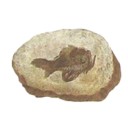
Designating a lectotype for Mesacanthus pusillus (Gnathostomata: Acanthodii)Matthew G. Baron
Published online: 03/03/2021 |
S.I. Data |

|
Contributions à l'étude du gisement Miocène supérieur de Montredon (Hérault). Les grands mammifères. 7 - Les proboscidiens DeinotheriidaeHeinz TobienPublished online: 15/11/1988Keywords: allometry; Astaracian; Deinotherium; Montredon; Systematics; taphonomy; Vallesian https://doi.org/10.18563/pv.18.ext.135-175 Abstract Some complete tooth rows and about one hundred isolated teeth enabled the identification of the deinothere of the Vallesian site Montredon (Hérault) as Deinotherium giganteum KAUP 1829, mainly by comparisons with the likewise Vallesian sample of the type locality Eppelsheim (Rheinhessen, F.R.G.). PV article infos Published in Vol. 18, Ext (1988) |
|

|
Les Tayassuidés des phosphorites du QuercyLéonard GinsburgPublished online: 15/11/1974Keywords: Quercy Phosphorites; Tayassuidae https://doi.org/10.18563/pv.6.1-2.55-85 Abstract Revision of the Tayassuidae from the old collections of the Quercy leads to interesting facts about taxonomic and phylogenetic problems. It could not have been well done without constant comparison with contemporaneous Tayassuidae from stratified series, as well as with European Miocene Tayassuidae and Hyotheriinae. The result is that only three species are present in the Phosphorites of Quercy: Doliochoerus quercyi FiLHOL (represented by two sub-species: the older, D. quercyi quercyi and the more recent, D. quercyi aquensis), Palaeochoerus gergorianus CROIZET et BLAINVILLE and Palaeochoerus purillus nov. sp. The two former species disappeared with Stampian time, while the third is the direct ancestor of the Aquitanian Palaeochoerus typus POMEL, which became extinct before the beginning of Burdigalian. PV article infos Published in Vol. 06, Fasc. 1-2 (1974) |
|

|
Dating dinosaur oodiversity: chronostratigraphic control of LateCretaceous oospecies succession.Nieves Lopez-MartinezPublished online: 15/12/2003Keywords: Biostratigraphy; Chronology; dinosaur eggshells; Late Cretaceous https://doi.org/10.18563/pv.32.2-4.121-148 Abstract An increasing fossil record of dinosaur eggs and eggshells allows putting ootaxa within a chronostratigraphic framework, in order to study their distribution pattern leading eventually to their use as biochronological markers. For these purposes, high-quality data exists in four major regions; North America, South America, Europe and Asia (Central Asia and India). Most of the highly diverse dinosaur egg record has been dated as Latest Cretaceous in age (Campanian-Maastrichtian), reaching the Cretaceous-Tertiary boundary closer than the dinosaur bone record. However, dating continental sections is problematic and need to be carefully verified, as it appears when comparing the European dinosaur eggshell record from two well-studied areas. Ootaxa distribution in both sides of the Pyrenees (Tremp and Aix basins) shows comparable oospecies successions, but different chronology. This disagreement probably indicates that one or both successions have a wrong chronostratigraphic calibration. PV article infos Published in Vol. 32, Fasc. 2-4 (2003) |
|

|
Les serpents des phosphorites du QuercyJean-Claude Rage
Published online: 20/12/1974 |
|

|
Table ronde sur les phosphorites du Quercy Montauban 15-16 Décembre 1972Louis Thaler and Jean-Louis HartenbergerPublished online: 15/11/1974Keywords: Quercy Phosphorites https://doi.org/10.18563/pv.6.1-2.1-3 Abstract Voici une centaine d'années débutait sur les Causses du Quercy l'exploitation des phosphorites qui devait permettre d'amasser des collections de Vertébrés fossiles uniques au monde. Ces fossiles firent l'objet de nombreuses publications et les noms de Filhol, Gaudry, Schlosser, Stehlin, Teilhard de Chardin sont attachés à ces premières études. PV article infos Published in Vol. 06, Fasc. 1-2 (1974) |
|

|
Analyse d'ouvrage: “J.J. THOMASON (Ed.): Functional morphology invertebrate paleontology (1995)”Jacques MichauxPublished online: 18/03/1996Keywords: Book review; Functional morphology https://doi.org/10.18563/pv.25.1.54-55 Abstract Functional morphology invertebrate paleontology, édité par Jeffrey J. THOMASON, 1995. Cambridge University Press, xi + 277 p. ISBN 0-521-44095-5, f. 45,00 ($ 69,95). PV article infos Published in Vol. 25, Fasc. 1 (1996) |
|

|
Rythme et modalités de l'évolution chez les rongeurs à la fin de l'Oligocène-leurs relations avec les changements de l'environnement.Bernard ComtePublished online: 15/12/2000Keywords: Environment; evolution; Oligocene; Rodents; Systematics https://doi.org/10.18563/pv.29.2-4.83-360 Abstract The analysis of oxygene isotope variations as well as paleobotanical data suggest that the Oligocene/Miocene boundary corresponds to a transitional period marked by floristical and climatic variations. During this period, the pyreneo-alpine tectonics has contribued to modify the geography and western Europe landscapes. Faunal changes (appearances, extinctions, migrations) are observed in different mammalian groups, notably in the rodents. A study of the evolutionary trends and patterns in paleogene rodents is involved for the period ranging from level MP 28 of the Late Oligocene to the Early Miocene, including the Oligo-Miocene boundary. PV article infos Published in Vol. 29, Fasc. 2-4 (2000) |
|

|
Etude des dents jugales inférieures des Equus (Mammalia, Perissodactyla) actuels et fossilesVéra EisenmannPublished online: 15/04/1981Keywords: Cheek teeth; Equus; Mammals https://doi.org/10.18563/pv.10.3-4.127-226 Abstract The comparative morphology and biometry of the lower cheek teeth of modern Equus are studied on approximately 300 mandibles belonging to the 10 usually recognised species : Equus grevyi, E. burchelli, E. quagga, E. zebra, E. africanus, E. asinus, E. hemionus, E. klang, E. przewalskii, E. caballus. The studied parameters comprise : occlusal length and width, postflexid length and index ; shape of the double knot (metaconid + metastylid + lingual groove) ; depth of the vestibular groove on the molars ; frequency of the pli caballinid, protostylid and other enamel plications or islets ; frequency of the dP/l. PV article infos Published in Vol. 10, Fasc. 3-4 (1981) |
|

|
Avant-proposMarc Godinot
Published online: 16/12/1996 |
|

|
Les Pseudosciuridae (Mammalia, Rodentia) de l'Eocène moyen de Bouxwiller, Egerkingen et Lissieu.Jean-Louis HartenbergerPublished online: 30/10/1969Keywords: Bouxwiller; cranium; Egerkingen; Middle Eocene; Rodents https://doi.org/10.18563/pv.3.2.27-64 Abstract The description of new material from three classic middle Eocene localities of western Europe permits the addition of details to the systematics of primitive Pseudosciurids. The cranial anatomy of Protadelomys cartieri (STEHLIN and SCHAUB) from Egerkingen is described here and compared to that of the Adelomyines from the late Eocene, until now the only ones known. The morphologic and biometric study of the dentition of P. cartieri compared to that of P. alsaticus n. sp. from Bouxwiller and P. Iugdunensis n. sp. from Lissieu, forms respectively older and younger than P. cartieri, permits the evolutionary tendencies of the group to be demonstrated and shows that notable differences in age exist between these localities. This ensemble of forms can constitute a valuable guide lineage in the establishment of a fine stratigraphy of the period. Other less well known lineages are present at Egerkingen along with P. cartieri. They can be related to genera that have been noted int he late Eocene. In conclusion, a criticism of recent zonation proposals, made by divers authors, completes this article. PV article infos Published in Vol. 03, Fasc. 2 (1969) |
|

|
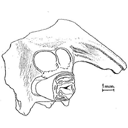
Les vertébrés fossiles de Colombie et les problèmes posés par l'isolement du Continent sud-Américain.Jaime de PortaPublished online: 20/01/1969Keywords: Columbia; Cretaceous; Fauna; Quaternary; South America https://doi.org/10.18563/pv.2.2.77-94 Abstract A general view is given of the vertebrate faunas, Cretaceous to Quaternary of age, found in Columbia and of their principal characteristics. This view leads to the discussion of the isolation of the South American continent and of the role played by the Bolivar syncline with respect to North American immigrants during the Oligocene. The absence of marine deposits of Oligocene age in the north and northwest of Columbia suggests the possibility of a communication with Central America. This communication would have permitted the passage of hystricomorph rodents, of platyrrhine monkeys, and of colubrids. The non-occupation, until then, of the ecologie niches of these groups would have favored their installation beside the indigenous fauna. In this hypothesis it would no longer be necessary to admit that these vertebrates arrived as «island hoppers ››. The eco-biologic conditions would explain the absence of large-sized forms of North American origin. PV article infos Published in Vol. 02, Fasc. 2 (1969) |
|
|
Les Paramyidae (Rodentia) de l'Eocène inférieur du bassin de Paris.Jacques MichauxPublished online: 15/07/1968Keywords: Ailuraviinae; Eocene; Paramyinae; Rodents https://doi.org/10.18563/pv.1.4.135-193 Abstract The exploitation of new early Eocene localities in the Paris Basin has resulted in the collecting of numerous mammalian remains, among which are about 300 isolated teeth representing the rodents. They belong, for the most part, to the paramyid group. Only the latest level of the early Eocene has yielded rodents belonging to the pseudosciurid group. The paramyids, the object of this study, are represented by at least 5 genera and 10 species; they are distributed among 4 clearly dilferentiated subfamilies : Paramyinae Simpson 1945, Pseudoparamyinae Michaux 1964, Ailuraviínae n. subf., Microparamyinae Wood1962. PV article infos Published in Vol. 01, Fasc. 4 (1968) |
|
|
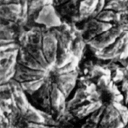
Eggshell microstructure and porosity of the Nicobar scrubfowl (Megapodius Nicobariensis, great Nicobar island, India)Géraldine Garcia
Published online: 16/12/2008 |
|

|
La poche à phosphate de Ste-Néboule (Lot) et sa faune de vertebres du Ludien supérieur. 11- CréodontesBrigitte Lange-BadréPublished online: 25/09/1978Keywords: Creodonta; Eocene; Quercy Phosphorites https://doi.org/10.18563/pv.8.2-4.295-299 Abstract The teeth and the astragale of the Creodonta from Ste-Néboule (Lot) are referred to Hyaenodon brachyrhynchus. Isolated teeth fit morphologically the material from La Débruge (Middle Ludian). However, biometric analysis suggests an Upper Ludian age. PV article infos Published in Vol. 08, Fasc. 2-4 (1978) |
|

|
La poche à Phosphate de Ste-Néboule (Lot) et sa faune de vertébres du Ludien supérieur. 5-SquamatesJean-Claude Rage
Published online: 25/09/1978 |
|

|
Contributions à l'étude du gisement Miocène supérieur de Montredon (Hérault). Les grands mammifères. 5 - Les périssodactyles EquidaeVéra EisenmannPublished online: 15/11/1988Keywords: Equidae; Hipparion; Late Vallesian; Mammalia; Montredon; Perissodactyla https://doi.org/10.18563/pv.18.ext.65-96 Abstract Revision of the hipparion material from Montredon, including newly excavated and other unpublished specimens brings evidence of specific heterogeneity. PV article infos Published in Vol. 18, Ext (1988) |
|

|
Evolution de la lignée Megacricetodon collongensis-Megacricetotodon roussillonensis (Cricetidae, Rodentia, mammalia) au cours du Midocène inférieur et moyen dans le Sud de la France.Jean-Pierre AguilarPublished online: 14/06/1995Keywords: Cricetids rodents; Evolutionary lineage; Lower and Middle Miocene; Mammalian biochronology; Megacricetodon new species; Southern France https://doi.org/10.18563/pv.24.1-2.1-45 Abstract New populations of the genus Megacricetodon have recently been discovered in Southern France.Two new species are defined: M. lemartineli n. sp. and M. fournasi n. sp., their stages of evolution are intermediate between those of M. gersii and M. roussillonensis. Morphological and biometrical analysis indicate the presence of only one lineage: M. collongensis--M. collongensis-gersii--M. gersii--M.lemartineli nov. sp.--M. fournasi nov. sp. and M. roussillonensis. This observation allows to refine the chronology based on rodents, for the Late Early Miocene and the Middle Miocene in the Southern France. PV article infos Published in Vol. 24, Fasc. 1-2 (1995) |
|

|
New records of terrestrial Mammals from the upper Eocene Qasr el Sagha Formation, Fayum Depression, EgyptPatricia A. Holroyd
Published online: 16/12/1996 |
|

|
L'anatomie de Lyrocephaliscus euri (wiman), Trématosaure du Trias inférieur du Spitsberg : arrière-crâne, squelette axial et ceinture scapulaire.Jean-Michel Mazin
Published online: 30/06/1983 |
|
