
Abstract book of the 18th Conference of the EAVP
Pterosaurs from Coahuila
New elephant cranium from early Pliocene Ileret, Kenya
Les sélaciens du Miocène de la région de Montpellier
Muridae du Pliocène supérieur d'Espagne et du midi de la France.
Contribution à l'étude des genres Gliravus et Microparamys.
Eocene (57) , Quercy Phosphorites (38) , Systematics (32) , Rodents (29) , Mammalia (27) , Rodentia (25) , Miocene (25)
Page 9 of 19, showing 20 record(s) out of 366 total

|
Cricetid and arvicolid rodents of the California wash local fauna, late Blancan of the san Pedro Valley, Arizona.Cristiana MezzabottaPublished online: 15/12/1997Keywords: Arvicolidae; Blancan; Cenozoic; Cricetidae; Mammals https://doi.org/10.18563/pv.26.1-4.189-218 Abstract An assemblage of micromammals is reported from California Wash, a fossil bearing continental deposit in the San Pedro Valley, Arizona, late Blancan in age. Cricetid and Arvicolid rodents are richly represented, including four and two species, respectively. This study mainly focuses on Sígmodon, the most abundant form. The sample of Sigmodon is compared to samples of the same genus from other localities of the San Pedro Valley of comparable age, and some inferences on the taxonomy of the genus are attempted. The specimens are referred to Sigmodon minor and Sigmodon cf. S. curtisi. Other cricetids (Onychomys pedroensis and Baiomys brachygnathus) and arvicolids (Mictomys vetus and Ondatra ídahoensis) are also recognized and described. PV article infos Published in Vol. 26, Fasc. 1-4 (1997) |
|

|
New murids and gerbillids (Rodentia, Mammalia) from Pliocene Siwalik sediments of India.Rajeev Patnaik
Published online: 15/12/1997 |
|

|
Reflections on some Russian eotheriodonts (Reptilia, Synapsida, Therapsida)Denise Sigogneau-Russell and P. K. TchudinovPublished online: 28/02/1972Keywords: Reptilia; Russia; Synapsida; Therapsida https://doi.org/10.18563/pv.5.3.79-109 Abstract As a result of the enrichment of eotheriodont material by one of us (P.K.T.), these specimens (essentially Biarmosuchur and Eotitanosuchur) are reexamined and refigured. A reevaluation of their particularities supports the distinction of two families, for which new diagnoses are proposed. This leads us to discuss the affinities of these families, with respect to the sphenacodonts on one hand, and to the South African primitive theriodonts on the other (gorgonopsids and ictidorhinids). This study contains inherent paleogeographic consequences which are considered in conclusion. PV article infos Published in Vol. 05, Fasc. 3 (1972) |
|

|
Eléments nouveaux sur l'évolution des genres Eucricetodon et Pseudocricetodon (Eucricetodontinae, Rodentia,Mammalia, de l'Oligocène d'Europe Occidentale.Bernard ComtePublished online: 01/07/1985Keywords: evolution; Occidental Europe; Oligocene; Rodentia; Systematics https://doi.org/10.18563/pv.15.1.1-68 Abstract The review of material recently collected in the new localities from the “Phosphorites du Quercy", and different localities from the South of France, bring new informations on the genus Eucricetodon THALER. 1966, and Pseudocricetodon THALER, I969 (Middle and Upper Oligocene. Western Europe). Thanks to Eucricetodon huerzeleri VIANEY-LIAUD, 1972, which were unsufficiently known until now, is proposed. During the middle Oligocene Eucricetodon atavus MISONNE, 1957 seems to give rise to two lineages. One of them led to Eucricetodon huberi,which however exhibits a larger size and a development of progressive characters on the teeth. The other would be Eucricetodon huerzeleri well differentiated at the “Mas de Pauffié" standard level (beginning of the upper Oligocene). The ornementation of lower incisors is described, when possible. Though the fossils are not abundant, it seems that the ancestral lineage, Eucriretodon atavus, remains in the upper Oligocene (Boningen standard level). evolving into Eucricetodon praecursor SCHAUB, 1925 (Rickenbach standard level). The characters of Eucricetodon dubius (SCHAUB. 1925), represented by a numerous population in Pech Desse and Pech du Fraysse (Quercy). confirm that this species and Eucricetodon praecursor belong to two different lineages. As Eucricetodon dubius shows more primitive features, this species could not originale from Eucricetodon atavus -Eucricetodon huberi. The appearance of this species at the level of Mas de Pauffié could be the result of an immigration. A new definition of Pseudocricetodon incertus (SCHLOSSER. 1884) is given. This species has been found in several localities, where it had not been identified until now. lts comparison with Pseudocricetodon moguntiacus (BAHLO. l975), found at several localities from the standard level of Antoingt (end of middle Oligocene). shows a parallel evolution to that of Pseudocetodon incertus, which is of larger size and with a less complicated pattern of teeth. PV article infos Published in Vol. 15, Fasc. 1 (1985) |
|

|
Contributions à l'étude des micromammifères du gisement Miocène supérieur de Montredon (Hérault). 4 - Les chiroptèresBernard SigéPublished online: 30/06/1982Keywords: Chiroptera; Hérault; Late Miocene; Micromammals; Montredon https://doi.org/10.18563/pv.12.3.133-140 Abstract The Montredon local fauna yielded very rare bats, represented by damaged isolated teeth. Only a few documents are available for this period of the European Neogene. ln this poor state of knowledge, the material represents three undetermined species, a supposed molossid and two vespertilionids. PV article infos Published in Vol. 12, Fasc. 3 (1982) |
|

|
Rongeurs nouveaux de l'Oligocène Moyen d'Espagne.Louis ThalerPublished online: 15/09/1969Keywords: Cricetidae; Oligocene; Pseudocricetodon; Rodents; Theridomys https://doi.org/10.18563/pv.2.5.191-207 Abstract Description of four new rodents from a recently discovered locality at Montalban. Theridomys crusafonti nov. sp. is considered as the ancestry of T. Iembronicus. Theridomys varian: nov. sp. includes «Theridomys» morphotypes and «Blainvilllimys» morphotypes; it could be ancestral to B. blainvillei. Pseudoltinomys nanus nov. sp. represents a new lineage paralleling in evolution that of P. gaillardi (which is equally found at Montalban). Pseudocricetodon montalbanensis nov. gen., nov. sp. designates a lineage of very small Cricetidae accompanying Eucricetodon. With these well defined new species and six others present in the locality, Montalban appears as the best faunal reference point within the biochronologic zone of La Sauvetat. PV article infos Published in Vol. 02, Fasc. 5 (1969) |
|

|
Un crane de Chalicothere (Mammalia, Perissodactyla) du Miocène supérieur de Macédoine (Grèce) : remarque sur la phylogénie des ChalicotheiinaeLouis de Bonis
Published online: 14/06/1995 |
|

|
The Late Cretaceous nesting site of Auca Mahuevo (Patagonia, Argentina): eggs, nests, and embryos of titanosaurian sauropods.Luis M. Chiappe
Published online: 15/12/2003 |
|

|
Nouveaux Mammifères Eocènes du Sahara OccidentalJean SudrePublished online: 01/11/1979Keywords: Eocene; Mammals; Occidental Sahara https://doi.org/10.18563/pv.9.3.83-115 Abstract The fossil mammals collected from the Eocene of Hammada du Dra (northwest Sahara. Algeria) and two fragmentary teeth from the Lutetian of M'Bodione Dadere (Senegal) are described. PV article infos Published in Vol. 09, Fasc. 3 (1979) |
|
|
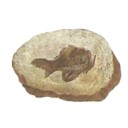
Designating a lectotype for Mesacanthus pusillus (Gnathostomata: Acanthodii)Matthew G. Baron
Published online: 03/03/2021 |
S.I. Data |
|
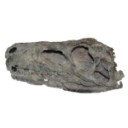
Difficulties with the origin of dinosaurs: a comment on the current debateMatthew G. Baron
Published online: 01/07/2020 |
|
|
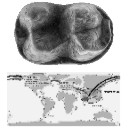
First early Eocene tapiroid from India and its implication for the paleobiogeographic origin of perissodactylsThierry Smith
Published online: 08/09/2015 |
|

|
Functional aspects of the evolution of rodent molarsPercy M. ButlerPublished online: 01/10/1980Keywords: Chewing; Muridae; Rodents; Wear facets https://doi.org/10.18563/pv.9.ext.249-262 Abstract The wear facets of primitive rodents can be homologized with those of primitive primates and ungulates. As in primates, the jaw movement was ectental, with an increased anterior component in the lingual phase (phase ll). The buccal phase (phase I) in rodents approaches the horizontal and it tends to be reduced in importance in comparison with the lingual phase. ln more advanced rodents the efficiency of grinding is increased by the development of additional cutting edges of enamel (e.g. enlargement of hypocone, development of mesoloph and lingual sinus). The buccal phase movement becomes lined up with the lingual phase movement to form a single oblique chewing stroke,resulting in planation of the crown. As the stroke becomes more longitudinal (propalinal) the enamel edges become more transverse. In Muridae propalinal chewing evolved before the loss of cusps, facets were reorientated and additional cusps developed. PV article infos Published in Vol. 9, Ext (1980) |
|

|
Les crocodiliens paléogenes du Tilemsi (Mali): un aperçu systématiqueEric Buffetaut
Published online: 01/10/1980 |
|

|
Les nouvelles faunes de rongeurs proches de la limite mio-pliocène en Roussillon. Implications biostratigraphiques et biogéographiquesJean-Pierre Aguilar, Jacques Michaux, Bernadette Bachelet, Marc Calvet
Published online: 29/04/1991 |
|

|
Les mammifères post-glaciaires de Corse. Etude Archéozoologique.Jacques MichauxPublished online: 15/09/1989Keywords: Book review https://doi.org/10.18563/pv.19.1.45-46 Abstract Les Mammifères post-glaciaires de Corse de Jean-Denis Vigne, étudie l'évolution des mammifères en Corse depuis 7000 av. J.-C. jusqu'à aujourd'hui, en explorant leur adaptation insulaire, l'impact de l'homme sur leur extinction ou leur introduction, et les pratiques de chasse et d'élevage à travers l'analyse des ossements. PV article infos Published in Vol. 19, Fasc. 1 (1989) |
|

|
Rongeurs muroidés du Néogène supérieur d'Afghanistan, évolution, biogéographie, corrélationsLouis D. BrandyPublished online: 30/09/1981Keywords: Afghanistan; Muroidea; Neogene https://doi.org/10.18563/pv.11.4.133-179 Abstract The rodent faunas of five afghan localities found in 1976 and 1977 (Sherullah, Ghazgay, Pul-e Charkhi, Dawrankhel 14 and 15) are studied. PV article infos Published in Vol. 11, Fasc. 4 (1981) |
|

|
Evolution des Aplodontidae Oligocènes EuropéensNorbert Schmidt-Kittler and Monique Vianey-Liaud
Published online: 01/10/1979 |
|

|
Les Affinités de Nyctereutes megamastoides (Pomel), canidé du gisement Villafranchien de Saint-Vallier (Drôme, France).R. MartinPublished online: 31/01/1971Keywords: Canidae; Nyctereutes; Villafranchian https://doi.org/10.18563/pv.4.2.39-58 Abstract Nyctereutes megamastoides (Pomel) from the Villafranchian of the Auvergne and from Saint-Vallier presents cranial and dental characters sufficiently close to those of the late Pliocene canid from Perpignan (Roussillon), described by Depéret under the specific name of Canis donnezani belonging to the same genus Nyctereutes. The extinction of the European "Nyctereutes" group seems due to the too great alimentary specialization of this canid, whereas the Asiatic lineage represented in the Villafranchian by Nyctereutes sinensis Schlosser and at present by Nyctereutes procyonider Gray was able to maintain itself probably by means of a profound change in its alimentary regime. PV article infos Published in Vol. 04, Fasc. 2 (1971) |
|
|
New datation of the Tafna Basin (Algeria): A combination between biochronological and magnetostratigraphical dataSalamet Mahboubi
Published online: 11/03/2015 |
|
