|
Sur les empreintes de pas des gros mammifères de l'Eocène supérieur de Garrigues-ste-Eulalie (Gard)
Published online: 01/10/1980
Keywords:
Eocene; Euzet; Footprints; Ichnofauna
https://doi.org/10.18563/pv.9.ext.37-78
Abstract
Is hereby described an impressive lchnoiauna belonging to the Lower to Middle Ludian of the Gard (S. France). The slab, already cleaned over a length of 18 m, is located near the top of the Potamides aporoschema lacustrine limestone (Lower Ludian, Euzet zone). It is therefore older than the Célas sandstone deposit, and still more than the Melanoides albigensis and M. acutus marly limestone corresponding to the Upper Levels of the Ludian stage. Although biostratigraphically older than the La Débruge and Montmartre zone, the biotope shows already a sampling of very tall Artiodactyles, Perissodactyles and Carnivorous. One of the most « majestic ›› Artiodactyles, Anopolotheriipus lavocati, nov., points out a huge size type. To mention also among the Ichnotypes described, 10, the big Perissodactyle Palaeotheriipus similimedius, nov., and the big Carnivorous Hyaenodontipus praedator, nov.
PV article infos
Published in Vol. 9, Ext (1980)
|
PDF
|

|
Préface au mémoire jubilaire en hommage à René Lavocat
Published online: 01/10/1980
Keywords:
Editorial
https://doi.org/10.18563/pv.9.ext.1-13
Abstract
Monsieur René Lavocat, Directeur du Laboratoire de Paléontologie des Vertébrés de la troisième section de l'Ecole Pratique des Hautes Etudes, quittait le service actif en l'année 1979.
Cela fait maintenant quinze ans que fut installé à Montpellier, le laboratoire de Paléontologie des Vertébrés de l'Ecole Pratique des Hautes Etudes. La décision de M. René Lavocat a été particulièrement heureuse dans ses conséquences. Il a en effet permis le développement de l'enseignement et de la recherche en Paléontologie des Vertébrés à l'Université de Montpellier où se créa un des centres importants de cette discipline, en France. Il suscita la création de nouveaux laboratoires de l'Ecole Pratique des Hautes Etudes installés dès leur origine à Montpellier, ainsi que le déplacement à Montpellier d'un Laboratoire de l'Ecole Pratique, préexistant. Ce groupe de laboratoires constitue maintenant l'Institut de Montpellier de l'Ecole Pratique des Hautes Etudes.
[...]
View editorial
Published in Vol. 9, Ext (1980)
|
PDF
|

|
Additions of the Geiseltal mammalian faunas, Middle Eocene: Didelphidae, Nyctitheriidae, Myrmecophagidae.
Published online: 04/12/1989
Keywords:
Edentata; Geiseltalian; German Democratic Republic; Lipotyphla; Marsupialia; MP 11-13
https://doi.org/10.18563/pv.19.3.95-114
Abstract
New and hitherto unpublished mammals from the stratigraphical levels Unterkohle, Untere Mittelkohle and Obere Mittelkohle of the Geiseltal near Halle, GDR, are described (= biochronological levels MP 11-13, Geiseltalian sensu Franzen & Haubold 1986a, b). The marsupial taxa Amphiperatherium aff. maximum (MP 12), A. goethei (MP 12), and Peratherium aff. monspeliense (MP 12 and 13) are recorded for the first time. A lectotype for Amphiperatherium giselense is designated, and the alleged primate Microtarsioides voigzi is assigned to Marsupialia, incertae sedis. A new insectivore species, Saturninia ceciliensis n. sp., is described (MP 13). The anteater Eurotamandua joresi is recorded for the first time outside its type locality, Grube Messel, FRG (MP 11). The present humerus and ulna display the autapomorphic features of the myrmecophagids.
PV article infos
Published in Vol. 19, Fasc. 3 (1989)
|
PDF
|

|
Un crane de Chalicothere (Mammalia, Perissodactyla) du Miocène supérieur de Macédoine (Grèce) : remarque sur la phylogénie des Chalicotheiinae
Published online: 14/06/1995
Keywords:
Chalicotheriidae; Cladistics; Greece; Miocene; Perissodactyla; PHYLOGENY
https://doi.org/10.18563/pv.24.1-2.135-176
Abstract
The discovery in the Turolian (Late Miocene) of Dytiko 3 (Macedonia, Greece) of a complete skull with mandibles and cervical vertebrae, atlas and epistropheus, is a very important contribution to the knowledge of the subfarnily Chalicotheríinae. After the description, the comparison with other specimens of Miocene chalicotheres permits the revival of the generic name Macrotherium with a new species M. macedonicum. This genus is mainly characterized by a short snout and an inflated cerebral skull. It coexists during the Miocene with Chalicotherium. A cladistic analysis leads to conclusion that the species which has been described from the Early Middle Miocene of Rusinga must be identified as the type-species of a new genus: Butleria.
PV article infos
Published in Vol. 24, Fasc. 1-2 (1995)
|
PDF
|

|
Dilambodont Molars :a functional interpretation of their evolution
Published online: 16/12/1996
Keywords:
Convergent evolution; Dilambdodont; Molar function; Molar teeth
https://doi.org/10.18563/pv.25.2-4.205.213
Abstract
In dilambdodont molars the primitive crest between paracone and metacone (centrocrista) is represented by a pair of crests that join the mesostyle (postparacrista, premetacrista). The cutting action of these crests against the crests of the hypoconid is described. Dilambdodonty is a derived adaptation for greater cutting efficiency. It has evolved several times and in more than one way.
PV article infos
Published in Vol. 25, Fasc. 2-4 (1996)
|
PDF
|

|
D'important restes de Diplobune minor FILHOL à Itardies (Quercy)
Published online: 15/11/1974
Keywords:
Diplobune; Quercy Phosphorites
https://doi.org/10.18563/pv.6.1-2.47-54
Abstract
Voici un résumé concis en trois phrases :
Cet article décrit des restes importants de Diplobune minor Filhol, une espèce d’Anoplothériidé, issus du gisement d’Itardies (Quercy), découvert lors de la campagne de fouille de 1972. Le matériel comprend deux crânes, plusieurs mandibules et des éléments du squelette, notamment des pattes postérieures complètes, permettant une étude anatomique détaillée. L’espèce, auparavant mal connue, est caractérisée par une denture distinctive, avec des incisives puissantes, des prémolaires carénées, et des molaires à structure archaïque, ainsi que par des particularités squelettiques comme des métapodes allongés et des phalanges planes.
L’étude de ces restes permet de préciser la morphologie et la systématique de cette espèce, tout en soulignant la nécessité d’une analyse plus approfondie des éléments anatomiques. La faune d’Itardies, corrélée avec celle de Montalban, suggère que Diplobune minor est soit plus récente que le Sannoisien supérieur classique, soit moins localisée chronologiquement qu’on ne le pensait.
PV article infos
Published in Vol. 06, Fasc. 1-2 (1974)
|
PDF
|

|
Revision of the family Cephalomyidae (Rodentia, Caviomorpha) and new cephalomyids from the early Miocene of Patagonia.
Published online: 30/07/2001
Keywords:
Cephalomyidae; Lower Miocene; Patagonia; Rodentia; Soriamys; Systematics
https://doi.org/10.18563/pv.30.1-2.51-88
Abstract
A new genus of hystricognath rodent with two new species, Soriamys gaimanensis and Soriamys ganganensis, from the Colhuehuapian Age (Early Miocene), Sarmiento Formation, of Patagonia is described. The first species comes from the south barranca of the valley of Rio Chubut, near Gaiman locality (Chubut Province). It is known through a great number of dental remains in different stages of wear. The teeth are protohypsodont, with cement in the principal valleys. P4 are simpler, more oval inoutline and without a differentiated hypocone-hypoflexus. Upper molars are pentalophodont in early stages of wear and become bilobated in middle and advanced stages; M3 have a temporary third posterior lobe due to the maintenance of the braquiflexus on the posterior wall of the tooth. Lower teeth have a completely asymrnetrical pattern in relation to the uppers. The molars are trilophodont, with only one complex crest in the trigonid composed of the fusion of the anterolophid and mesolophid. The dp4 have a derived pentalophodont pattern due to the loss or fusion of the mesolophid and the development of an accessory transverse crest between the anterolophid and metalophid. The second species is known through a complete skull and jaw and other skull fragments with the dentition, proceeding from Pampa de Gan Gan, Chubut province. Respect to the first species, the teeth are higher crowned, with an earlier occlusal simplification and a third posterior lobe of M3 more developed and persistent. The skull and jaws show many chinchilloid characters, such as jugal bone with an ascending process, concave palate, very prominent dorsal shelf of the masseteric fossa, nasolachrymal duct opened laterally on the maxillary and very developed lateral mandibular fossa. Moreover, Soriamys is closely related to Cephalomys by sharing a similar asymmetric dental pattern and other dental and mandibular characters. These two genera constitute a natural group, the Cephalomyidae, with peculiar dental characters, like the asymmetric pattem of the upper and lower teeth; Cephalomyopsis, and probably Litadontomys, can be considered part of this group. Scotamys and Perimys constitute a distinct lineage (the Neopiblemidae or Perimyidae), more closely related to the chinchillids. Many characters shared by cephalomyids, eocardiids and caviids suggest a closer affinity between the Chinchilloidea and the Cavioiidea as a whole. Abrocoma shows also an asymmetric dental pattern and other chinchilloid features that suggest some degree of relationship with the cephalomyids, still not well determined.
PV article infos
Published in Vol. 30, Fasc. 1-2 (2001)
|
PDF
|

|
Mammals and stratigraphy : the Paleocene of Europe
Published online: 01/12/1982
Keywords:
Europe; Mammalia; Mammalian biochronology; Paléogène; Stratigraphy
https://doi.org/10.18563/pv.12.ext
Abstract
The mammalian faunas of the Paleogene of Europe and their localities are reviewed with comments on problems of European stratigraphy (epoch, stage and substage limits) and on the possibilities of faunal migrations. Radiometric dating is discussed. A stratigraphic scale for the Paleogene is presented, as well as a refined system of sequential faunal levels.
PV article infos
Published in Vol. 12, Ext (1982)
|
PDF
|

|
Etude paléoneurologique comparative de Parabos Cordieri (De Christol), un bovidae (Mammalia, Artiodactyla) du Pliocène d'Europe Occidentale.
Published online: 31/03/1982
Keywords:
Bovidae; endocranial cast; Europe; Pliocene
https://doi.org/10.18563/pv.12.2.57-74
Abstract
A skull of Parabos cordieri, undamaged by fossilisation, allows us to make an endocranial cast, which is compared to those of Bos taurus, Boselaphus tragocamelus and Hippotragus equinus. These are studied by general form (shape, volume, « rolling-up›› and inclination), and by detailed morphology (gyri and sulci patterns, rete mirabile, importance of rhinencephalon and cerebellum).
A preliminary study is made in order to recognize convolution topography, gyri, sulci, and the various encephalic regions as clearly on an endocranial cast as on a bare encephalon; an intermediate stage is the study of an encephalon covered with «soft» meninges.
The comparative study reveals great similarity between the endocranial cast of Parabos cordieri and that of Boselaphus tragocamelus, both belonging to the tribe Boselaphini. On the other hand, a marked differences separates the cast of Parabos cordieri from that of Bos taurus, representing the tribe Bovini to which Parabos cordieri had been referred. The endocranial cast of Hippotragus equinus, which had long been considered the descendant of Parabos cordieri, is also quite different from that of Parabos.
PV article infos
Published in Vol. 12, Fasc. 2 (1982)
|
PDF
|

|
Rongeurs du Miocène inférieur et moyen en Languedoc. Leur apport pour les correlations Marin-Continental et la Stratigraphie.
Published online: 31/03/1980
Keywords:
Languedoc; Miocene; Rodents; Southern France
https://doi.org/10.18563/pv.9.6.155-203
Abstract
The rodents (Cricetidae, Gliridae, Sciuridae) found in lacustrine, brackish marine and karstic sediments of Miocene age in Languedoc, assign the position of the different localities in the scale of "niveaux repères" used by mammalogists. Some detailed stratigraphical studies bring several correlations between this continental biochronological scale and the marine scale ; the most important results are the Aquitanian age of the "niveaux repères" of Coderet and Paulhiac, the Burdigalian age of Laugnac, Estrepouy, Vieux-Collonges, La Romieu and Sansan and the Langhian or Lower Serravallian age of La Grive M. The correlations between the Tethys and the Central Paratethys for the Lower Neogene profit also of these results, since the locality of Neudorf Spalte 1, 2 (Czechoslovakia) is shown to be younger than Sansan (France). The paleontological study has also several geological inferences for the Miocene of Languedoc ; with the calibration of this Miocene, we know quite precisely that the Lower Miocene is chiefly a time lacustrine sedimentation, and also that the marine Miocene sedimentation ends early in the Miocene Period, in Langhian or lower Serravallian times.
PV article infos
Published in Vol. 09, Fasc. 6 (1980)
|
PDF
|

|
Introduction à l'oeuvre scientifique de Donald E. Russell, "gentleman paleontologist"
Published online: 16/12/1996
Keywords:
D.E.Russell; Eocene; Mammals; Paleocene; Paleontology; synthesis
https://doi.org/10.18563/pv.25.2-4.63-74
Abstract
The scientific career of D.E. Russell began with a Pliocene fauna from Oregon, and then turned in the direction of European Paleogene mammals. Field work followed by study of the mammals that were collected, firstly in the Paleocene and later in the early Eocene, greatly rejuvenated learning in this field. Syntheses on the Northwest European Tertiary basin and on European marnmals and stratigraphy came next. Research on the Eocene of Asia was carried out jointly with Gingerich on Pakistan and with Dashzeveg on the faunas of Mongolia. An important synthesis on the entire Paleogene of Asia, joint with Zhai, followed. Field work in Africa with Sigogneau-Russell led to the discovery of Mesozoic mammals there. A synthesis of mammalian paleofaunas of the world was written with Savage, and a similar synthesis of Cenozoic vertebrate faunas is currently being prepared. These achievements reflect the perennial importance of field work, numerous collaborations with both amateurs and professionals, and the human qualities of this author.
PV article infos
Published in Vol. 25, Fasc. 2-4 (1996)
|
PDF
|
|
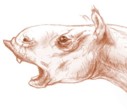
There were giants upon the earth in those days
Published online: 16/07/2014
Keywords:
Eurasia; history of science; Indricotheriinae; Paléogène; Rhinocerotoidea
https://doi.org/10.18563/pv.38.1.e4
Abstract
Rhinoceros Giants: the Paleobiology of Indricotheres. Donald R. Prothero. Life of the Past Collection, Indiana University Press; 160 pp. (66 b&w illustrations). Hardback (7x10”): USD 42.00 plus shipping. ISBN: 978-0-253-00819-0. E-book: USD 34.99. ISBN: 978-0-253-00826-8.
PV article infos
Published in Vol.38-1 (2014)
|
PDF
|
|
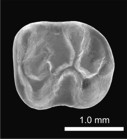
A new and primitive species of Protophiomys (Rodentia, Hystricognathi) from the late middle Eocene of Djebel el Kébar, Central Tunisia
Published online: 02/06/2014
Keywords:
Adaptive radiation; Bartonian; Dental morphology; North Africa; Paleobiogeography
https://doi.org/10.18563/pv.38.1.e2
Abstract
Based on fossil discoveries and phylogenetic studies, an Eocene Asian origin for hystricognathous rodents and anthropoid primates has gained strong support in recent years. The two groups then invaded both Africa and South America, which promoted their evolutionary success. However, the fossil record has so far failed to constrain the nature and precise timing of these pivotal dispersal events. In Africa, given the apparent absence of hystricognaths and anthropoids in early to early middle Eocene localities, it is suggested that these mammal groups dispersed from Asia to Africa sometime during the middle Eocene. In this paper, we report the discovery of several isolated teeth of a rodent from a new vertebrate locality situated in central Tunisia (Djebel el Kébar, KEB-1), dating from the late middle Eocene (Bartonian, ~39.5 Myr). These fossils document a diminutive new species of Protophiomys (P. tunisiensis nov. sp.), a basal genus of hystricognathous rodents which is well known from several North African mammalian-bearing localities of the end of the Eocene. The teeth of P. tunisiensis display a suite of anatomical details comparable with those observed in the other species of the genus, but with a lesser degree of development. Such an apparent primitive evolutionary stage is corroborated by the greater antiquity of this Tunisian species. P. tunisiensis nov. sp. is so far the most ancient representative of hystricognaths in Africa. However, it can be expected that hystricognaths were already present on that landmass given the new data on early caviomorphs recently reported from South America (at ~41 Myr). The arrival of hystricognaths in Africa from South Asia certainly predates the depositional period of the Kébar sediments, but perhaps not by much time.
PV article infos
Published in Vol.38-1 (2014)
|
PDF
|
|
Angolabatis nom. nov.,a replacement name for the Cretaceous genus Angolaia Antunes & Cappetta, 2002 (Chondrichthyes: Rajiformes), a preoccupied name.
Published online: 15/10/2006
Keywords:
Angola; Campanian/Maastrichtian; homonymy; Hypsobatidae; nomen novum; Rajiformes
https://doi.org/10.18563/pv.34.e13
Abstract
In 2002, Antunes & Cappetta published several new taxa (genera and species) in a paper on Cretaceous elasmobranch faunas from Angola. One of the new genera was named Angolaia (Rajiformes, Hypsobatidae; type-species: Angolaia benguelaensis Antunes & Cappetta, 2002, Late Campanian/Early Maastrichtian of Angola). Recently, Dr. Christian Kammerer kindly informed us that the genus Angolaia was preoccupied by a cicadellid homoptere (Insecta), published by Linnavuori & Al-Ne'amy, 1983. So, according to mIes of the International Code of Zoological Nomenclature (ICZN 1999, articles 52, 60) this name became unavailable. Consequently, the Rajiformes genus Angolaia is a junior homonym, invalid and must be rejected. In replacement, we propose the new name Angolabatis.
PV article infos
Published in Vol. 34, Fasc. 1-2 (2006)
|
PDF
|
|
Révision systématique des Anchilophini (Palaeotheriidae, Perissodactyla, Mammalia).
Published online: 15/10/2012
Keywords:
Anchilophus; Eocene; new genus; new species; Palaeotheriidae; Paranchilophus; Perissodactyla; Systematics
https://doi.org/10.18563/pv.37.1-3.1-165
Abstract
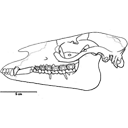
The knowledge of the Anchilophini has been lately renewed by the discovery of a rather large amount of new material still largely unpublished. This new material offers the opportunity of a systematic revision of this tribe gathering those of European Eocene Equoidea which bear no mesostyle on upper check teeth and display a heavy trend to the molarization of premolars.
A cladistic analysis has made out two genera, Anchilophus (Paranchilophus included as a subgenus), characterized by a marked lophodonty and the transverse narrowness of the cheek teeth, a rather high hypsodonty, the frequent occurrence of "crochets" and "anticrochets" on the superior ones, and a rather weak molarization of the premolars, opposite to Metanchilophus n. gen. whose cheek teeth are more transversally elongated, less high, less lophodont, with cusps better distinct, enamel thicker and premolars more molarized on the whole.
Three species of Anchilophus are recognized, A. desmaresti, type species of the genus, A. (Paranchilophus) remyi and A. (Paranchilophus) jeanteli n. sp.
The genus Metanchilophus is more diversified with the species dumasi, radegondensis, gaudini (whose a new sub-species M. g. fontensis is defined), depereli, castrensis n. sp. and chaubeti n. sp.
The skull anatomy has been moreover described with several taxa; it brings to light (for all that one can generalize) that Anchilophini were light animals with a slender and elongated snout, a thin zygomatic arch, a rather developed encephalon with an advanced gyrencephaly.
The structure of the nasal opening together with the occurrence of epitympanic sinuses and the molarizing process of the premolars corroborate the attribution of this tribe to the family PalaeotheIiidae.
PV article infos
Published in Vol. 37, Fasc. 1-3 (2012)
|
PDF
|
|
Nouvelles données sur les Ichnites de dinosaures d'El Bayadh (Crétacé Inférieur, Algérie)
Published online: 16/12/2008
Keywords:
Algeria; Brezina; El Bayadh; Ichnites; Lower Cretaceous; Sauropoids; Theropoids
https://doi.org/10.18563/pv.36.1-4.7-35
Abstract
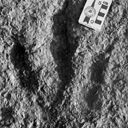
Evidence of 350 Lower Cretaceous Dinosaur footprints is pointed out in El Bayadh area. Their preliminary study allow to distinguish four trackway assemblages which reveal vertebrate bipedal presence forms of tri-and tetradactylous Dinosauroïds (Assemblages 1-3) and quadrupidal Sauropoïd (Assemblage 4).
The analysis of their footprint biometric features will attribute the quadrupidal Sauropoïd form to Brontopodus ichnogenus which is weIl known in the Jurassic and Cretaceous periods. In retum and despite their age, the dinosauroïd forms were approached, temporarily, to Grallator and Eubrontes types.
The occurrence of the dinosaur traces (Theropoïd and Sauropoïd) constitutes, in the Lower Cretaceous, an important first step of the knowlege of the marshy Reptilian fauna which takes over, from the begining of the Secondary Era, a wide paleogeographie area on the Southem Tethyan margin.
PV article infos
Published in Vol. 36, Fasc. 1-4 (2008)
|
PDF
|

|
La poche à phosphate de Ste-Néboule (Lot) et sa faune de vertebres du Ludien supérieur. 12- Fissipèdes (Carnivores)
Published online: 25/09/1978
Keywords:
Carnivora; Eocene; Quercy Phosphorites
https://doi.org/10.18563/pv.8.2-4.301-311
Abstract
Les Carnivores Fissipèdes de Sainte-Néboule appartiennent tous au genre Cynodictis et semblent constituer une population homogène. Celle-ci se distingue suffisamment des espèces déjà décrites pour constituer un taxon particulier : Cynodictis lacustris neboulensis n. s. sp. . L'étude des variations à l'intérieur de cette population nous a conduit à reconsidérer les critères utilisés pour définir les espèces existantes et à regrouper certaines d'entre elles. Il semble qu'il demeure cependant trois lignées distinctes dans le genre Cynodictis mais le matériel nous paraît encore insuffisant pour traduire cette remarque en termes de systématique.
PV article infos
Published in Vol. 08, Fasc. 2-4 (1978)
|
PDF
|

|
Une faune du niveau d'Egerkinger (MP 14; Bartonien inférieur) dans les phosphorites du Quercy (Sud de la France)
Published online: 18/12/1990
Keywords:
Biochronology; Early Bartonian; Eocene; evolution; Mammals; New taxa; Quercy
https://doi.org/10.18563/pv.20.1.1-32
Abstract
The Laprade fauna is chronologically situated between those from Egerkingen and Lissieu and consequently, is close to the MP 14 reference-level of the European mammalian biochronological scale (Symposium of Mainz, 1987).
This new fauna is presently the oldest known in the Quercy phosphorites, formerly the Le Bretou fauna (MP 16) was considered as the oldest one. The Laprade fauna includes 21 species which belong in 7 mammalian orders (Marsupialia: Amphiperatherium bastbergense, Amphiperatherium goethei; Apatotheria: Heterohyus (Gervaisyus) pygmaeus nov. subgen., nov. sp.; Lipotyphla: Saturninia cf. mamertensis, Saturninia cf. intermedia; Chiroptera: Vespertiliavus lapradei nov. sp.; Rodentia: Protadelomys cf. lugdunensis, Elfomys nov. sp.; Primates: Nannopithex cf. filholi, cf. Pseudoloris or Pivetonia; Perissodactyla: ?Palaeotherium ?castrense, small-sized Palaeotherium sp., Plagiolophus sp., Anchilophus sp.; Artiodactyla: Dichobune cf. robertiana, Mouillacitherium cartieri, Tapirulus cf. depereti, Mixtotherium priscum, Pseudamphimeryx schlosseri, and Artiodactyla indet). Sixteen of these species are mentioned for the first time from the Quercy faunas.
The recognition of a new apatemyid, Heterohyus (Gervaisyus) pygmaeus nov. subgen., nov. sp., attests to an early origin of a lineage known in the Late Eocene. The emballonurid bat Vespertiliavus lapradei nov. sp. is presently the earliest record of this genus and family. This Auversian fauna leads to discuss the age of taxa showing archaic features. These taxa were defined on specimens collected in the Quercy during the last century and have never been found in the Quercy localities recently investigated. This fauna bears also evidence of a karstic filling episode older than those previously dated by fossils in the Quercy Jurassic.
PV article infos
Published in Vol. 20, Fasc. 1 (1990)
|
PDF
|

|
Ein neuer condylarthre und ein tillodontier (Mammalia) aus dem Mitteleozän des Geiseltales.
Published online: 15/04/1986
Keywords:
Condylarthra; Eocene; Europe; Mammalia; taxonomy; Tillodontia
https://doi.org/10.18563/pv.16.1.35-53
Abstract
In the course of a revision of the Equoidea numerous dentitions as well as a partial skeleton of a Phenaeodont were discovered from the Middle Eocene lignite beds of the Geiseltal locality. These fossils are recognized as a new genus and species of Phenacodontidae : HaIlensia matthesi n.g. n.sp.. The species is present in the « untere und obere Unterkohle ›› (uUK, oUK = the lower and upper part of the Lower Coal Seam) as well as in the « obere Mittelkohle ›› (oMK = the upper part of the Middle Coal Seam). Two fragmentary upper jaws described and figured by Matthes (1977) as Propachynolophus gaudryi are also belonging to Hallensia matthesi. Thus the decisive argument for classifying the " Unterkohle " of the Geiseltal section as Lower Eocene has to be dropped. Another relict form of the Geiseltal is Esthonyx tardus n. sp. documented by a fragmentary mandible coming from the « untere Unterkohle ››. This is the latest Tillodont from Europe. Contrasting to E. munieri from the european Lower Eocene the dentition of E. tardus is morphologically more progressive.
PV article infos
Published in Vol. 16, Fasc. 1 (1986)
|
PDF
|

|
Contributions à l'étude du gisement Miocène supérieur de Montredon (Hérault). Les grands mammifères. 8 - Analyse paléoécologique de la faune mammalienne
Published online: 15/11/1988
Keywords:
France; Mammalia; Montredon; Paleoecology; Upper Miocene
https://doi.org/10.18563/pv.18.ext.177-186
Abstract
The species diversity of the mammalian fauna from Montredon (Hérault, France, late Miocene) is examined in terms of richness and abundance. A cenogramic analysis of the fossil mammalian community suggests the prevalence of open habitats, with the presence of marshes and of a poorly developed galery forest, and a climate rather warm and dry.
PV article infos
Published in Vol. 18, Ext (1988)
|
PDF
|