|
Multituberculate endocranial casts
Published online: 30/06/1983
Keywords:
Allotheria; Cretaceous; endocranial cast; Mongolia; multituberculates
https://doi.org/10.18563/pv.13.1-2.1-12
Abstract
A reconstruction of a multituberculate endocranial cast is made on the basis of a complete natural cast prepared from the skull of Chulsanbaatar vulgaris, and other less complete endocasts, all from the Late Cretaceous of Mongolia. The multituberculate endocast is of mammalian pattern but it has retained a therapsid-like lateral profile with a deep rhombencephalon and a shallow telencephalon. It is characterized by: a heart-shaped cross-section of the telencephalon; an extensive lissencephalic neocortex; a very prominent pons placed far anteriorly; a lack of cerebellar hemispheres, and very large paraflocculi. Its structure, very different from the brains of other mammals, suggests thats the Multituberculata branched very early from the main mammalian stock. This supports Simpson's (1945) idea that the Multituberculata should be placed in a subclass of their own: Allotheria MARSH. The endocast and braincase structure show that the Multituberculata had strongly developed senses of smell and hearing. The encephalization quotient of approx. 0.55 evaluated for Ch. vulgaris is relatively high for a Mesozoic mammal.
PV article infos
Published in Vol. 13, Fasc. 1-2 (1983)
|
PDF
|

|
An Australian Miocene Brachipposideros (Mammalia, Chiroptera) related to Miocene representatives from France
Published online: 15/12/1982
Keywords:
Australia; bats; Chiroptera; Miocene
https://doi.org/10.18563/pv.12.5.149-172
Abstract
A new middle Miocene hipposiderid bat is described from a limestone deposit on Riversleigh Station in north-western Queensland. Hipposideros (Brachipposideros) nooraleebus n. sp. is the first record of this subgenus from anywhere in the world outside of France. The palaeoecological setting of the fossil bats appears to have been a relatively quiet, sunny lime-enriched tropical pool that contained tortoises, crocodiles and fish. It is possible that the bats were washed into the pool from an adjacent cave.
The Riversleigh bat most closely resembles the French Burdigalian (early middle Miocene) bat H. (B.) aguilari. It is also possible that it may have been closely related to the original Australian hipposiderid stock that ultimately gave rise to the endemic monotÿpic Rhinonycteris aurantius. The disjunct distribution of species of H. (Brachipposideros) suggests that representatives of this subgenus will be found in at least tropical southern Asia.
PV article infos
Published in Vol. 12, Fasc. 5 (1982)
|
PDF
|
|
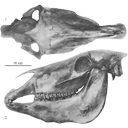
Old world hemiones and new world slender species (Mammalia, Equidae)
Published online: 16/12/2008
Keywords:
Amerhippus; biometry; Equus; Holocene; New World; Old World; Osteology; Pleistocene; Pliocene
https://doi.org/10.18563/pv.36.1-4.159-233
Abstract
Morphological and biometrical description of skulls, teeth, and limb bones of extant and fossil Old World herniones (including E. hydruntinus) and of New World 'stilt-Iegged' and other slender species from Blancan to Holocene. An Appendix presents ways in which the approximate size of some missing bones or dimensions may be deduced from available ones.
The discussed and/or illustrated fossils were found in Bolivia (Tarija), Canada (Yukon), China (Choukoutien, Gulongshan, Jiling, Loufangzi), Ecuador (Oil Fields), Ethiopia (Melka Kunturé), France (Lunel-Viel), Germany (Süssenborn), Greece (Agios Georgios, Petralona), Hungary (Dorog), Italy (Romanelli), Mexico (Cedazo, San Josecito), Mongolia (Sjara-osso-gol), Spain (Venta Micena), ex-Soviet Union (Akhalkalaki, Binagady, Chokurcha, Chukochya, Kabazi, Kolyma, Krestovka, Kurtak, Staroselie, Tologoj), USA (Alaska, Arkalon, Cedar Meadow, Channing, Conkling, Dry Mountains, Hay Springs, Leisey Shell Pit A, Lissie Formation, Natural Trap, Pool Branch, Powers Ranch, Rock Creek, San Diego, Santo Domingo, Seymour Formation, Shelter, Slaton, Trinity River). Numerous raw or statistically elaborated data are given in Tables.
There is no evidence for the existence of Old World hemiones in the New World nor of 'stilt-Iegged' equids in the Old World. The first 'stilt-Iegged' equid was found at Santo Domingo, New Mexico, and is believed to be Late Blancan. It was probably at the origin of E. calobatus (Arkalon, Rock Creek) and of the smaller E. semiplicatus (Channing, Rock Creek). Slender, but not 'stilt-Iegged', equids found at Natural Trap, Wyoming, ca. 12 ky ago belong to Amerhippus. AlI these species share with Oid World Sussemiones (and some hemiones) peculiar patterns on the lower cheek teeth.
The slender Equus sp. B of Leisey Pit A, Florida, ca. 1.2 Ma, as weIl as Amerhippus francisci and E. tau (probably a senior synonym of E. quinni) share conventional lower cheek teeth patterns. The skulls of A. francisci and E. tau, however, are quite different.
Paleontological data suggest a common origin of Amerhippus, Sussemiones, and 'stilt-Iegged' equids during the late Blancan. Old World hemiones seem to have differentiated later.
PV article infos
Published in Vol. 36, Fasc. 1-4 (2008)
|
PDF
|
|
Enamel hypoplasia on rhinocerotoid teeth: Does CT-scan imaging detect the defects better than the naked eye?
Published online: 03/01/2022
Keywords:
fossil teeth; method; micro-CT imaging; Rhinocerotoidea
https://doi.org/10.18563/pv.45.1.e2
Abstract
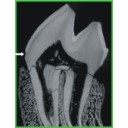
Micro-CT imaging is an increasingly popular method in paleontology giving access to internal structures with a high resolution and without destroying precious specimens. However, its potential for the study of hypoplasia defects has only recently been investigated. Here, we propose a preliminary study to test whether hypoplastic defects can be detected with micro-CT (μCT) scan and we assess the costs and benefits of using this method instead of naked eye. To do so, we studied 13 fossil rhinocerotid teeth bearing hypoplasia from Béon 1 (late early Miocene, Southwestern France) as positive control and 11 teeth of the amynodontid Cadurcotherium (Oligocene, Phosphorites du Quercy, Southwestern France), for which enamel was partly or totally obscured by cement. We showed that all macroscopically-spotted defects were retrieved on 3D reconstructions and selected virtual slices. We also detected additional defects using μCT scan compared to naked eye identification. The number of defects detected using μCT was greater in the Cadurcotherium dataset (paired-sample Wilcoxon test, p-value = 0.02724) but not for our control sample (paired-sample Wilcoxon test, p-value = 0.1171). Moreover, it allowed for measuring width and depth of the defects on virtual slices (sometimes linked to stress duration and severity, respectively), which we could not do macroscopically. As μCT imaging is both expensive and time consuming while not drastically improving the results, we recommend a moderate and thoughtful use of this method for hypoplasia investigations, restricted for instance to teeth for which enamel surface is obscured (presence of cement, uncomplete preparation, or unerupted germs).
PV article infos
Published in 45-1 (2022)
|
PDF
S.I. Data
|
|
A femur of the Late Cretaceous giant bird Gargantuavis from Cruzy (southern France) and its systematic implications
Published online: 27/06/2019
Keywords:
Aves; femur; France; Gargantuavis; Late Cretaceous
https://doi.org/10.18563/pv.42.1.e3
Abstract
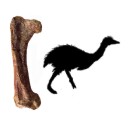
A large avian femur recently discovered at the Late Cretaceous Montplo-Nord locality at Cruzy (Hérault, southern France) is referred to the giant bird Gargantuavis philoinos. The estimated mass of the bird is 57 kg, within the range of living cassowaries. The specimen provides new evidence about the anatomy of G. philoinos, notably showing that the distal end of the femur was similar to that of modern birds in having a condylus lateralis subdivided into two semicondyles. A new diagnosis of Gargantuavis philoinos is provided and the taxon is placed in a new family of basal ornithurines.
PV article infos
Published in Vol 42-1 (2019)
|
PDF
|
|
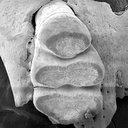
A new Desmodillus (Gerbillinae, Rodentia) species from the early Pliocene site of Langebaanweg (South-western Cape, South Africa)
Published online: 20/01/2017
Keywords:
Lower Pliocene; Muridae; Rodentia; RSA
https://doi.org/10.18563/pv.41.1.e1
Abstract
Situated in the Cape region of the Republic of South Africa (RSA), the paleontological site of Langebaanweg is dated to 5.1 Myr and is famous for having yielded an abundant vertebrate assemblage, including numerous rodent species from the Mio-Pliocene transition. Based on molar morphology and skull anatomy, the single Gerbillinae taxon identified at Langebaanweg and described in this paper is allocated to Desmodillus, which is a modern monotypic South African endemic genus. It is significant in being the oldest representative of the genus in Africa. We describe here a new species of this genus which is larger than the modern D. auricularis, but nevertheless retains some of its main characteristics, namely the shape of the maxilla and mandible, the presence of poorly fused alternating cusps, and no longitudinal crest. This taxon differs from modern South African Gerbilliscus representatives in some mandibular and maxillary characters, in the m1 prelobe cusp, and in having less fused cusps. Two fossil Gerbillinae discovered in the Upper Miocene of Africa and Asia, Abudhabia and Protatera, have been compared with the new species. We discuss their relationships with modern and Plio-pleistocene Gerbillinae and conclude that Abudhabia could be the sister taxon of Desmodillus and that around 6-5 Myr a vicariance event allowed Gerbillinae to diversify into modern Desmodillus in South Africa, and Gerbilliscus in East Africa. The murine/gerbilline ratio, which is a good indicator of rainfall, supports other proxies which suggest that at 5.1 Myr the climate in the Langebaanweg region was more humid than today.
PV article infos
Published in Vol 41-1 (2018)
|
PDF
S.I. Data
|

|
La Poche à phosphate de Ste-Neboule (Lot) et sa faune de vertébres du Ludien Supérieur. 3- Chéloniens
Published online: 25/09/1978
Keywords:
Eocene; Quercy Phosphorites
https://doi.org/10.18563/pv.8.2-4.181-184
Abstract
The few remains recently collected at Ste Néboule (upper Eocene) belong to three genera: the Testudinid Ergilemys, of which it is the oldest occurence in Western Europa, probably Palaeochelys and an unpublished genus, which is peculiar to the Phosphorites du Quercy. Some statements are made on the chelonian fauna as a whole in that région. After the study of some characters proper to the genus Ergilemys, some remarks are made concerning its antecedents and descendants.
PV article infos
Published in Vol. 08, Fasc. 2-4 (1978)
|
PDF
|

|
Les crocodiliens paléogenes du Tilemsi (Mali): un aperçu systématique
Published online: 01/10/1980
Keywords:
Crocodilians; Dyrosoridae; Eocene; Mali; Palaeocene
https://doi.org/10.18563/pv.9.ext.15-35
Abstract
Abundant crocodilian fossil remains have been collected, mainly by R. Lavocat. from several levels of the
Palaeogene of the Tilemsi valley (eastern Mali). Several dyrosaurids occur in the Palaeocene (Montian ?) : Phosphatosaurus sp., Hyposaurus bequaerti (Dollo). H. wilsoni (Swinton). H. nopesai (Swinton), Rhabdognathus rarus Swinton, R. compressus n. sp. ln the lower Eocene has been found a dyrosaurid which cannot be accurutely determined.In the middle Eocene were found a dyrosaurid, Tilemsisuchus lavocati n. g., n. sp., and an indeterminate eusuchian.
PV article infos
Published in Vol. 9, Ext (1980)
|
PDF
|

|
A new hypothesis for the origin of African Anomaluridae and Graphiuridae (Rodentia)
Published online: 16/12/1996
Keywords:
Africa; Anomaluridae; Gliridae; Graphiuridae; Paleontology; PHYLOGENY; Rodentia
https://doi.org/10.18563/pv.25.2-4.349-358
Abstract
A new hypothesis for the phylogenetic relationships of recent anomalurids and graphiurids is proposed, based on information from evolutionary lineages of Paleogene European rodents, particularly Gliridae, and Eocene Algerian Zegdoumyidae. Differences in first occurrences, in paleogeography, and in infraorbital structure in glirids (protrogomorphy and pseudomyomorphy) and graphiurids (hystricomorphy) separate Graphiuridae from Gliridae (Graphiurinae is here raised to family rank). Similar considerations, and dental morphology, suggest that Anomaluridae (appearing in the late Eocene) and Graphiuridae (appearing in the Pliocene) are related to early Eocene Zegdoumyidae.
PV article infos
Published in Vol. 25, Fasc. 2-4 (1996)
|
PDF
|

|
Origins of avian reproduction: answers and questionsfrom dinosaurs.
Published online: 15/12/2003
Keywords:
Avian reproduction; clutch; dinosaurs; egg size; nests; oviducts; parental care
https://doi.org/10.18563/pv.32.2-4.149-169
Abstract
The reproductive biology of living birds differs dramatically from that of other extant vertebrates. Distinctive features common to most birds include a single ovary and oviduct, production of one egg at daily or greater intervals, incubation by brooding and extensive parental care. The prevalence of male parental care is most exceptional among living amniotes. A variety of hypotheses exist to explain the origin of avian reproduction. Central to these models are proposed transitions from a condition of no care to maternal, paternal or biparental care systems. These evolutionary models incorporate a number of features potentially preservable or inferable from the fossil record (integument, skeletal adaptations for flight, egg and clutch size, nest form, hatchling developmental stage, the number and function of oviducts, and the mode of egg incubation). Increasing availability of data on dinosaur reproduction provides a means of assessing these hypotheses with fossil evidence. We compare dinosaur data to a selection of models that emphasize maternal, paternal or biparental care. Despite some congruence with dinosaur features, no single model on the evolution of avian reproduction conforms fully to the fossil record, and the ancestral parental care system of birds remains ambiguous. Further investigation into dinosaur parental care, nest structures, clutch geometry, egg-pairing, eggshell porosity, and embryo identification may eventually resolve these issues.
PV article infos
Published in Vol. 32, Fasc. 2-4 (2003)
|
PDF
|

|
Sur le remplissage des "poches à phosphorite" d'Aubrelong (commune de Bach, Lot)
Published online: 15/11/1974
Keywords:
Aubrelong; Quercy Phosphorites
https://doi.org/10.18563/pv.6.1-2.21-25
Abstract
L’article analyse les poches à phosphorite d’Aubrelong (Quercy), comparant les fouilles de 1937 (Éocène supérieur) et celles des années 1967-1970 (Oligocène inférieur), révélant une stratification contrastée : argiles brunes pauvres en fossiles en surface, et argiles rouges riches en phosphates et faune en profondeur. Les analyses géochimiques confirment une origine latéritique sous climat tropical humide, avec des remplissages tantôt stratifiés, tantôt chaotiques, remettant en cause l’hypothèse d’une progression chronologique uniforme des dépôts
PV article infos
Published in Vol. 06, Fasc. 1-2 (1974)
|
PDF
|

|
La région des phosphorites du Quercy
Published online: 15/11/1974
Keywords:
Quercy Phosphorites
https://doi.org/10.18563/pv.6.1-2.5-19
Abstract
L'exploitation des phosphates s'est produite surtout de 1890 à 1914 de Saint-Antonin à Cajarc, sur le Causse de Limogne, dont l'histoire géologique et morphologique peut expliquer les conditions de gisement du minerai, et aussi la découverte des nombreux, variés et beaux fossiles qu'on a extrait des poches en même temps que la phosphorite. Le Causse de Limogne est le nom donné par les géographes au plateau calcaire, faisant partie des Causses du Quercy, et compris entre la vallée du Lot au Nord et celle de "Aveyron au Sud". En fait, le nom de "causse" désigne localement un terroir, un paysage, à sous-sol de calcaire, à sol peu épais, qui s'oppose aux sols argileux des « terreforts » et aux sols légers et profonds des "boulbènes". Chaque communauté agricole distinguait ainsi son causse, par exemple le causse de Caylus, le causse de Limogne ou le causse de Cajarc. C'est par extension que l'appellation Causse de Limogne désigne tout un petit pays. La présence des poches à phosphate déborde un peu vers le Nord la vallée du Lot, et vers l'Est le Causse de Limogne proprement dit (Causse de Villeneuve).
PV article infos
Published in Vol. 06, Fasc. 1-2 (1974)
|
PDF
|

|
Les pantolestidés (Mammalia, Pantolesta) de l'Eocène inférieur de Prémontré (Aisne, France).
Published online: 30/07/2001
Keywords:
France; Mammals; Pantolestids; Ypresian
https://doi.org/10.18563/pv.30.1-2.11-35
Abstract
Study of pantolestid mammals from the late Ypresian locality of Prémontré (reference level MP 10) allows the recognition of three genera: Palaeosinopa. Pantolestes and Premontrelestes n. gen. Pantolestes, up to now only recorded from North America, is represented by P. sabatieri n. sp. Premontrelestes n. gen., represented by the type species P. duchaussoisi n. sp., is compared with Pantolestes and Buxolestes. The latter, known from middle Eocene sites in Europe, has not been recognized at Prémontré. Two other taxa, the first of which is close to Pantolestes and the second of Premontrelestes n. gen. are left in open nomenclature.
PV article infos
Published in Vol. 30, Fasc. 1-2 (2001)
|
PDF
|

|
Mammals and stratigraphy of the continental mammal-bearing Quarternary of South America
Published online: 16/12/1984
Keywords:
Geochronology; Mammalia; Quaternary; South America; Stratigraphy
https://doi.org/10.18563/pv.14.ext
Abstract
Previous chronological arrangements of South American Quaternary land mammal faunas are appraised on the basis of current geological and paleontological data. Three South American late Pliocene-Pleistocene land mammal ages are conventionally recognized, from oldest to youngest, the Uquian, Ensenadan, and Lujanian ; all are defined on Argentine faunas.
The Uquian is based fundamentally and historically on the fauna from the Uquía Formation in Jujuy Province, northwestern Argentina. Important known formations in Argentina yielding Uquian Age faunas include the sub-surface Puelche Formation (or Puelchense) near the city of Buenos Aires, and the Barranca de Los Lobos and Vorohué Formations between Mar del Plata and Miramar, Buenos Aires Province. A tentative subdivision is propos-ed for the Uquian into three subages based on knowledge of the Mar del Plata-Miramar sequence, from oldest to youngest, the Barrancalobian, Vorohuean, and Sanandresian. In Argentina the Uquian is presently marked by the first known record of Scelidodon, Hydrochoeropsis, Ctenomys, Canidae, Ursidae, Gomphotheriidae, Equidae, Tapiridae, Camelidae, Cervidae, and the last known record of Thylatheridium, Thylophorops, Dankomys, Eumysops, Pithanotomys, Eucoelophorus, Hegetotheriidae, Sparassocynidae, and Microtragulidae.
The Ensenadan Age is based on the fauna from the Ensenada Formation near the city of Ensenada, Buenos Aires Province. In Argentina the Ensenadan is marked by the first known record of Lomaphorus, Neothoracophorus, Plaxhaplous, Cavia, Lyncodon, Lutra, Galera, Smilodon, Dicotyles, Lama, Vicugna, the last known record of Orthomyctera, and the only known record of Brachynasua.
Typícal beds of late Lujanian Age in Argentina consist of fluvial deposits occupying stream channels, and shallow basins, often incised into beds of early Lujanian (i.e. Bonaerian of early workers) and Ensenadan Age. The Lujanian Age is based on a fauna from beds along the Rio Luján, about 65 km west of the city of Buenos Aires, Buenos Aires Province. The Lujanian in Argentina is marked by the first record of Equus, Chlamyphorus, and Holochilus, and the last record of Megatherioidea, Glyptodontoidea, Arctodus (=Arctotherium), Smilodon, Litopterna, Notoungulata, Proboscidea, Equidae, Morenelaphus, and Palaeolama.
These land mammal ages are often difficult to recognize in other South American countries. The compositions of South American Pleistocene faunas vary with the environment. Some taxa were widely distributed in fossil deposits throughout the continent, but their occurrences need not reflect synchroneity. This is a result of changing climates and habitats in time. Consequently, proposed intracontinental correlations need confirmation based on magnetostratigraphy and a radioisotope time scale. Paleontologic characterizations of these land mammal ages (i.e. first and last record, and guide fossils) are useful for much of Argentina, but extensions to most of the other parts of South America are at best tenuous.
The majority of known non-Argentine Pleistocene faunas are believed to be Lujanian in age. Possible non Argentine early Pleistocene (Uquian) faunas include Ayo Ayo and Anzaldo in Bolivia, and Cocha Verde in southern Columbia. A possible middle Pleistocene (Ensenadan or early Lujanian) fauna is the Chichense of Ecuador. Paleomagnetic and radioisotopic date (MacFadden et al., 1983) clearly indicate that the greater part of the Tarija fauna (Bolivia) is Ensenadan in age.
The end of the Pleistocene and beginning of the Holocene in South America is marked by extinction of nearly all large mammalian herbivores and their specialized large predators. Radiocarbon age determinations suggest that large scale extinctions of megafauna occurred between 15,000 and 8,000 yrs. B.P. (years before present).
PV article infos
Published in Vol. 14, Ext (1984)
|
PDF
|

|
Agriotherium intermedium (Stach 1957) from a Pliocene fissure filling of Xiaoxian County (Anhuei Province, China) and the phylogenetic position of the genus.
Published online: 30/09/1983
Keywords:
Carnivora; China; PHYLOGENY; Pliocene; skull anatomy; Ursidae
https://doi.org/10.18563/pv.13.3.65-81
Abstract
A fragmentary mandible and maxilla of a small sized Agriotherium of a young individual discovered from a Pliocene fissure filling in Xiaoxian county (Anhuei Province, China) are described. Judging from the morphology of the dentition and its dimensions the new material can be identified as Agriotherium inlermedium (STACH l957). Hendey's proposition (1980) that the Agriotherium species are derived from Indarctos is reconsídered on the basis of the new documents. As a result of a more general phylogenetic discussion it can be stated, that: 1. the supposed size increase as well as other trends, leading from Indarctos to Agriotherium are untenable ; 2. there are no positive indications to assume a phylogenetic transition of these two genera. 3. there are no real arguments in favor of an adaptational reversal in the evolution of Agriotherium. Hence, many features of that genus supposed by Hendey to be derived are plesiomorphic ; 4. regardless of the previous points it is methodologícally impossible to establish direct ancestor - descendant relationships between Indarctos and Agriotherium species, as Hendey did. Based on the data available and especially on the characters of the new material from China it is more likely that Agriotherium and Indarctos are two genera which developed independently. While advanced Agriotherium species, e.g. A. africanum, resemble in some respects Indarctos by adaptational analogies, more primitive species, e.g. Agriotherium intermedium, are quite dissimilar to lndarctos. While Indarctos might be derived from an Ursavus like forerunner, Agriotherium has its roots more likely somewhere in between Ursavus and the Hemicyon-group.
PV article infos
Published in Vol. 13, Fasc. 3 (1983)
|
PDF
|

|
Les mammifères de Rians (Eocène inférieur, Provence)
Published online: 01/02/1981
Keywords:
Eocene; Mammals; Provence; Rians
https://doi.org/10.18563/pv.10.2.43-126
Abstract
The fossil mammals discovered in the quarry of Rians (Sparnacian, Provence) are described. Among these forms, Hyracotherium is interesting because of the little molarization of the lower premolars and its small size, and Diacodexis by its small size and very primitive astragalus ; they may be the most primitive representatives of their respective orders. Also, Proviverra eisenmanni n. sp. is the smallest and most primitive hyaenodontid yet described. Hyopsodus itinerans is the first species of this genus described France. Among other rare fossils is a new species of bat, a small palaeoryctid, and other forms not yet identified. Marsupials are varied. Several new species are present among the rodents. The fauna is well-balanced and rich in small hyopsodontid condylarths. It is stratigraphically situated at the
Dormaal reference-level, at the base of the early Eocene, and is considered equivalent to the late Clarkforkian of North America. The hypothesis is presented that new forms appearing at the beginning of the Wasatchian in North America migrated, in fact, at that time from Europe.
PV article infos
Published in Vol. 10, Fasc. 2 (1981)
|
PDF
|
|
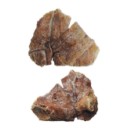
Dortokid turtle remains from the Upper Cretaceous of Cruzy (Hérault, southern France) and phylogenetic implications
Published online: 14/11/2022
Keywords:
Cruzy; Dortoka vasconica; France; Late Cretaceous; Turtle
https://doi.org/10.18563/pv.45.2.e3
Abstract
An isolated right costal 1 from the Late Cretaceous Massecaps locality (Cruzy, Hérault, southern France) is assigned to Dortoka vasconica (Dortokidae). This find adds a new element to the Late Cretaceous turtle fauna of Cruzy and further supports the hypothesis that two distinct lineages of Dortokidae were present in Europe during the Late Cretaceous-Paleogene due to geographical isolation.
PV article infos
Published in 45-2 (2022)
|
PDF
|
|
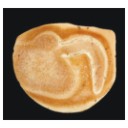
Eocene Teleostean Otoliths, Including a New Taxon, from the Clinchfield Formation (Bartonian) in Georgia, USA, with Biostratigraphic, Biogeographic,
and Paleoecologic Implications
Published online: 03/01/2022
Keywords:
climate; Congridae; Ophidiidae; Sciaenidae; tectonics
https://doi.org/10.18563/pv.45.1.e1
Abstract
Investigations of the Clinchfield Formation (middle Eocene, upper Bartonian) exposed at the Hardie Mine (Wilkinson County, Georgia, USA), produced 4,768 actinopterygian otoliths representing 14 taxa and increased the number of bony fishes threefold from the site. The somewhat limited richness was characterized by bonefishes, mud eels, conger eels, sea catfishes, cusk-eels, snooks, grunts, drums and croakers, and porgies. The assemblage had a relatively even distribution with Ophidiidae, Congridae, and Sciaenidae most common. Included in the otolith taxa was a new sciaenid genus and species, Eosciaena ebersolei, with unknown relationships to other Sciaenidae. The Clinchfield otoliths were compared to other middle and late Eocene in age otolith assemblages in Alabama, Mississippi, and Louisiana utilizing percentage similarity measurements. Analysis indicated that the Clinchfield otoliths were not greatly similar or greatly unlike the Moodys Branch and Yazoo Clay otolith assemblages. However, the Clinchfield showed little relationship to the slightly older Lisbon Formation in adjacent Alabama and is postulated to be related to global climatic and plate tectonic events. Biostratigraphically, the Clinchfield otolith taxa are essentially the same as the other formations except for the Lisbon, which has at least ten unique species. Abundances of Clinchfield otolith taxa indicate a possible sub-bioprovince in the eastern Gulf Coastal Plain. The Clinchfield otoliths indicate a tropical to perhaps subtropical, soft substrate, mainly normal marine to slightly reduced salinities, inner shelf (0–20 m) paleoenvironment with indications of proximal continental coastlines. This investigation represents an initial step in addressing the immensely understudied Paleogene otolith assemblages in Georgia.
PV article infos
Published in 45-1 (2022)
|
PDF
|

|
La poche à phosphate de Sainte-Néboule (Lot) et sa faune de vertébrés du Ludien supérieur. 13-Rongeurs
Published online: 25/09/1978
Keywords:
Eocene; Quercy Phosphorites
https://doi.org/10.18563/pv.8.2-4.313-318
Abstract
Sainte-Néboule has yielded only 4 species of Rodents. But the Theridomyids (Blainvillimys rotundidens and Patriotheridomys altus) are very significative of the age of the locality: Ste-Néboule is lower than the marker level of Escamps
PV article infos
Published in Vol. 08, Fasc. 2-4 (1978)
|
PDF
|

|
La poche à phosphate de Ste-Néboule (Lot) et sa faune de vertebres du Ludien supérieur. 9- Primates et Artiodactyles
Published online: 25/09/1978
Keywords:
Eocene; Quercy Phosphorites
https://doi.org/10.18563/pv.8.2-4.269-290
Abstract
La faune d'artiodactyles de Ste-Néboule, qui comprend neuf espèces, présente de nombreux
points communs avec les faunes habituellement rattachées au Ludien supérieur, telles celles de La Débruge ou de Montmartre. A l'inverse de ces localités, on ne connaît pourtant, à Ste-Néboule, ni Oxacronae, ni Anoplotheriinae. Parmi les espèces du gisement se trouve une nouvelle espèce du genre Mouillacitherium (M. schlosseri n. sp.), cette forme devant être interprétée comme le dernier représentant du rameau. Nous faisons connaître par ailleurs la presque totalité de la denture du Dacrytherium saturninii, espèce qui était à ce jour très imparfaitement documentée. Ste-Néboule est, d'autre part, la seule localité où l'on peut signaler l'association probable de deux lignées du genre Amphimeryx. Les primates sont peu diversifiés à Ste-Néboule, puisque le groupe est limité au seul genre Adapis. Les genres Microchoerus et Pseudoloris, que l'on sait pourtant être représentés dans des gisements dâge voisin (Microchoerus ornatus à San Cugat de Gavadons et Mormont-Entreroches, Pseudoloris reguanti à San Cugat de Gavadons, Pseudoloris cf. reguanti à Neustadt ; cf. Louis et Sudre 1975) sont absents dans les faunes du Quercy de cette période.
PV article infos
Published in Vol. 08, Fasc. 2-4 (1978)
|
PDF
|