|
Equus caballus antunesi, nouvelle sous-espèce Quaternaire du Portugal
Published online: 30/10/1989
Keywords:
Equidae; Equus caballus; new subspecies; Perissodactyla; Portugal; Würm
https://doi.org/10.18563/pv.19.2.47-72
Abstract
Equus caballus antunesi, nova subspecies, was a hypsodont, slender, and rather small horse (around 141cm at the withers), with narrow hooves and protocones longer on P3/-P4/ than on M1/-M2/. It does not fit in any of the different "types" of Pleistocene caballine horses previously recognized but may be related to the horse from the Acheulean of Solana del Zamborino.
Hypsodonty, small size, slenderness, narrow hooves are all characters that can easily be related to ecological conditions. Equus caballus antunesi was probably a horse adapted to rather dry and cold conditions and to a hard ground. It does not seem related at all to the North-European Equus caballus germanicus-gallicus group.
PV article infos
Published in Vol. 19, Fasc. 2 (1989)
|
PDF
|

|
Les Amphibiens et les reptiles du Pliocène supérieur de Balaruc II (Herault, France)
Published online: 15/09/1989
Keywords:
amphibians; Europe; France; Pliocene; Reptiles
https://doi.org/10.18563/pv.19.1.7-28
Abstract
The late Pliocene site (MN 16) of Balaruc II (Hérault, France) has provided remains of the following amphibians and reptiles: Chelotriton pliocenicus nov. sp. and Triturus marmoratus (Salamandridae), cf. Rana (Ranidae), cf. Blanus (Amphisbaenidae), cf. Agama (Agamidae), Gekkonidae indet., Lacerta s.l. (Lacertidae), "Ophisaurus" sp. (Anguidae), Michauxophis occitanus (Aniliidae), Erycinae indet. (Boidae), Elaphe cf. E. longissima and Malpolon sp. (Colubridae), cf. Naja (Elapidae) and Vipera sp. (Viperidae). The salamandrid Chelotriton pliocenicus and the aniliid Michauxophis occitanus constitute, up to now, the only records of these groups in the European Pliocene. The fauna is indicative of a warm, dry
subtropical climate.
PV article infos
Published in Vol. 19, Fasc. 1 (1989)
|
PDF
|

|
Skeleton of early Eocene Homogalax and the origin of Perissodactyla
Published online: 16/12/1996
Keywords:
Eocene; Homogalax; Perissodactyla; Skeletal Anatomy
https://doi.org/10.18563/pv.25.2-4.243-260
Abstract
The first good skeletal remains of Homogalax protapirinus from the Wasatchian of the Bighorn Basin, Wyoming, indicate that this primitive tapiromorph was more plesiomorphic in many features than primitive equoids including Hyracotherium. Compared to Hyracotherium, Homogalax more closely resembles Phenacodonta (the closest outgroup of Perissodactyla for which postcrania are known) in various details of articular surfaces, muscle attachments, and proportions of the humerus, manus, and pes.Among known taxa, Homogalax most nearly approximates the plesiomorphic postcranial skeletal anatomy of Perissodactyla.
PV article infos
Published in Vol. 25, Fasc. 2-4 (1996)
|
PDF
|

|
The Late Cretaceous nesting site of Auca Mahuevo (Patagonia, Argentina): eggs, nests, and embryos of titanosaurian sauropods.
Published online: 15/12/2003
Keywords:
Argentina; Eggs; embryos; Late Cretaceous; nests; Patagonia; titanosaurian sauropods
https://doi.org/10.18563/pv.32.2-4.97-108
Abstract
The late Cretaceous Auca Mahuevo nesting site (Neuquén Province, Argentina) has produced a large number of sauropod eggs, many of them containing the remains of embryos. Research at this site has generated important information about the development of the embryos, the morphology and eggshell microstructure of the eggs, and the reproductive behavior of sauropod dinosaurs. Cranial features present in the embryos have allowed their identification as those of titanosaurian sauropods. Differences in the texture of the sediments that contain some of the egg-clutches have illuminated their nest architecture. Microstructural studies of eggshells have expanded our knowledge of their variability and the incidence of pathologies within a reproductive titanosaurian population. Maps showing the spatial distribution of eggs and clutches. the stratigraphic distribution of the egg-beds, and the sedimentological context in which they are contained, have provided the basis for several inferences about the nesting behavior of these dinosaurs.
PV article infos
Published in Vol. 32, Fasc. 2-4 (2003)
|
PDF
|

|
Les poissons crétacés et tertiaires du bassin des Iullemmeden (République du Niger)
Published online: 15/09/1972
Keywords:
Actinopterygians; Cenozoic; Cretaceous; Dipnoans; Selachians
https://doi.org/10.18563/pv.5.5.179-251
Abstract
The present work is devoted to the study of the Cretaceous and Tertiary fishes (teeth of Selachians, Actinopterygians and Dipnoans) collected during a recent expedition in Niger. The Maestrichtian localities have yielded a new genus and a new subspecies of Selachian: Igdabatis sigmodon nov. gen., nov. sp. and Lamna biauriculata nigeriana nov. subsp. The locality of Sessao, which has been attributed to the Thanetian by means of the study of the fish, has furnished by screen-washing an interesting fauna wherein six new species are described: Raja Iouisi, Dasyatis sessaoensis, D. sudrei, D. russelli, Hypolophites thaleri and Ceratodus casieri. Comparison of these faunas with contemporary faunas of Africa has brought out a certain endemism in the Iullemmeden Basin during the late Cretaceous and the early Tertiary.
PV article infos
Published in Vol. 05, Fasc. 5 (1972)
|
PDF
|

|
Données nouvelles sur le genre Stehlinia (Vespertilionoidea, Chiroptera) du Paléocène d'Europe
Published online: 01/12/1974
Keywords:
Chiroptera; Palaeocene; Vespertilionoidea
https://doi.org/10.18563/pv.6.3-4.253-272
Abstract
Cet article présente une étude détaillée du genre Stehlinia, un chiroptère du Paléogène d'Europe, basé sur un matériel abondant issu notamment du gisement d'Escamps (Quercy). L'analyse révèle que Stehlinia possède un mélange de caractères primitifs (comme une denture tribosphénique complète et des prémaxillaires soudés) et évolués (notamment dans le squelette post-crânien), le rapprochant des vespertilionoïdes actuels, en particulier des Kerivoula.
PV article infos
Published in Vol. 06, Fasc. 3-4 (1975)
|
PDF
|

|
Les rongeurs de l'Eocène inférieur et moyen d'Europe Occidentale; Systématique, phylogénie, biochronologie et paléobiogéographie des niveaux-repères MP 7 à MP 14.
Published online: 15/12/1999
Keywords:
Biochronology; Early and Middle Eocene; Gliridae; Ischyromyidae; Mammalia; MP Scale; New Genus and Species; Palaeogeography; PHYLOGENY; Rodents; Theridomyidae; Western Europe
https://doi.org/10.18563/pv.28.2-4.89-351
Abstract
Fourteen distinct phyletical lineages which belong at least in three families: Ischyromyidae ALSTON, 1876, Gliridae THOMAS, 1896 and Theridomyidae ALSTON, 1876, have been identified after the study of more than 3600 rodent dental remains from about twenty Early and Middle Eocene european localities. A systematical and phylogenetical revision of these rodents has been achieved. Nearly all the specific and generic diagnosis are emended. Several new combinations and synonymies are proposed. Four new species and two new genera, Euromys nov. (Ailuravinae) and Hartenbergeromys nov. (Microparamyini), are named and described. Euromys nov. gen. is known by three distinctive ypresian (MP 7 to MP 10 european reference levels) chronospecies. This new lineage is thought to be the direct ancestor of Meldimys MICHAUX, 1968 and Ailuravus RUTIMEYER, 1891. A new species of the genus Plesiarctomys BRAVARD, 1850, Pl. lapicidinarum from Condé-en-Brie (MP 8-9 reference level), allows to relate the Plesiarctomys lineage to the Pseudoparamys MICHAUX, 1964 one. The taxa Sparnacomys HARTENBERGER, 1971, Pantrogna HARTENBERGER, 1971, and Corbarimys MARANDAT, 1989 are erected to genus rank; the last one is not thought to be an Ischyromyidae. A new chronospecies of Pantrogna, P. marandati nov. sp. from the locality of Prémontré (MP 10 reference level), is described. This lineage is at the origin of two others, namely Masillamys TOBIEN, 1954, including M. mattaueri (HARTENBERGER, 1975) nov. comb. (MP 10 reference level), and Hartenbergeromys nov. gen., known from MP 10 (H. hautefeuillei nov. sp.) and MP 11 (H. parvus TOBIEN, 1954) reference levels. The phylogenetical position of Hartenbergeromys nov. gen., at the origin of the european family Theridomyidae, is discussed. The systematical and phylogenetical status of two probable Paramyinae, "Paramys" woodi MICHAUX, 1964 and an unnamed genus and species, are discussed. New populations of the primitive Gliridae Eogliravus HARTENBERGER, 1971 and of the primitive Theridomyidae Protadelomys HARTENBERGER, 1968, are described and assigned to previously known species.
PV article infos
Published in Vol. 28, Fasc. 2-4 (1999)
|
PDF
|

|
Analyse d'ouvrage : A.J.Sutcliffe. On the track of Ice Age mammals
Published online: 30/12/1985
Keywords:
Book review
https://doi.org/10.18563/pv.15.4.270
Abstract
On the Track of Ice Age Mammals justifie pleinement son titre car l'auteur, Anthony J. Sutcliffe, apporte au lecteur faits et interprétations qui l'amèneront à s'intéresser encore plus au passé récent et à l'avenir de son environnement et à la question de l'impact de l'homme sur la nature. Après les chapitres qui présentent les temps glaciaires et les divers témoignages qui nous en sont parvenus, les cinquième et sixième apportent les informations nécessaires à la compréhension des résultats que nous donnent les chercheurs: principes, moyens d'étude et limites des méthodes, difficultés de l'intégration des données dans un cadre stratigraphique, variabilité des signaux climatiques, variabilité de leur intensité selon l'endroit par rapport au centre de la glaciation, complications liées à la qualité inégale de l'enregistrement géologique, en mer et sur le continent.
PV article infos
Published in Vol. 15, Fasc. 4 (1985)
|
PDF
|

|
Rongeurs Miocènes dans le Valles-Penedes 2 : Les rongeurs de Castell de Barbera
Published online: 20/04/1979
Keywords:
Castell de Barbera; Miocene; Rodents; Valles-Penedes
https://doi.org/10.18563/pv.9.1.17-32
Abstract
The rodent-fauna (Cricetidae and Gliridae) recently found at Castell de Barbera (Spain) is similar to those from the other locslities of the Valles - Penedes - Can Ponsic 1 and Can Llobateres - : same composition and similar evolutionary level of the different species. On the other hand this fauna is different from those of Upper Vindobonian and Vallesian localities of the Calatayud - Teruel area. Castell de Barbera has an intermediate chronological position between the localities of Anwil (Switzerland) and Can Ponsic 1. It is still not possible to validate or invalidate the initial attribution based on absence of Hipparion of Castell de Barbera to the Upper Vindobonian.
PV article infos
Published in Vol. 09, Fasc. 1 (1979)
|
PDF
|

|
Les sélaciens du Miocène de la région de Montpellier
Published online: 15/12/1970
Keywords:
Ichtyofauna; Miocene; Montpellier
https://doi.org/10.18563/pv.3.ext.1-139
Abstract
The utilization of screen-washing and attack by dilute acetic acid has permitted the collecting, in the Miocene of the department of Hérault (France), of a very rich ichthyofauna. This fauna is presently comprised of about 60 studied species, of which 11 are new, and represents, in the present state of knowledge, the most varied Miocene selachian fauna described in the world.
The abondance of material has allowed an overall revision to be made; it has thus been possible to complete the description and the figuration of species that were poorly known until now, and to synonymize species that were established on simple morphotypes. Paleo-ecologic study of the ichthyofauna has permitted conclusions to be drawn relative to climate and bathymetry; it was thus possible to show that the Miocene fauna of Hérault was a fauna of a subtropical sea, essentially neritic with rare pelagic contributions.
Knowing the stratigraphic position of the localities, it has been possible to distinguish three faunal assemblages based on associations of species. Some hypotheses on the evolution of certain lineages have been expressed.
The comparison of this fauna with that of other regions permitted the relationships of two diflerent faunal provinces to be specified: the first belongs to the northern domain, characterized by a fauna still subtropical but with numerous temperate water elements; the leoond belongs to the Mesogean domain characterized by warm water forms. It has also lhovm that contemporary faunas could be very different according to the bathymetric zone in which they lived, which furnishes valuable information for the paleogeographic reconstruction of sedimentary basins.
PV article infos
Published in Vol. 3, Ext (1970)
|
PDF
|
|
Enigmatic rodents from Lavergne, a late middle Eocene (MP 16) fissure-filling of the Quercy Phosphorites (Southwest France)
Published online: 08/04/2024
Keywords:
diversity; late Bartonian; Rodentia; taxonomy; Theridomyidae
https://doi.org/10.18563/pv.47.2.e1
Abstract
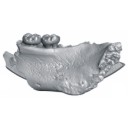
Two somewhat “odd” taxa of theridomyid rodents, one formerly known (Bernardia marandati Vianey-Liaud, 1991) and the other new (Idicia vidalenci gen. et sp. nov.) are discussed from a taxonomical and taphonomical perspectives. These two rodents were found at Lavergne, a late middle Eocene (MP16) “phosphatière” from the Quercy (Southwest France). The genus Bernardia, being preoccupied by a scale insect (Bernardia Ashmead, 1881), is here renamed Burgia. We benefit from this nomenclatural change to describe additional new dental specimens of this patriotheridomyine species, including a previously undescribed locus (P4). The other theridomyid from Lavergne, Idicia vidalenci gen. et sp. nov., so far documented by a mandible preserving two teeth (m2-m3) is a new taxon of peculiar occlusal morphology, and whose subfamilial affinities remain unknown. These two peculiar theridomyids recorded at Lavergne are found nowhere else, whether in coeval localities in Quercy or elsewhere in Western Europe. We discuss the possible causes of their unique presence at Lavergne.
PV article infos
Published in 47-2 (2024)
|
PDF
|
|
Autopsie d’une radiation adaptative : Phylogénie des Theridomorpha, rongeurs endémiques du Paléogène d’Europe - histoire, dynamique évolutive et intérêt biochronologique
Published online: 15/12/2016
Keywords:
Diversification; Extinction; Paléoenvironnements; Rodentia; Theridomyoidea
https://doi.org/10.18563/pv.40.3.e1
Abstract
Résumé :
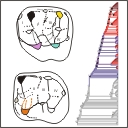
L’étude des rongeurs Theridomorpha permet de suivre le déroulement d’une radiation adaptative pendant toute sa durée (Eocène moyen-Oligocène terminal), sur un territoire restreint à l’extrémité ouest de l’Europe Occidentale. Dans ce papier, la phylogénie de ce groupe est établie à partir d’une analyse cladistique reposant sur l’examen de 315 caractères (310 dentaires). Le groupe d’intérêt comprend 110 des 132 espèces (24 genres) de Theridomyoidea et deux genres encore inclus jusqu’ici dans les Reithroparamyinae qui rejoignent les Theridomorpha. Les groupes externes comprennent des Glires basaux, Cocomys, Tanquammys et 16 Ischyromyiformes. Un cadre phylogénétique robuste est produit, qui permet de clarifier la systématique des Theridomorpha. La position des Remyoidea (nov. sup.fam.) au sein des Ischyromyiformes, extérieure aux Theridomorpha, est confortée. Les Protadelomys et Tardenomys sont à la base des Theridomyoidea, avant la séparation en deux clades correspondant aux familles Pseudosciuridae et Theridomyidae. Les sous-familles sont consolidées : Pseudosciurinae et Sciuroidinae pour les Pseudosciuridae ; Issiodoromyinae, Oltinomyinae, Columbomyinae, Theridomyinae, auxquelles s’ajoute au moins une nouvelle sous-famille (Patriotheridomyinae), pour les Theridomyidae. La topologie des chrono-espèces (sensu Simpson), traitées antérieurement comme lignées évolutives, apparaît dans la plupart des cas sous forme de clades successifs dans lesquels les espèces sont le plus souvent arrangées de manière pectinée, émergeant dans l’ordre stratigraphique. L’analyse des caractères aux principaux nœuds permet de consolider les caractères diagnostiques des taxons et les tendances évolutives, ainsi que de discuter des divers parallélismes et convergences dans l’évolution des structures et patrons dentaires (e.g., émail des incisives unisérié chez les Issiodoromyinae et les Patriotheridomyinae, ou pseudo-multisérié chez les Blainvillimys les plus hypsodontes, les Protechimys et Archaeomys ; patrons dentaires téniodontes ; allongement des dents déciduales chez les Patriotheridomyinae, Issiodoromyinae et Theridomyidae ; sélénodontie ou lophodontie). Les dynamiques évolutives traduites par les changements morphologiques sont mises en relation avec les variations environnementales. Enfin, les implications biochronologiques de l’évolution des Theridomyoidea sont discutées.
Abstract:
The adaptive radiation of the rodents Theridomorpha occurred during a limited time window (middle Eocene to late Oligocene), on an area restricted to Western Europe. In this paper, the phylogeny of this group is established via a cladistic assessment of 315 morphological characters (310 dental). The group of interest encompasses 110 upon 132 species (24 genera) of Theridomyoidea, and two genera formerly included within the Reithroparamyinae, and which are included here within the Theridomorpha. The outgroups include basal Glires, Cocomys, Tanquammys and 16 Ischyromyiformes. A robust phylogenetic frame is produced, which allows clarifying the systematics of the Theridomorpha. Within the Ischyromyiformes, the Remyoidea (nov. supfam.) are set apart from the Theridomorpha. Protadelomys and Tardenomys represent the earliest offshoots of the Theridomyoidea, before the dichotomy between Pseudosciuridae and Theridomyidae. It supports the former subfamilies Pseudosciurinae and Sciuroidinae within the Pseudosciuridae; and for the Theridomyidae: the Issiodoromyinae, Oltinomyinae, Columbomyinae, Theridomyinae, with at least one new subfamily (Patriotheridomyinae). The topologies of the chronospecies (sensu Simpson), formerly considered as evolutionary lineages, appear in most cases as successive clades, in which the species are generally pectinately arranged and emerging in the stratigraphic order. The analysis of characters supporting the main nodes allow consolidating the diagnosic characters of the taxa and their evolutionary trends, as well as discussing the various cases of parallelism and convergence in the evolution of structures and dental patterns (e.g., uniserial incisor enamel for Issiodoromyinae and Patriotheridomyinae, or pseudo-multiserial for the most hypsodont Blainvillimys, Protechimys and Archaeomys; taeniodont dental patterns; lengthening of deciduous premolars for Patriotheridomyinae, Issiodoromyinae and Theridomyidae; selenodonty or lophodonty).
Evolutionary dynamics are analysed with respect to environmental changes. Finally, biochronological implications of the evolution of Theridomyoidea are discussed.
PV article infos
Published in Vol 40-3 (2016)
|
PDF
S.I. Data
|

|
Study of the Turolian hipparions of the lower Axios valley (Macedonia, Greece). 4. Localities of Dytiko.
Published online: 15/12/1988
Keywords:
Equidae; Greece; Hipparion; Lower Axios Valley; Macedonia; Mammalia; Turolian
https://doi.org/10.18563/pv.18.4.187-239
Abstract
The hipparions from the Dytiko localities of the lower Axios valley (Macedonia, Greece) are studied. The material comes from three localities Dytiko-l, 2, 3 (DTK, DIT, DKO), which are situated near the village of Dytiko, about 60 km northwest to Thessaloniki. Three species have been determined, the medium-sized H. mediterraneum, the small-sized H. matthewi and the very small-sized H. periafricanum. The determined Hipparion species, their morphological characters and their comparison with the other Axios valley material indicate a Late Turolian age for the Dytiko localities.
PV article infos
Published in Vol. 18, Fasc. 4 (1988)
|
PDF
|

|
Un gisement à mammifères dans la formation lacustre d'âge Miocène moyen du Collet Redon près de St-Cannat (Bouches-du-Rhone). Implications stratigaphiques
Published online: 10/04/1979
Keywords:
France; Neogene; Rodentia
https://doi.org/10.18563/pv.8.5.327-341
Abstract
The new fauna of Collet Redon (Bouches-du-Rhône, France) is dated by three rodents: Megacricetodon aff. bavaricus, Democricetodon affinis mutilus and Peridyromys cf. hamadryas. They correlate this locality with Oggenhof and Ohningen in Bavaria (Western Germany). As the radiometric age of Ohningen is estimated between 14 and 13 M.Y., these three localities are of Serravallian age. This datation brings a complete readjusment of the stratigraphy of the section of Collet Redon formerly described by Collot and Combaluzier. The marine deposits with underly the continental formation with the mammal fauna, are Burdigalian. The angular unconformity between the marine and the continental deposits gives evidence of an episode of emersion on the margin of a sedimentary basin, with deformation and erosion. Owing to the newly discovered fauna, this geodynamical event is clearly settled within the regional geographical and chronological context. Lacustrine and continental deposits of such an age were up to now unsuspected in this area.
PV article infos
Published in Vol. 08, Fasc. 5 (1979)
|
PDF
|

|
Les rongeurs de l'Eocène d'Afrique Nord-Occidentale [Glib Zegdou ( Algérie) et Chambi (Tunisie)] et l'origine des anomaluridae.
Published online: 20/05/1994
Keywords:
Africa; Eocene; New taxa; Paleobiogeography; PHYLOGENY; Rodents
https://doi.org/10.18563/pv.23.1-4.93-118
Abstract
This paper is about the oldest African rodents faunas, from the late Early Eocene, or early Middle Eocene, Glib Zegdou (Algeria) and Chambi (Tunisia) localities. Five species are described and figured, belonging to a new family here created, the Zegdoumyidae.
This family is compared to the Early and Middle Eocene rodents families from Asia, Europe and North America (Chapattimyidae, Yuomyidae, Gliridae, Theridomyidae, lschyromyidae and Sciuravidae), as well as to those known from the Late Eocene African locality Bir El Ater (Anomaluridae and Phiomyidae).
On the one hand, it seems clear that the African endemic Anomaluridae arise from the Zegdoumyidae. On the other hand, the lschyromyidae, or primitive Sciuravidae, may be the most reliable ancestral groups for the Zegdoumyidae. Thus, this new family can be considered as the sister group for the American Sciuravidae on the one hand, and for the European Gliridae on the other hand.
The biogeographical consequences of these phylogenetic hypotheses are discussed. A new phase of communication between Europe and North Africa is inferred, during the Early Eocene. It has been followed by a short period of endemism, allowing the adaptive radiation for the Zegdoumyidae, preceding the immigration of the Phiomyidae, during the Late Eocene, probably from Asian relatives.
PV article infos
Published in Vol. 23, Fasc. 1-4 (1994)
|
PDF
|

|
The late Miocene percrocutas (Carnivora,Mammalia) of Madedonia, Greece.
Published online: 14/06/1995
Keywords:
Biochronology; Carnivora; Comparisons; Dinocrocuta; Greece; Late Miocene; Mammalia
https://doi.org/10.18563/pv.24.1-2.67-84
Abstract
Some new material of percrocutas from the late Miocene of Axios valley (Macedonia, Greece) is studied. They have been found in the locality of "Pentalophos 1" (PNT). The material has been described and compared with the known late Miocene percrocutas of Eurasia. This comparison indicates that it can be identified as Dinocrocuta gigantea (SCHLOSSER, 1903). A maxilla of a percrocuta, named ”Hyaena" salonicae, was found in the same area (Andrews, 1918). "Hyaena" salonicae is smaller than the PNT material. It is also compared with other material from Eurasia while its taxonomic and age problems are discussed. It belongs to Dinocrocuta and shows close relationships with D. robusta and D. senyureki; its age can be considered as late Vallesian-early Turolian. The age of the locality PNT is also discussed and a possible Vallesian age is proposed for it.
PV article infos
Published in Vol. 24, Fasc. 1-2 (1995)
|
PDF
|

|
Mode de vie et affinités de Paschatherium (Condylarthra, Hyopsopontidae) d'après ses os du tarse
Published online: 16/12/1996
Keywords:
Astragalus; Calcaneum; Condylarthra; Eocene; Functional morphology; Paschatherium; PHYLOGENY
https://doi.org/10.18563/pv.25.2-4.225-242
Abstract
Tarsals that can be confidently attributed to Paschatheríum dolloi from Dormaal (Belgium) are described. The astragalus is short; its broad neck is set at an angle of 30 degrees to the trochlea. The trochlea is pulley-shaped and proximally extended. There is no astragalar foramen. The medial tibial facet extends distally in a cup deeply excavated in the neck and buttressed. The sustentacular facet extends toward the navicular facet but is not fully confluent with it. The calcaneum bears a proximo-distally extended proximal facet for the astragalus. A relatively large peroneal tubercle projects from the body, and is situated distally. Functionally, the trochlea indicates extensive flexion-extension movements of the foot. Calcaneo-astragalar facets indicate sliding and rotation between the two tarsals. The inclination of the navicular facet suggests frequent foot inversion. The peroneal tubercle reflects good muscular capacities for foot rotation. Overall morphology is interpreted as a scansorial adaptation similar to that of sciurids.Comparisons are made with the tarsals of Macrocranion vandebroeki from Dormaal and Hyopsodus paulus from the Bridgerian of Wyoming. Some similarities between the astragali of Paschatherium and Macrocraníon (trochlea) are interpreted as convergences for rapid locomotion. However absence of mobility at the lower ankle and midtarsal joints in M. vandebroekzi suggests that this species was cursorial, as is known for M. tenerum from Messel. Similarities in the calcanea of Paschatherium and Hyopsodus are probably the result of close phylogenetic relations, and confirm the placement of Paschatherium in the hyopsodontids. The differences in the calcanea of Paschatherium and Macrocranion underline that Paschatherium is distinct from erinaceomorph insectivores. The differences in astragalar morphology between Paschatherium and Hyopsodus show that a marked adaptive divergence separates the two genera. We speculate about the common occurrence of a deep tibial cup (“cotylar fossa”) and a pulley-shaped trochlea in Paschatherium and hyracoids, suggesting that an adaptive scenario similar to that having led to Paschatherium (scansoriality) might explain the acquisition of the peculiar hyracoid tarsal characters; such a scenario contradicts the concept of Pantomesaxonia. Other peculiar characters of Hyopsodus suggest that hyopsodontids might be given more consideration in the search for hyracoid (and tethythere) origins.
PV article infos
Published in Vol. 25, Fasc. 2-4 (1996)
|
PDF
|

|
Experimental taphonomy inavian eggs and eggshells: effects on early diagenesis.
Published online: 15/12/2003
Keywords:
archosaurian eggshells; avian egg; Experimental taphonomy; geochemical analysis; pyritisation; Upper Cretaceous
https://doi.org/10.18563/pv.32.2-4.77-95
Abstract
We experimentally explore the early taphonomic stages involving the decay and biodegradation of buried eggs and eggshells. Unfertilised commercial chicken eggs and eggshell fragments were buried in plastic containers and were kept under controlled conditions for eight months. Half of the containers were filled with marl, and the remainder with sand. All were saturated with fresh tap water, acidified water, sulphate water, or seawater. They were kept in the dark at 23.4-26 °C, except one, which was kept in a heating chamber at 37.4°C. We expected that different burial conditions would produce distinct taphonomic outcomes. Instead, the taphonomic alterations of buried eggs parallel that of the alteration of egg proteins (i.e., denaturation and/or putrefaction) with an additional role played by the eggshell. Mummification, encrustation, distortion and fragmentation, and necrokynesis (vertical displacement) depend on organic matter decay. The experiment identifies environmental conditions that may favour or actively promote these taphonomic processes. Of these, early pyritization is one of the most relevant. For comparative purposes, samples of fossil and extinct eggshell representing three distinct environmental burial conditions were examined. These included Megaloolithus, Caiman crocodilus, and Struthio camelus ootypes. The geochemical analysis of these eggshells showed no significant differences among the chemical variables of these fossil and extant ootypes. Eggshells exhibited a stable composition over a range of experimental conditions.
PV article infos
Published in Vol. 32, Fasc. 2-4 (2003)
|
PDF
|

|
First record of dinosaur eggshells and teeth from the north-west african Maastrichtian (Morocco).
Published online: 15/12/2003
Keywords:
Africa; amniotic eggshells; Maastrichtian; Morocco; theropod teeth
https://doi.org/10.18563/pv.32.2-4.59-69
Abstract
We report the discovery of amniotic eggshells and theropod teeth from the Late Cretaccous period in Morocco.The megaloolithid family represents the only known dinosaur egg remains in the north part of Africa and attests indirectly to the occurrence of sauropod dinosaurs (titanosaurids) in the Maastrichtian of Africa.
PV article infos
Published in Vol. 32, Fasc. 2-4 (2003)
|
PDF
|

|
Rongeurs du Miocène supérieur de Chorora, Ethiopie: Murinae, Dendromurinae et conclusions.
Published online: 30/07/2001
Keywords:
Ethiopia; Late Miocene; Muridae; Rodentia
https://doi.org/10.18563/pv.30.1-2.89-109
Abstract
The subfamilies Murinae and "Dendromurinae" both include 4 species at Chorora. Among the former, while Preacomys nov. gen. seems to be a forerunner of Acomys, the affinities of the remaining, poorly known taxa, are more difficult to evaluate. The bulk of the fauna, remarkably, consists of Dendromurines. Their similarities with those of Ngorora tends to pull the site back in time, but the large size and diversity of Murines fit better an age more recent than the very beginning of the Late Miocene.
PV article infos
Published in Vol. 30, Fasc. 1-2 (2001)
|
PDF
|